Choosing the right material is one of the most critical steps in automotive plastic injection ...
A Complete Guide to Hot Runner Molds: Advantages, Disadvantages, Key Technical Factors, and Application Fields
2025-12-03
Introduction
As injection molding technology continues to advance, hot runner molds have become a mainstream solution in global manufacturing. From thin-wall packaging to medical devices and consumer electronics, industries increasingly rely on hot runner systems to shorten cycle time, reduce material waste, and achieve high-precision results.
Based on decades of industrial experience and practical application, this article provides a systematic and expanded guide covering:
Advantages and disadvantages of hot runner molds
Key technical factors affecting hot runner performance
Compatibility with materials and product sizes
Industrial applications across multiple sectors
Whether you are a mold manufacturer, injection molding engineer, or project manager, this guide will deepen your understanding of hot runner technology and help you make better decisions for production optimization.
Advantages of Hot Runner Molds
Hot runner molds are widely used in industrially developed countries because they deliver significant performance and economic benefits. The following sections expand each advantage in detail.
Shorter Molding Cycle
One of the most recognized benefits of hot runner systems is the ability to reduce cycle time dramatically.
Because there is no cold runner to cool and solidify, the molded part can be ejected immediately after solidification.
Key points:
Thin-wall parts produced with hot runner molds often achieve cycle times of below 5 seconds.
Faster cycles directly translate into increased throughput and cost savings.
For high-volume production (e.g., packaging, caps, medical consumables), cycle-time reduction brings exponential economic benefits.
In industries where every second counts, hot runner technology can significantly increase daily or annual production output.
Material Savings and Reduced Waste
Pure hot runner systems eliminate cold runners, resulting in:
No sprue waste
No need for grinding or reprocessing
No contamination risk from recycled material
This is especially important when processing expensive engineering plastics, such as PC, POM, PBT, LCP, PA6/PA66, PEI, PMMA, and more.
Historically, hot runner manufacturers grew rapidly during periods of rising oil and resin prices, because reducing raw material consumption directly improved competitiveness and profitability.
Improved Product Quality and Consistency
Hot runner systems precisely control melt temperature along the entire flow path.
Advantages include:
Stable, uniform melt reaching every cavity
Better part-to-part repeatability
Minimal gate vestige
Lower residual stress after demolding
Reduced warpage and deformation
Many globally recognized products are manufactured with hot runner molds due to strict quality requirements—for example:
MOTOROLA mobile phone components
HP printer internal parts
DELL laptop housings and functional components
High-precision injection molding heavily depends on hot runner consistency.
Reduced Post-Processing and Improved Automation
With hot runner systems, the molded part is a finished product:
No need to trim gates
No need to recycle cold runners
No manual handling or sorting required
This greatly simplifies downstream operations and enables full automation.
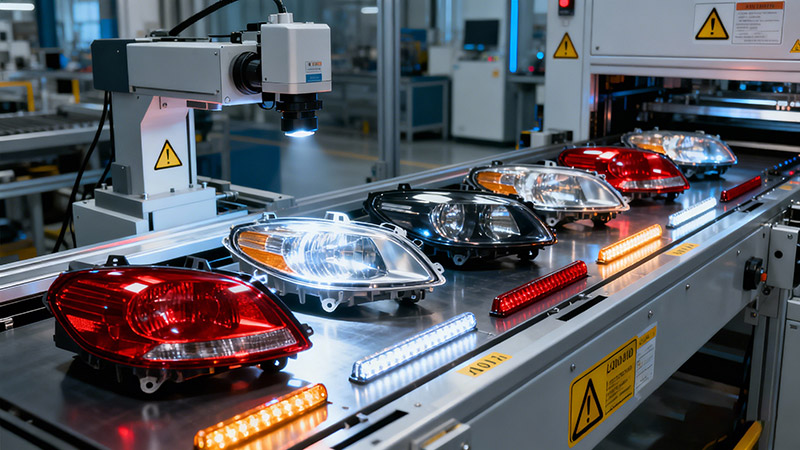
Many manufacturers integrate hot runners with:
Robots
Conveyor systems
Vision inspection
Automated packaging
The result is a highly efficient production cell with fewer operators and stable output.
Expanded Processing Capabilities
Hot runner technology is the foundation of many advanced injection molding processes, including:
PET preform molding
Multi-color injection (multi-shot molding)
Multi-material molding (hard/soft combinations)
Stack molds
Sequential valve gate molding
Co-injection
Without hot runners, these processes would be difficult or impossible to achieve.
Disadvantages of Hot Runner Molds
Despite numerous benefits, manufacturers should also understand the limitations of hot runner systems.
Higher Initial Tooling Cost
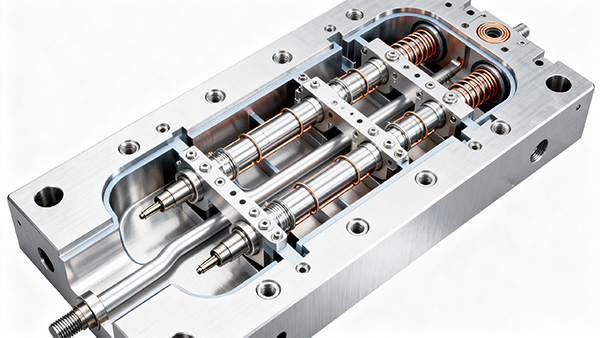
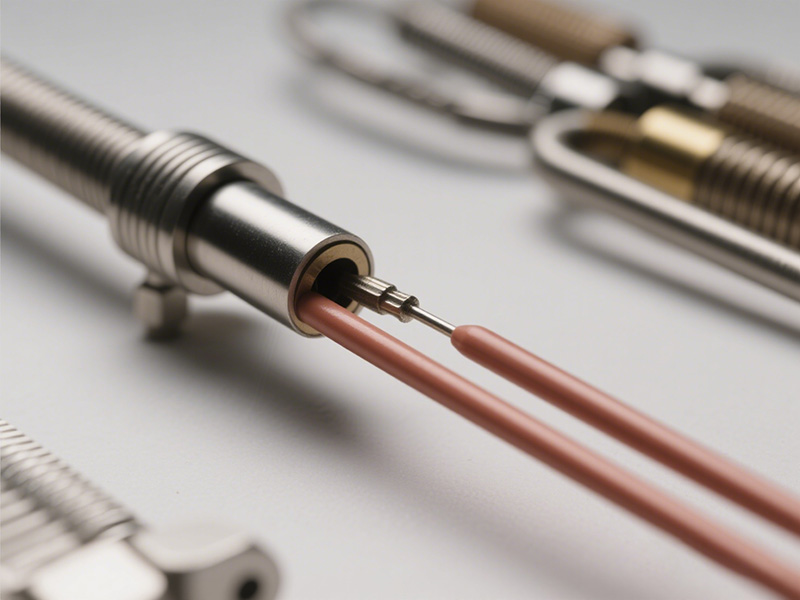
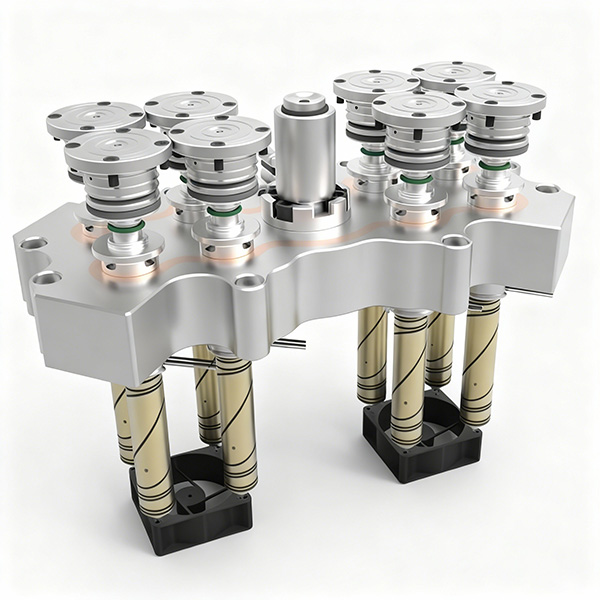
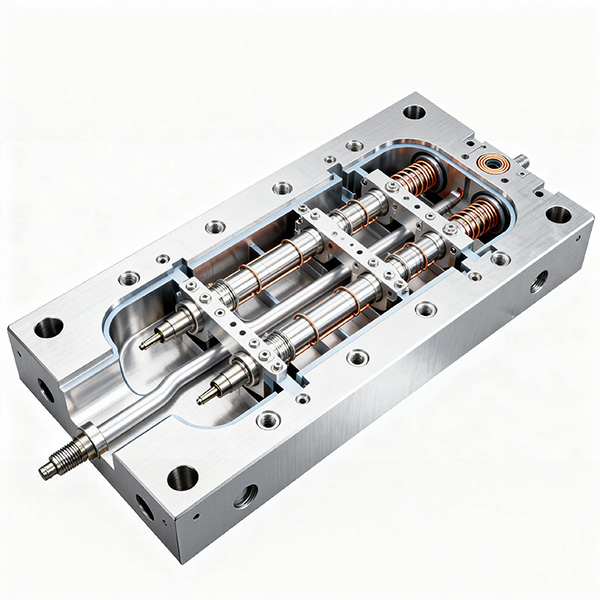
Hot runner components—manifolds, heaters, controllers, nozzles, and valve gates—are expensive.
This results in:
Higher mold cost
Longer mold manufacturing lead time
Reduced economic viability for low-volume projects
In many developing regions, the high upfront cost remains one of the main barriers preventing widespread adoption.
High Requirements for Mold Manufacturing Precision
A hot runner system must integrate seamlessly with the mold.
If tolerances or assembly conditions are not precise, serious issues may occur:
Plastic leakage inside the manifold pocket
Heater burnout
Misalignment between gate inserts and nozzle tips
Reduced product quality
Unexpected production downtime
Precision machining, strict assembly procedures, and experienced toolmakers are essential.
More Challenging Operation and Maintenance
Compared with cold runner molds, hot runner systems:
Require more careful temperature regulation
Have more components that may fail
Are sensitive to improper startup/shutdown procedures
Are less forgiving of molding mistakes
New users typically need time to accumulate operating experience to avoid damaging components or causing production stoppages.
Key Technical Factors for Successful Hot Runner Applications
To ensure a successful hot runner project, the following technical factors must be monitored closely.
Melt Temperature Control
Temperature control is the core of hot runner performance.
Common issues caused by poor temperature control:
Poor gate quality when using thermal-gate (hot-tip) systems
Valve pin not closing smoothly in valve gate systems
Inconsistent filling and part weight differences in multi-cavity molds
Best practices:
Choose multi-zone temperature controllers
Use thermocouples placed accurately
Ensure manifold and nozzles maintain uniform heating
Optimize start-up and shut-down procedures
Stable melt temperature is essential for consistent molding results.
Melt Flow Balance Control
Flow imbalance is another major challenge in hot runner design.
Problems caused by poor flow balance:
Short shots
Over-packing
Excessive flash
Cavity-to-cavity weight variations
Key considerations:
Avoid excessively small runners (causing high pressure loss)
Avoid overly large runners (causing material degradation due to long residence time)
Ensure gates open synchronously
For family molds, balance flow paths based on part weight ratio
Use CAE simulation tools like Moldflow or Moldex3D for manifold design optimization
Proper flow balancing ensures stable productivity and consistent part quality.
Application Scope of Hot Runner Molds
Hot runner molds are highly adaptable and can be used across many domains.
Compatible with a Wide Range of Plastics
Hot runners can process almost all injection-moldable materials, including:
PP
PE
PS
ABS
POM
PC
PA6/PA66
PVC
PET
PMMA
LCP
PEI
ABS/PC blends
Any material suitable for cold runner injection molding can be processed with a hot runner system.
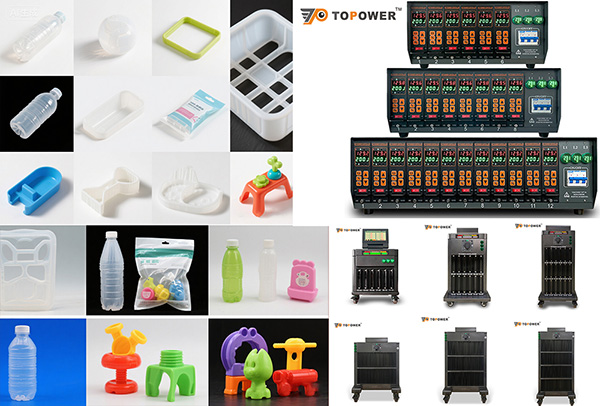
Widely Used Across Multiple Industries
Hot runner molds are now common in:
Electronics
Automotive
Medical devices
Toys
Household goods
Packaging
Industrial components
Office equipment
Construction and architectural hardware
As automation and high-precision manufacturing expand, hot runner adoption continues to grow worldwide.
Conclusion
Hot runner molds deliver major advantages in efficiency, quality, material savings, and automation compatibility, making them an essential technology for modern injection molding.
Although the initial cost and operational complexity are higher compared with traditional cold runner systems, the long-term benefits—especially for high-volume or high-precision production—are significant and transformative.
For manufacturers seeking to improve competitiveness, reduce waste, and adopt advanced molding processes, hot runner technology is a strategic investment worth considering.