
5083 Aluminum: What It Is (and Why It Matters)
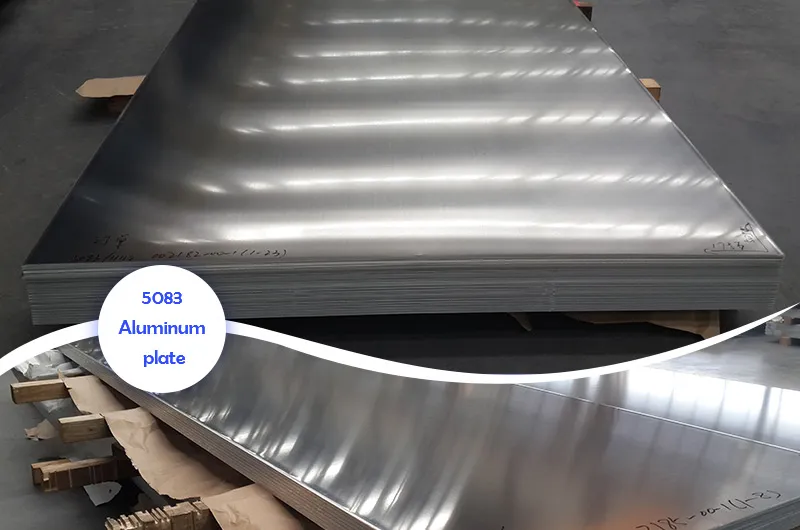
Aluminium 5083 (AA5083 / EN AW-5083) is a high-strength, non-heat-treatable alloy that has become the gold standard for structural applications in extreme environments. Known primarily for its exceptional performance in seawater and industrial chemical settings, it is the alloy of choice when durability meets high-stress demands.
Marine Corrosion Resistance: It possesses outstanding resistance to attack by seawater, making it the primary material for ship hulls and offshore structures.
High Strength: It holds the title for the highest strength among the non-heat-treatable 5xxx series alloys, significantly outperforming 5052 in structural loads.
Superior Weldability: 5083 retains exceptional strength after welding, which is critical for large-scale fabrications like pressure vessels and tankers.
Cryogenic Stability: Unlike many materials that become brittle, 5083 maintains its properties at extremely low temperatures, ideal for LNG storage and transport.
Common Forms: Typically supplied as flat-rolled plate and sheet, though also available in extrusions and forgings for specialized components.
The 5xxx Family Fit: As an Al-Mg alloy, it sits at the high-end of the magnesium content spectrum (up to 4.9%), providing the "backbone" for heavy industrial marine grade applications.
At a Glance: 5083 Identifiers:
Series: 5xxx (Aluminium-Magnesium)
Major Element: Magnesium (Mg) 4.0% – 4.9%
Strengthening: Strain hardening (Work hardened)
Typical Tempers: O (annealed), H111, H112, H116, H321
Core Material & Specification Basics
Understanding the chemistry and physical limits of 5083 is essential for engineers. The alloy's strength is derived from solid solution strengthening of magnesium in the aluminum matrix. While it offers superior strength, it is not recommended for use in service temperatures exceeding 65°C (150°F) to prevent susceptibility to stress corrosion cracking.
| Element | % Composition |
| Magnesium (Mg) | 4.00 - 4.90 |
| Manganese (Mn) | 0.40 - 1.00 |
| Chromium (Cr) | 0.05 - 0.25 |
| Iron (Fe) | 0.40 max |
| Silicon (Si) | 0.40 max |
| Aluminum (Al) | Balance |
The mechanical properties of 5083 are highly dependent on the thickness and the specific temper applied during the rolling process. Marine-grade tempers like H116 and H321 are specifically processed to avoid continuous grain boundary precipitates, ensuring maximum corrosion resistance in saltwater.
|
Temper |
Tensile Strength (MPa) |
Proof Stress (MPa) |
Hardness (HB) |
|
O / H111 |
270 - 350 |
115 - 125 min |
75 |
|
H112 |
275 min |
125 min |
75 |
|
H32 / H116 |
305 - 380 |
215 min |
89 |
Standards & Marine Certifications
Sourcing 5083 requires strict adherence to international standards. For general plate, ASTM B209 or EN 485 are used. However, for marine structural use, ASTM B928 is the mandatory specification for high-magnesium alloys (like 5083) to ensure corrosion resistance. Buyers must also ensure traceability to class societies such as ABS, DNV, or Lloyd's Register.
How to Choose 5083 (Engineer + Buyer Workflow)
Selecting the right 5083 product involves more than just picking a thickness. Engineers must consider the processing equipment required, such as ceramic band heaters for pre-heating or precision control units, and buyers must ensure that the manufacturing partner can provide the necessary QA documentation.
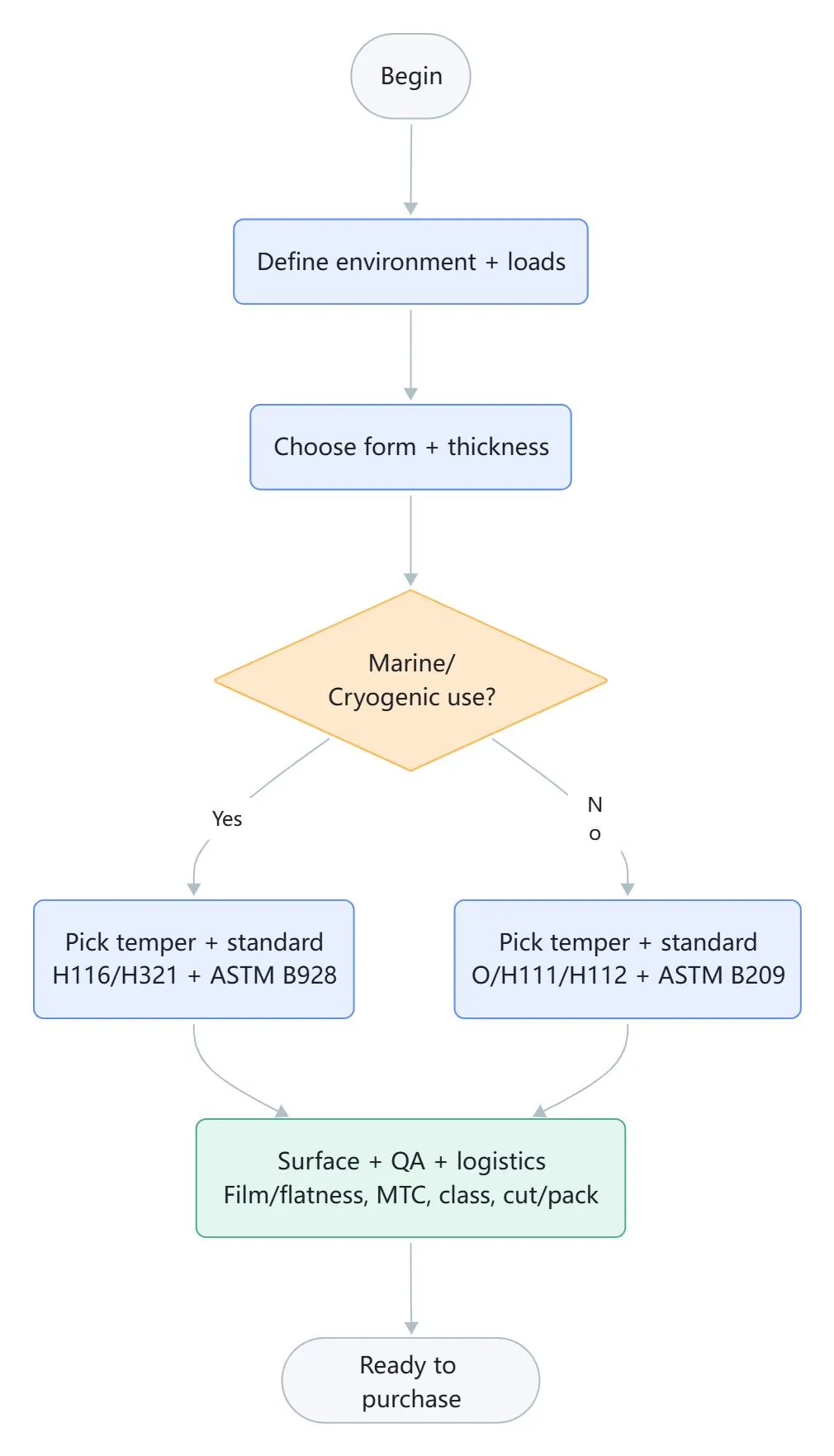
To streamline procurement, use the following checklist to ensure all technical and commercial requirements are captured in the RFQ. For any technical challenges, consulting a troubleshooting specialist for related equipment can prevent delays.
| Selection Field | Common Requirements |
| Application | Ship Hull, LNG Tank, Armor Plate, Pressure Vessel |
| Environment | Seawater (Marine), Cryogenic (-196°C), Chemical |
| Thickness/Dim | Sheet (0.5-6mm), Plate (6mm-200mm+), Cut-to-size |
| Temper | H116/H321 (Marine), O (Forming), H112 (Structural) |
| Spec/Certs | ASTM B928, EN 485, MTC 3.1 or 3.2, ABS/DNV Certs |
| Surface Prot. | PE/PVC film (single/double side), Paper interleaved |
Typical Applications (and What ‘Good’ Looks Like)
The versatility of 5083 allows it to dominate several key industrial sectors. Its non-magnetic properties and spark resistance add safety benefits in hazardous environments like fuel transport.
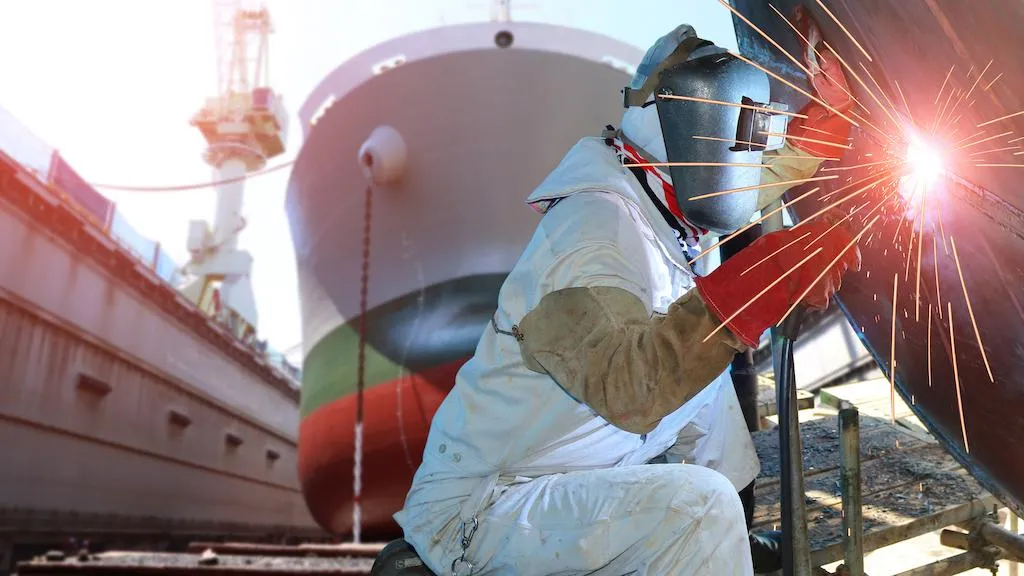
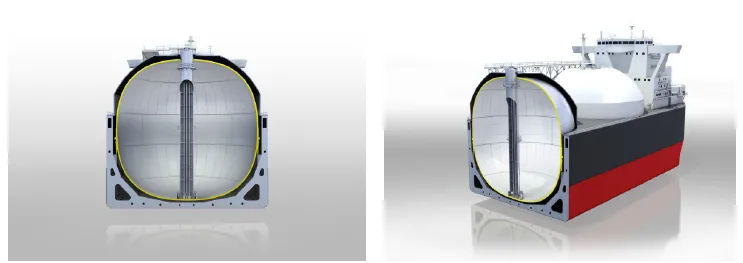
Marine & Shipbuilding: Used for hulls, decks, and bulkheads. Its corrosion resistance eliminates the need for heavy protective coatings in many areas.
Cryogenic/LNG: 5083 maintains high fracture toughness at temperatures as low as -196°C, making it indispensable for Moss-type and membrane LNG storage tanks.
Transportation: Truck tankers and rail cars use 5083 to reduce dead weight, increasing payload capacity while maintaining the structural integrity needed for welded pressure vessels.
Defense: Specified as armor plate (Al-Mg armor) for light military vehicles due to its energy absorption and ballistic protection properties.
Market Size & Where 5083 Sits
The market for 5083 It is important to distinguish these high-level market valuation figures from actual physical trade and consumption data, which reflect the real-time movement of material across borders and through industrial supply chains. aluminum is a major subset of the broader aluminum flat-rolled products (FRP) industry. In 2024, the global aluminum sheets and coils market was valued at USD 52.4 billion. By 2030, the total aluminum rolled products market is projected to reach USD 154.64 billion, growing at a CAGR of 5.0%. It is important to distinguish these high-level market valuation figures from actual physical trade and consumption data, which reflect the real-time movement of material across borders and through industrial supply chains.
| Market Segment | Value (2025 Est.) | CAGR (to 2030) |
| Global Aluminum Rolled Products | USD 121.37 Billion | 5.0% |
| Aluminum Sheets & Coils | USD 52.4 Billion (2024) | 6.0% |
| China Market (Sheets & Coils) | USD 22.7 Billion (2024) | 5.9% |
5083 demand is primarily driven by the 5xxx series segment, which is a core part of the industrial and marine plate This consumption volume highlights the critical scale of the FRP market, where the top ten exporters alone control over 85% of total trade, underscoring the alloy's systemic importance to global manufacturing infrastructure. market. With global aluminum sheet consumption reaching 26.92 million tonnes in 2025, the industrial shift toward lightweighting in marine and transportation sectors ensures that 5083 remains a high-growth alloy. This consumption volume highlights the critical scale of the FRP market, where the top ten exporters alone control over 85% of total trade, underscoring the alloy's systemic importance to global manufacturing infrastructure.
Typical Users, Buyers, and the Value Chain
The value chain for 5083 aluminum involves complex coordination between producers and end-users. At the fabrication level, companies often utilize precision industrial equipment to process plate into final components.
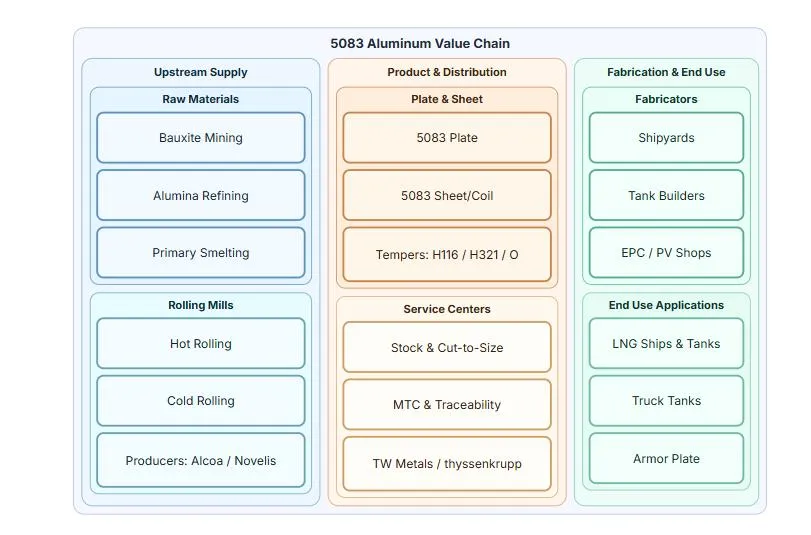
Persona: Shipyard Engineer
Focuses on weld integrity and class society (DNV/ABS) certifications. Needs high-flatness plates to minimize fitting time.
Persona: Procurement Manager
Concerned with lead times, supplier reliability, and price volatility. Prioritizes MTC traceability.
Comparative Alternatives (When 5083 Is / Isn’t Best)
Choosing 5083 over other alloys or materials involves balancing strength, corrosion resistance, and cost. While 5083 is the "marine workhorse," lighter loads might be better served by 5052, while aerospace structural needs might shift toward 6xxx or 7xxx series.
| Alloy | vs 5083 Key Difference | Best Use Case |
| 5052 | Lower strength, better formability | Fuel tanks, sheet metal work |
| 5086 | Slightly lower strength, better welding ductility | Small marine craft hulls |
| 6061 | Heat-treatable, easier to extrude | Structural frames, fittings |
| 5454 | Better at high temps (>65°C) | Hot chemical tanks, truck wheels |
When compared to steel, 5083 offers roughly 1/3 the weight for a given volume. This weight reduction is the primary driver for its use in transportation and marine sectors, despite the higher material cost compared to carbon steel.
Competitor Landscape (Who You’ll See in RFQs)
The supply base is split between global "Mega-Mills" that produce the master coils and plates, and service centers that provide regional distribution and value-added processing.
| Company | Role | Notable Focus |
| Novelis | Producer | Automotive, Industrial Sheet |
| Alcoa (Arconic) | Producer | Aerospace & Marine Plate |
| China Hongqiao | Producer | Mass-market FRP supply |
| TW Metals | Distributor | Global marine/aerospace specialty |
| Thyssenkrupp | Distributor | European industrial & marine |
Key Trends to Watch (2025–2030+)
The next decade will see 5083 demand reshaped by sustainability and automation. As advanced process timers and automation become standard in manufacturing, the precision required for 5083 fabrication will increase.
Green Aluminum: Increasing demand for 5083 produced with renewable energy (hydro) to lower the carbon footprint of ships and vehicles.
LNG Infrastructure: The global shift toward LNG as a transition fuel is driving record demand for 5083 cryogenic plates.
Welding Automation: New friction stir welding techniques for 5083 are reducing labor costs in shipyard hull construction.
Trade Policy & Geopolitics: Supply chains are increasingly reshaped by geopolitical tensions and policy shifts, such as the withdrawal of Chinese tax rebates and new tariff regimes. These factors are leading to increased export costs and extended qualification lead times as buyers pivot toward regional suppliers to mitigate pricing volatility and ensure stable availability of marine-grade plate.
Trade Policy & Geopolitics: Supply chains are increasingly reshaped by geopolitical tensions and policy shifts, such as the withdrawal of Chinese tax rebates and new tariff regimes. These factors are leading to increased export costs and extended qualification lead times as buyers pivot toward regional suppliers to mitigate pricing volatility and ensure stable availability of marine-grade plate.
Traceability: Stricter digital MTC (Mill Test Certificate) requirements for "Pedigree" materials in defense and aerospace.
Related Resources on CNTOPower (Internal Links)
For organizations involved in the processing and manufacturing of aluminum components, CNTOPower provides critical control and heating solutions.
| Resource / Keyword | Destination URL | Content Focus |
| Industrial Heating | Coil Heater Manufacturer | Custom heating elements for industrial processing. |
| Temp Control Guide | Complete Controller Guide | Maintaining precision temperature in thermal tasks. |
| Sequential Timers | Sequential Timer Systems | Process control for automated welding/fabrication lines. |
| Company News | CNTOPower Blog | Latest updates on manufacturing and control tech. |