
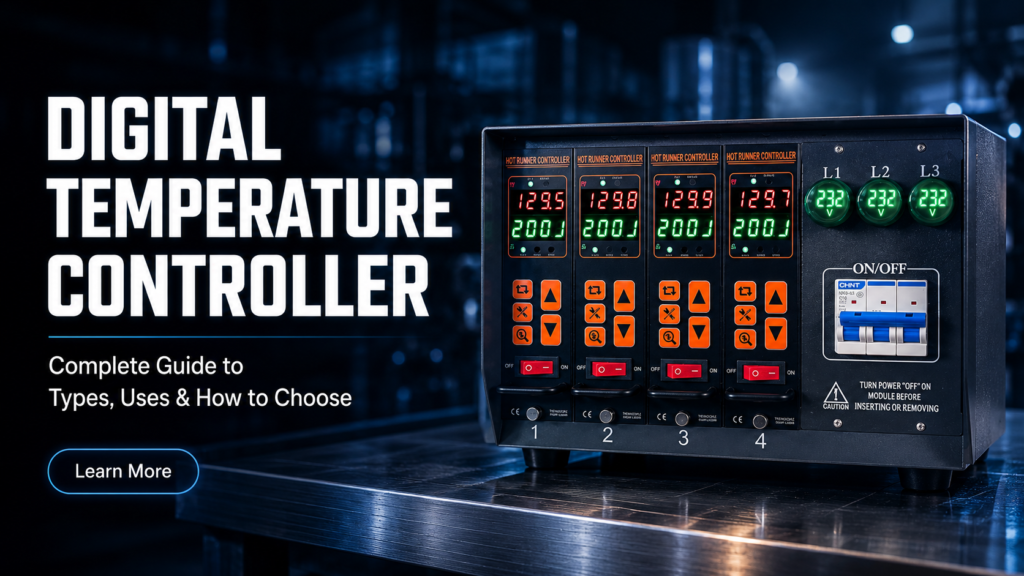
What Is a Digital Temperature Controller?
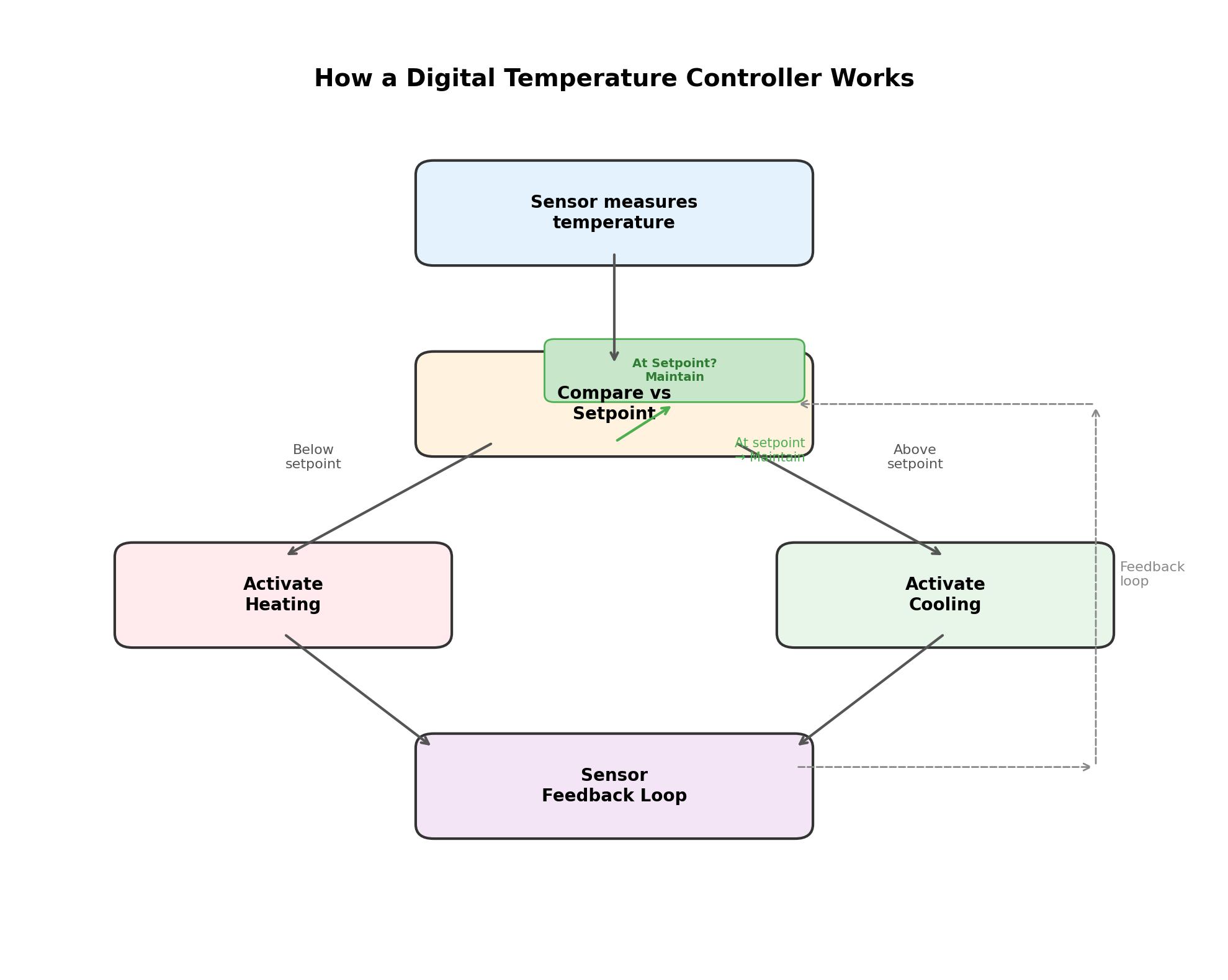
A digital temperature controller is an electronic device that maintains a target temperature by automatically managing heating or cooling equipment. It reads temperature from a sensor, compares it against a setpoint, and tells the connected device when to turn on or off. These controllers show up everywhere — plastic injection molding lines, commercial refrigerators, laboratory ovens, home brewing setups, even egg incubators.
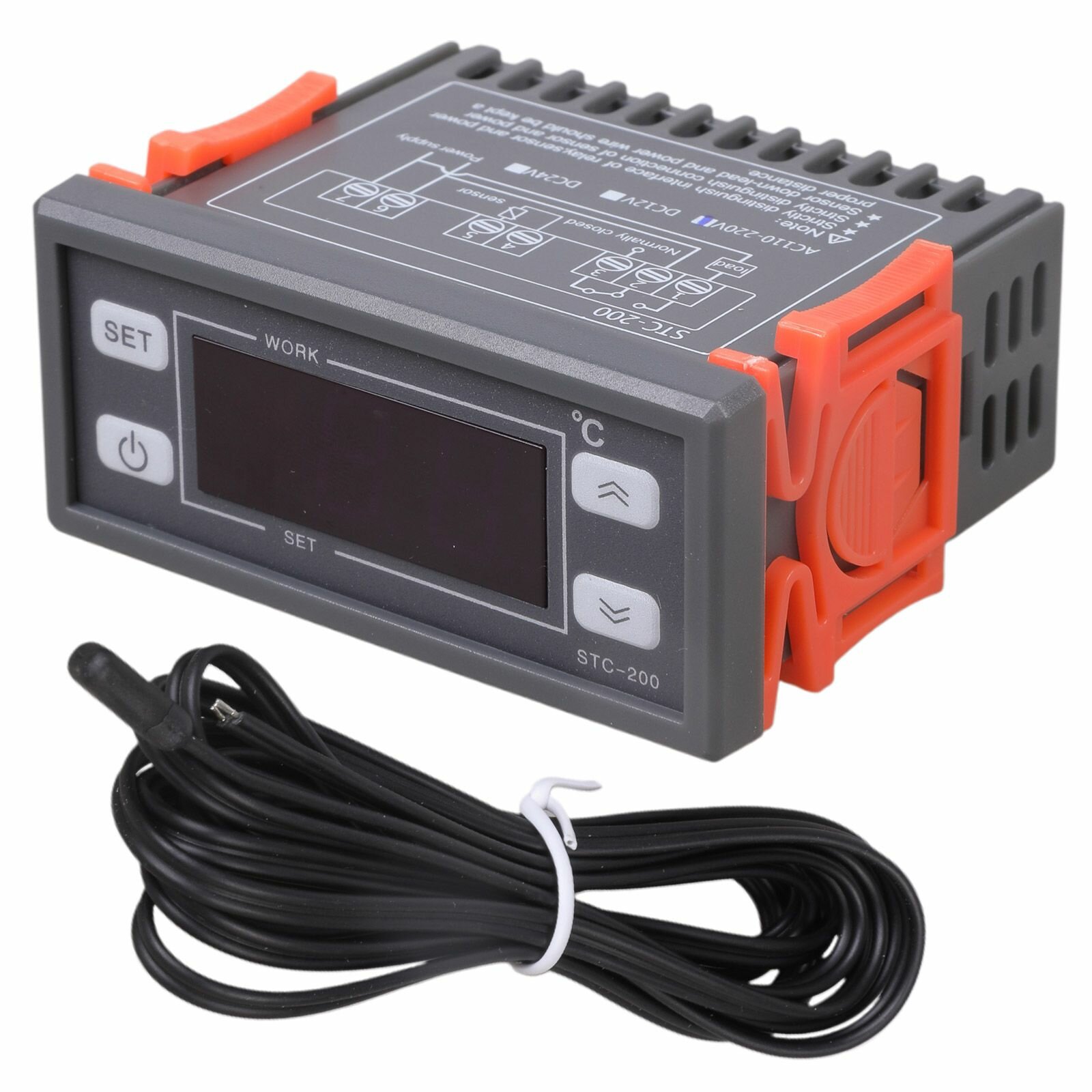
What sets a modern digital temperature controller apart from old mechanical thermostats? Precision. A mechanical bimetallic strip might swing ±3°C around your setpoint. A digital controller, even a basic one, holds within ±1°C. PID models go tighter — down to ±0.1°C in many industrial setups.
Key components inside any digital temperature controller: a temperature sensor (thermocouple, RTD, or thermistor), a processor running the control algorithm, an output relay or SSR to switch the load, and a digital display showing current and set temperatures.
Defining characteristic — it closes the loop. The sensor feeds back real-time data, the controller adjusts its output accordingly, all without you touching a thing.
Types of Digital Temperature Controllers
Not all digital temperature controllers work the same way. The control method directly affects how well your process holds temperature. Four main types dominate the market.
On/Off (Bang-Bang) Controllers
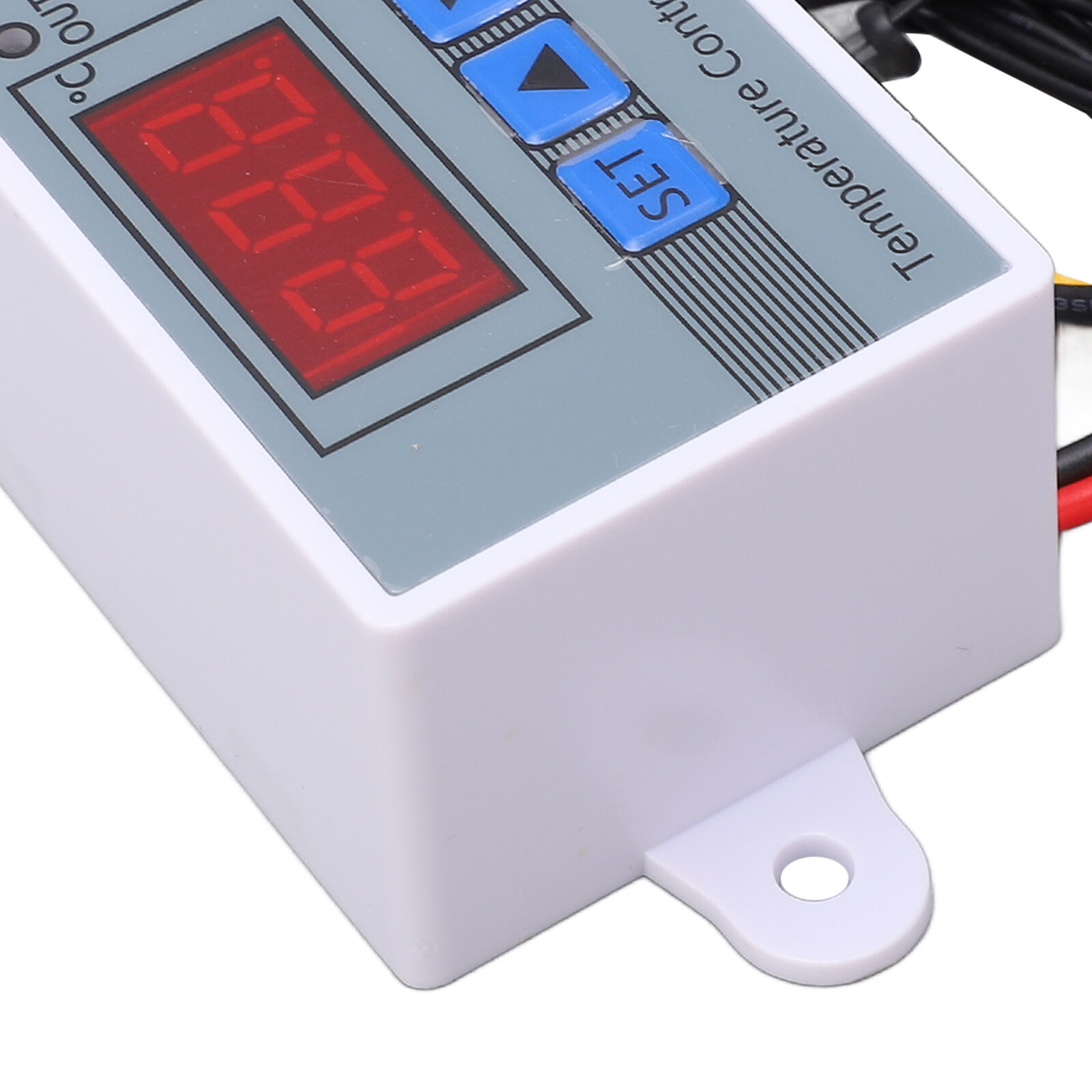
The simplest design. When temperature drops below the setpoint minus hysteresis, the controller switches the heater on. When it reaches setpoint plus hysteresis, it switches off. That hysteresis band — typically 1-2°C — prevents rapid cycling that would wear out relays.
Best for applications where exact temperature isn't critical. Home refrigerators, simple incubators, basic soldering irons. They're cheap, reliable, and easy to wire. Just not very precise.
Proportional (P) Controllers
Instead of full on or full off, a proportional controller reduces power as temperature approaches setpoint. The closer you get, the less heat it applies. This eliminates the constant overshoot-and-recover cycle of bang-bang control.
The trade-off? A proportional controller almost never reaches the exact setpoint. It settles at some offset — called steady-state error — and just stays there. Fine for many processes, not fine for precision work.
Proportional-Integral (PI) Controllers
Adds an integral term that watches how long the error has existed and gradually corrects for it. That steady-state error from proportional-only control? The integral term eliminates it over time.
PI controllers work well in systems with consistent load changes. They respond smoothly without the aggressive corrections of full PID.
PID Controllers
The gold standard for precision temperature control. PID stands for Proportional-Integral-Derivative. Three terms working together:
Proportional — responds to current error. Big error means big correction.
Integral — accounts for past error. Eliminates steady-state offset.
Derivative — predicts future error. Dampens overshoot by watching how fast temperature is changing.
Modern PID controllers include auto-tune. You press a button, the controller runs through a heating and cooling cycle, figures out the optimal tuning parameters, and sets them automatically. No math required.
For injection molding, hot runner systems, heat treatment furnaces, and laboratory-grade applications — this is the type you want. Its used across the temperature controller lineup at cntopower.com for precisely this reason.
Programmable Logic Controllers (PLC-based)
For complex multi-zone systems, a PLC handles more than just temperature. It sequences entire production lines, logs data, communicates with plant-wide systems via Modbus or Ethernet/IP. These are overkill for a single oven but essential for a 48-zone hot runner system.
Key Features to Look For in a Digital Temperature Controller
When comparing digital temperature controllers, these specifications matter most.
Temperature range and accuracy. You need a controller whose range covers your process. A controller rated -50°C to 200°C works for freezers and incubators. Industrial processes may require 0°C to 1300°C with thermocouple input. Accuracy varies from ±0.1°C (industrial PID) to ±2°C (basic on/off).
Sensor compatibility. Thermocouples (Type J, K, T) cover wide ranges but are less accurate. RTDs (PT100) are more stable and precise but cost more. Thermistors are cheap and sensitive in narrow ranges. Make sure the controller supports the sensor you plan to use.
Output type. Relay outputs switch high-voltage loads directly — simple but wears out with frequent cycling. SSR (Solid State Relay) outputs handle rapid switching silently, ideal for PID control. 4-20mA outputs drive proportional valves or SCR power controllers in industrial setups.
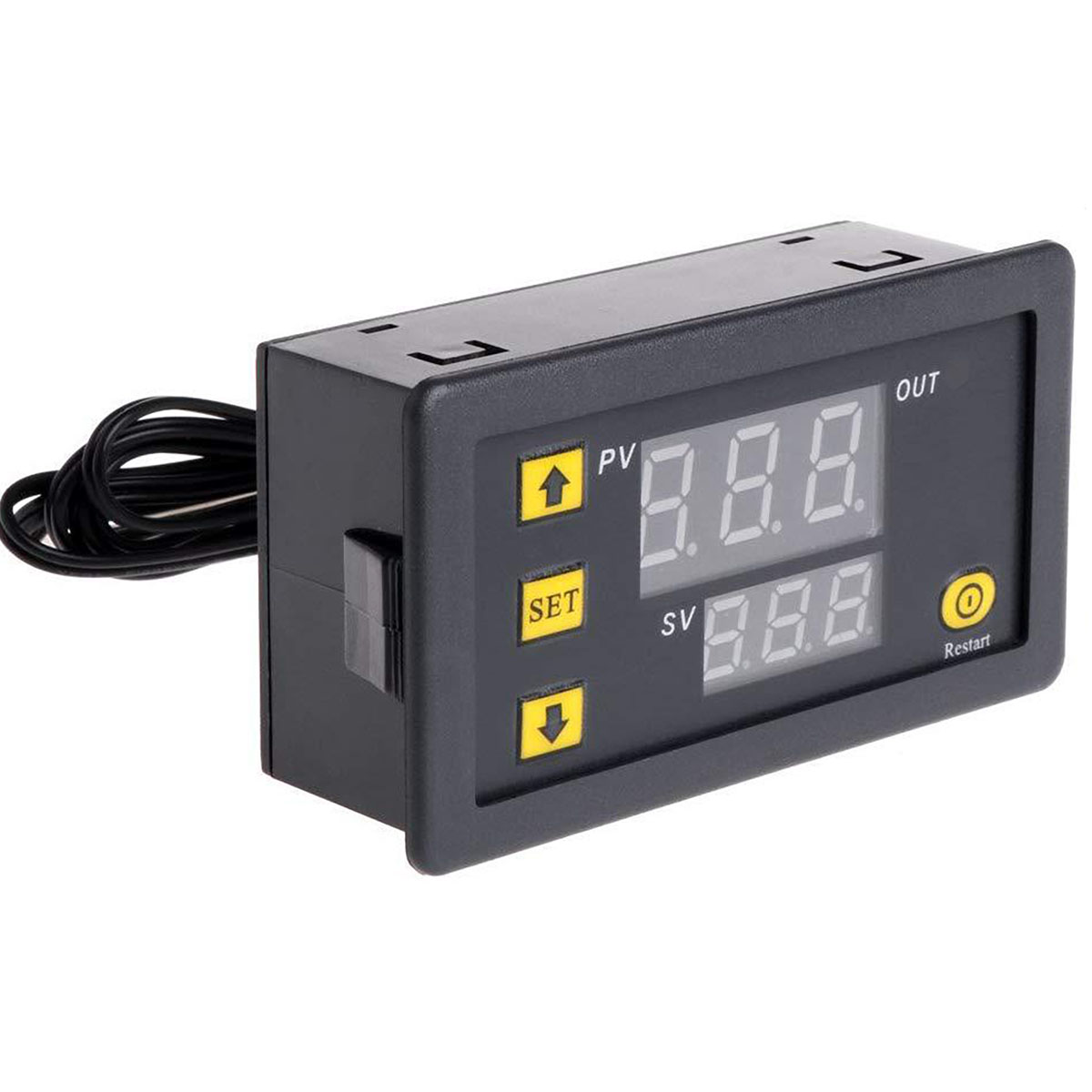
Display and interface. Basic LED displays show two numbers — current temp and setpoint. LCD screens can show graphs, trends, and multi-zone data. Touch screen controllers offer the most intuitive experience but cost significantly more.
Communication. Need remote monitoring? Look for Modbus RTU, RS485, WiFi, or Ethernet connectivity. This lets you log data, adjust setpoints remotely, and integrate with building management or factory automation systems.
Common Applications of Digital Temperature Controllers
Where you'll find a digital temperature controller in the real world. The list is longer than most people realize.
Industrial Applications
Plastic injection molding is a massive user. Every mold cavity needs precise temperature control to prevent warping, sink marks, and inconsistent cycle times. Hot runner systems rely on multi-zone controllers — each nozzle gets its own PID loop. Cntopower.com's modular and touch-screen hot runner controllers handle anywhere from 1 to 60 zones simultaneously.
Mold temperature controllers circulate water or oil through the mold to maintain consistent cavity temperatures. A mould temperature controller paired with a good digital controller holds process temperatures within ±1°C across long production runs.
Heat treatment furnaces use programmable PID controllers that follow precise ramp-and-soak profiles. The controller raises temperature at a set rate, holds for a specified time, then cools — all automatically.
Packaging machinery. Heat sealing bars, shrink tunnels, and labeling stations all depend on accurate temperature control to produce consistent seals without burning materials.
Commercial Applications
Commercial refrigerators and freezers use digital controllers to maintain safe food storage temperatures while minimizing energy consumption. Walk-in coolers, reach-in displays, blast chillers — each has a controller optimized for its duty cycle.
HVAC systems in large buildings use networked controllers that coordinate multiple zones. A central building management system monitors temperatures across floors and adjusts dampers, valves, and fan speeds in real time.
Food service equipment. Commercial ovens, fryers, griddles, and holding cabinets rely on digital temperature controllers for consistent cooking results shift after shift.
Home and DIY Applications
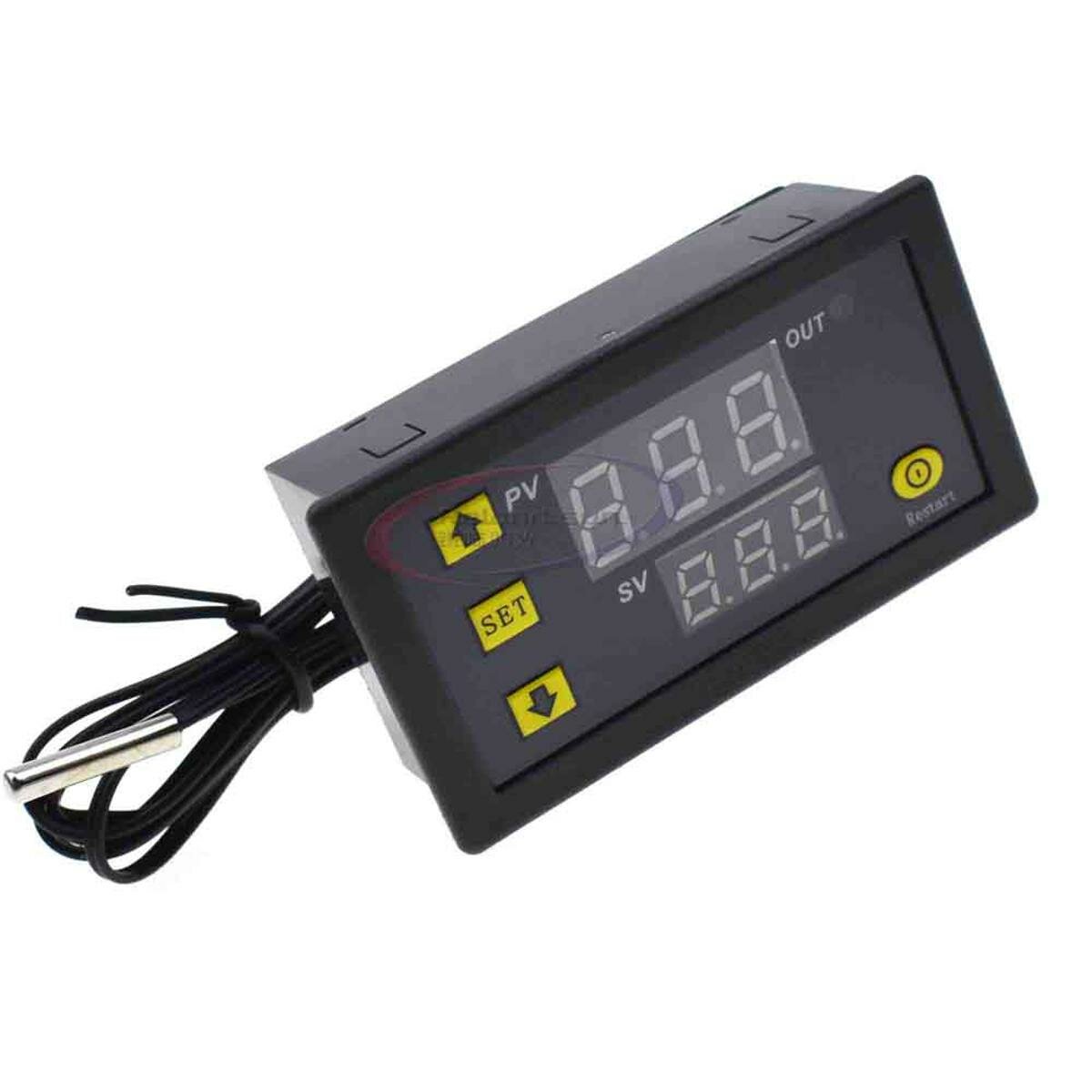
Home brewing and fermentation. Temperature directly affects yeast activity and flavor development. Home brewers use digital temperature controllers connected to mini-fridges or heating pads to maintain precise fermentation temperatures for days or weeks.
Aquarium and reptile keeping. Maintaining water temperature within ±0.5°C is critical for tropical fish and reptiles. A digital controller with a submersible sensor and backup failsafe prevents costly temperature swings.
Incubators for egg hatching require precise temperature control for 21 days straight. A small digital temperature controller with a ceramic heat emitter does the job reliably.
Soldering stations. High-end soldering irons use PID controllers to maintain tip temperature within ±1°C, essential for sensitive electronic components.
Digital Temperature Controller vs. Mechanical Thermostat
Still wondering whether you need a digital temperature controller or a simple mechanical thermostat? Here's the breakdown.
| Feature | Digital Temperature Controller | Mechanical Thermostat |
|---|---|---|
| Accuracy | ±0.1°C to ±1°C | ±1°C to ±3°C |
| Display | Digital LED/LCD/Touch | Analog dial or none |
| Control Type | On/Off, P, PI, PID | On/Off only |
| Programmable | Yes — schedules, ramps, auto-tune | No |
| Remote Monitoring | WiFi, Modbus, RS485, Ethernet | Not available |
| Sensor Types | Thermocouple, RTD, Thermistor | Bimetallic strip, wax pellet |
| Cost | $15 – $500+ | $5 – $50 |
| Best For | Precision processes, industrial use | Simple on/off, low-cost applications |
A mechanical thermostat costs less upfront. A digital temperature controller saves you more in the long run through better process control, less waste, and fewer rejected parts.
How to Choose the Right Digital Temperature Controller
Picking the right controller for your application. Six steps that simplify the decision.
Step 1 — Define your temperature range and accuracy. Freezer storage at -20°C needs a different controller than a heat treatment furnace running at 1050°C. Write down your min and max process temperatures. Then add 20% margin on each end. Now you know the range you're shopping for.
Step 2 — Select your sensor type. For most industrial applications up to 750°C, a Type K thermocouple is the standard. Below 200°C and need better accuracy? Use a PT100 RTD. For a simple DIY project in a 0-100°C range, a 10K NTC thermistor paired with a basic controller does the job for under $20.
Step 3 — Choose your control method. On/off is fine for refrigerators and simple heaters. P-only works for processes with stable loads. PI handles most commercial applications well. PID is the choice for injection molding, hot runners, and any process where precision matters. If you're unsure, buy a PID controller with auto-tune. It defaults to PID but can be configured down if needed.
Step 4 — Consider output requirements. A 10A relay handles most resistive heating loads under 2400W. For high-cycling PID applications, use an SSR output — it switches silently and lasts tens of millions of cycles. The solid state relay pairs naturally with digital PID control. For variable-power control, specify a 4-20mA or 0-10V analog output driving an SCR power controller.
Step 5 — Evaluate your environment. A controller on a factory floor faces vibration, dust, heat, and electrical noise. Look for industrial-rated units with IP54 or higher enclosures. For a clean lab bench, a smaller panel-mount unit works perfectly.
Step 6 — Check communication needs. Will you need to log data? Adjust setpoints from a central console? Integrate with a plant wide SCADA system? Then add Modbus RTU or Ethernet connectivity to your requirements list. For standalone applications, skip the communication module and save the cost.
How to Use a Digital Temperature Controller
Getting a digital temperature controller up and running. The basic steps apply to most common models — STC-1000, Inkbird ITC-308, W1209, and industrial units alike.
Wiring basics. Three connections: power input (usually 110-240V AC), sensor input (thermocouple or thermistor), and load output (heater or cooling device). Always disconnect power before wiring. A wiring mistake — especially reversing the sensor polarity — can damage the controller instantly. Double-check your connections against the wiring diagram printed on the controller housing.
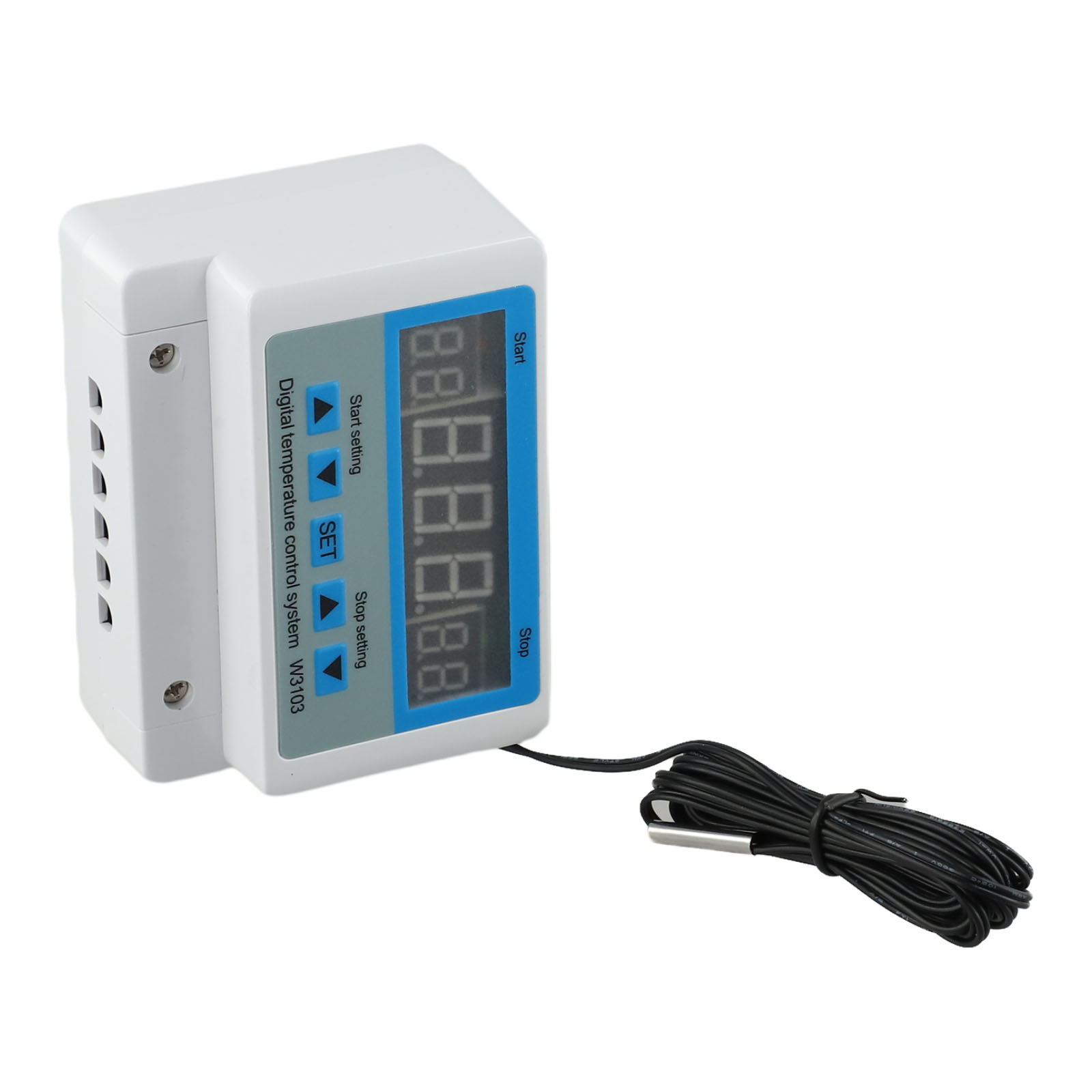
Setting your setpoint. Most controllers have a SET or MENU button. Press and hold for 3 seconds, use the up/down arrows to adjust the target temperature, press SET again to confirm. The controller now works to maintain that temperature.
Configuring hysteresis. For on/off controllers, set the hysteresis (sometimes labeled H/S or DIFF). A 2°C hysteresis on a refrigerator means the controller turns cooling on at setpoint+2°C and off at setpoint. Tighter hysteresis means more frequent cycling. Too tight and you risk relay wear or short-cycling a compressor.
Auto-tuning a PID controller. Locate the AT (Auto-Tune) parameter in the settings menu. Set it to 1 or ON. The controller will cycle your system through heating and cooling, analyze the response, and calculate P, I, and D values automatically. The process takes 15-30 minutes depending on your system's thermal mass. Let it complete without interruption.
After auto-tune, most systems reach setpoint with minimal overshoot and hold steady within ±0.5°C or better.
Top Digital Temperature Controller Brands and Models
A quick comparison of popular models on the market today.
| Model | Type | Range | Accuracy | Best For |
|---|---|---|---|---|
| Inkbird ITC-308 | On/Off + PID | -50 to 99°C | ±0.3°C | Home brewing, fermentation |
| STC-1000 | On/Off | -50 to 99°C | ±1°C | Budget DIY projects |
| W1209 | On/Off | -50 to 110°C | ±1°C | Hobbyist, incubator, aquarium |
| Johnson A421 | On/Off | -30 to 110°C | ±0.5°C | Commercial refrigeration |
| Omega CN740 | PID with ramp/soak | 0 to 1300°C | ±0.1°C | Industrial furnaces, ovens |
| Watlow EZ-Zone | PID with Ethernet | -200 to 2300°C | ±0.1°C | Multi-zone industrial systems |
| Topower TP01 | PID (Modular) | 0 to 450°C | ±0.5°C | Hot runner injection molding |
| Topower HY20 | PID (Touch Screen) | 0 to 450°C | ±0.5°C | Multi-cavity hot runner control |
Frequently Asked Questions
What is the difference between a digital temperature controller and a thermostat?
A thermostat is technically a type of temperature controller — usually the on/off type. A digital temperature controller is broader. It includes PID control, programmable profiles, data logging, and communication capabilities that a simple thermostat lacks. Think of thermostats as a subset of the temperature controller family.
Can I use a digital temperature controller for a refrigerator?
Yes. In fact, replacing a failed mechanical thermostat with a digital controller often improves temperature stability and energy efficiency. Use an on/off controller with a 1-2°C hysteresis to prevent short-cycling the compressor. Make sure the controller's relay rating matches your refrigerator's compressor draw.
How do I wire a digital temperature controller?
Wire the power supply to the controller's input terminals. Connect the sensor to the sensor input (observe polarity for thermocouples). Connect your heating or cooling device to the output relay terminals. Use a wiring diagram specific to your model — terminal assignments vary between brands. When in doubt, consult the manual or contact the manufacturer.
What does PID mean in a temperature controller?
PID stands for Proportional-Integral-Derivative. Three control terms that work together to maintain a setpoint with minimal error and overshoot. The proportional term responds to current error, the integral term corrects for past error, and the derivative term anticipates future error. Together they provide the most stable temperature control available in a standard controller.
How accurate are digital temperature controllers?
Accuracy depends on the controller type and sensor. Basic on/off controllers with a thermistor sensor achieve ±1-2°C. PID controllers with a PT100 RTD sensor reach ±0.1°C under stable conditions. The sensor is often the limiting factor — a high-end controller paired with a cheap thermocouple still gives mediocre accuracy.
What size controller do I need for my heater?
Check your heater's current draw in amps. The controller's relay rating must exceed this value by at least 20% for safety. A 10A controller handles most heaters up to 2400W (at 240V). For larger loads, use the controller to drive an external contactor or SSR that handles the high current, while the controller itself switches only milliamps.
Can a digital temperature controller both heat and cool?
Many controllers support both heating and cooling outputs. They operate in three modes: heat only, cool only, or heat/cool (dual mode). In dual mode, the controller activates the heating output when below setpoint and the cooling output when above. A dead band between the two prevents them from fighting each other. Industrial units like the Watlow EZ-Zone and Topower TP01 support this natively.
How long does a digital temperature controller last?
Relay-based controllers typically last 100,000 to 1,000,000 cycles depending on the load. SSR-based controllers last longer since they have no moving parts — expect 10+ years in normal service. The display and electronics generally outlast the output relays. When a relay fails, it can often be replaced without buying a whole new controller.
Conclusion
Digital temperature controllers have become essential across industries and homes alike. From maintaining precise cavity temperatures in injection molding to keeping a homebrew fermentation stable for weeks, these devices deliver repeatable, accurate temperature control that mechanical thermostats simply can't match.
Choosing the right digital temperature controller comes down to your specific process needs: temperature range, accuracy requirements, control method, and environmental conditions. For industrial applications like hot runner systems and mold temperature control, a PID controller with auto-tune and SSR output is the standard choice. For simpler applications, an on/off controller with basic hysteresis may be all you need.
At C N Topower, we specialize in precision temperature control solutions for the injection molding industry. Our modular and touch-screen hot runner temperature controllers deliver PID accuracy across 1 to 60 zones, backed by CE and RoHS certifications. Whether you're setting up a new system or upgrading an existing one, contact our team for a solution matched to your application.