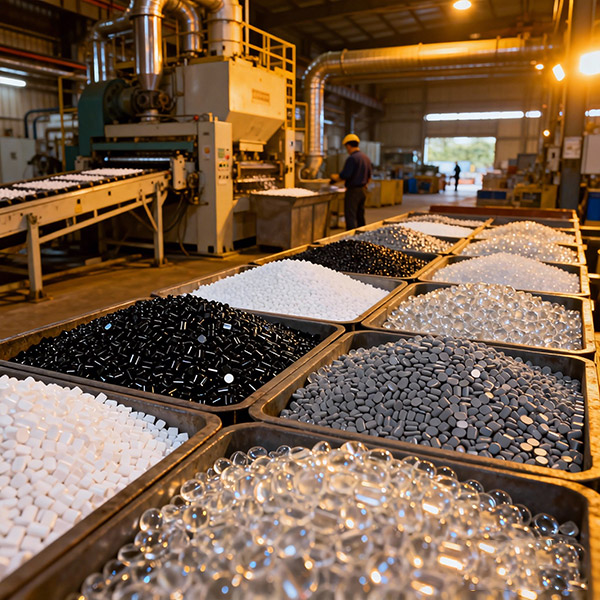
Choosing the right material is one of the most critical steps in automotive plastic injection molding. From interior trims to structural brackets and under-the-hood components, every resin directly impacts durability, dimensional stability, heat resistance, and overall part performance. As the automotive industry moves toward lightweight design, electric mobility, and integrated assemblies, selecting the correct material for injection molded automotive parts has become more essential than ever.
This guide provides a practical and comprehensive overview of the most widely used materials in automotive injection molding, helping engineers and manufacturers make informed decisions for high-quality and cost-effective production.
Why Material Selection Matters in Automotive Injection Molding
Automotive parts operate in demanding environments where materials are exposed to:
-
Constant vibration
-
Temperature changes ranging from −40°C to 150°C
-
Oils, fuels, cleaners, and chemical exposure
-
UV radiation
-
Tight tolerance and dimensional accuracy needs
-
Automotive safety and regulatory requirements
A suitable material ensures long-term performance, while a poor choice may cause warpage, cracking, deformation, or failure over time. Therefore, material selection is not only a technical decision—it is fundamental to the success of automotive plastic injection molding projects.
Most Common Materials Used for Injection Molded Automotive Parts
Below are the core materials used across modern automotive manufacturing.
Polyamide (PA6 / PA66)
Ideal for: High-strength structural parts & under-the-hood components
Polyamide (nylon) is among the most widely used materials in automotive injection molding. When reinforced with glass fiber, PA offers exceptional stiffness, strength, and thermal stability.
Advantages:
-
High mechanical strength
-
Excellent fatigue and impact resistance
-
Good oil and chemical resistance
-
Suitable for elevated temperatures
Limitations:
-
High moisture absorption
-
Requires proper drying before molding
Typical Applications:
-
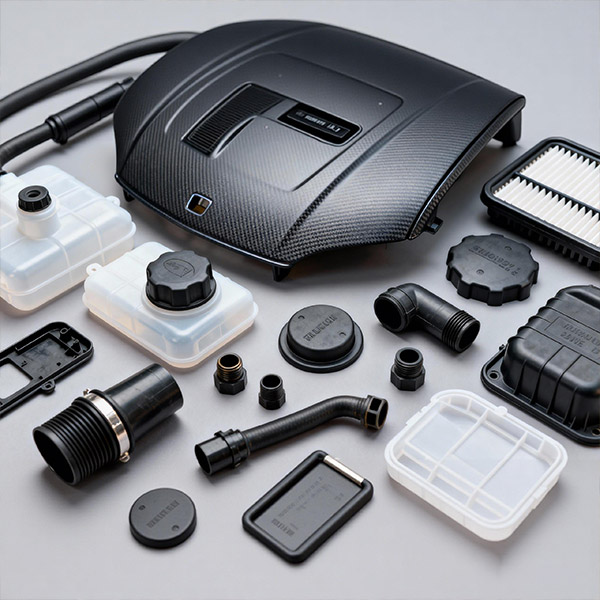
Engine covers
-
Air intake manifolds
-
High-strength brackets
-
Cooling system parts
Polypropylene (PP)
Ideal for: Lightweight interior components
PP is one of the most versatile and cost-effective materials for injection molded automotive parts, especially in interior applications.
Advantages:
-
Lightweight and low density
-
Excellent chemical resistance
-
Good impact strength (PP-EPDM blends)
-
Highly recyclable
Limitations:
-
Limited temperature resistance
-
Requires UV stabilizers for outdoor exposure
Typical Applications:
-
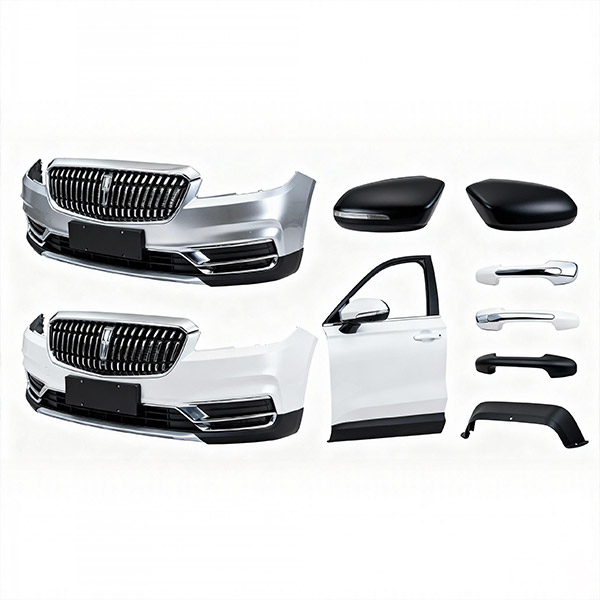
Interior trims
-
Door panels
-
Instrument panel elements
-
Battery casings
ABS / PC-ABS
Ideal for: High-impact interior parts with aesthetic requirements
ABS is known for its strong impact resistance and good surface finish. PC-ABS blends offer enhanced heat resistance suitable for parts requiring appearance + performance.
Advantages:
Excellent toughness
Stable dimensions
Premium surface finish
Good moldability
Typical Applications:
Dashboard components
Pillar covers
Center console parts
Electronic housings
Polyoxymethylene (POM)
Ideal for: Precision moving mechanisms
POM (acetal) is a top choice for applications requiring low friction, high dimensional stability, and precision.
Advantages:
Very low friction
Excellent wear resistance
High stiffness
Resistant to fuels and chemicals
Typical Applications:
Gears & actuators
Seatbelt systems
Lock mechanisms
Hinges and clips
Polycarbonate (PC)
Ideal for: Optical-grade & high-impact automotive components
PC is widely used in automotive lighting systems and transparent elements.
Advantages:
High transparency
Outstanding impact strength
Heat-resistant grades available
Typical Applications:
Light covers
Display lenses
EV dashboard components
Thermoplastic Polyurethane (TPU)
Ideal for: Flexible, durable components
TPU offers excellent elasticity, abrasion resistance, and durability.
Applications:
Seals & gaskets
Cable jackets
Soft-touch interior parts
High-Performance Plastics (PPS / PEEK)
Ideal for: High-temperature EV & engine components
For extreme environments, PPS and PEEK deliver unmatched mechanical, thermal and chemical stability.
Applications:
EV battery system components
High-temperature connectors
Powertrain parts
How to Select the Right Material for Injection Molded Automotive Parts
Material selection depends on these factors:
Mechanical Requirements
Strength, impact resistance, stiffness, and fatigue behavior.
Thermal Performance
Consider continuous operating temperature and peak heat exposure.
Chemical Environment
Exposure to oils, fuels, coolants, or cleaning agents.
Dimensional Stability
Critical for gears, connectors, and precision mechanisms.
Weight Optimization
PP and glass-filled PA are leading choices for lightweighting.
Cost & Production Volume
Balance between performance and budget.
Aesthetic & Surface Requirements
ABS and PC-ABS offer excellent finishes for visible interior parts.
Quick Material Selection Matrix
| Requirement | Recommended Material |
| Structural load-bearing | PA6/PA66 (GF) |
| High-temperature use | PPS / PEEK / PA66 |
| Interior trim | PP or ABS / PC-ABS |
| Precision gears | POM |
| Flexible / soft-touch | TPU |
| Transparency | PC |
Looking for Reliable Hot Runner Temperature Controllers for Automotive Injection Molding?
For stable, efficient production of injection-molded automotive parts, precise temperature control is essential—especially when running multi-cavity molds, high-temperature engineering plastics, and large-volume automotive projects.
At CNTO Power (https://cntopower.com/), we provide advanced, reliable hot-runner temperature-control solutions specifically designed for automotive applications.
Our Key Products Include:
-
Precision PID-controlled units for demanding materials
Why Automotive Manufacturers Choose CNTO Power:
-
Ultra-fast heat-up and stable temperature control
-
Consistent zone balancing for multi-cavity production
-
Reduced mold setup and tuning time
-
Improved cycle consistency & defect reduction
-
Designed for long-term industrial use
If you want to upgrade your mold performance, enhance part quality, or stabilize your automotive injection molding production, our engineering team is ready to help.
-
Explore our full range of hot runner temperature controllers: https://cntopower.com/
-
Contact us today for technical support or custom solutions.