
Overview
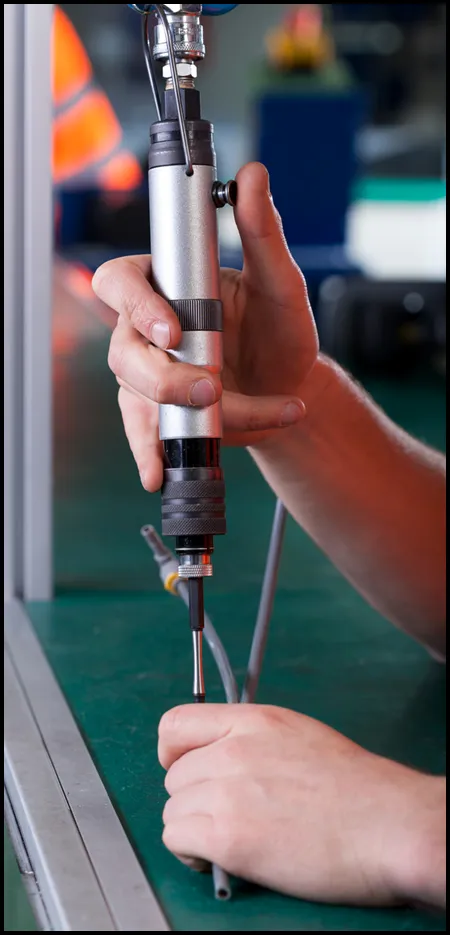
Assembly tools are specialized instruments designed for the joining of components using fasteners. These tools play a critical role in modern manufacturing, where torque control is essential for ensuring joint integrity. By maintaining precise force during assembly, these tools prevent common failure modes such as over-tightening or loose joints that compromise product safety.
This guide covers the spectrum of assembly equipment, from handheld manual wrenches to high-speed automated systems. Readers will learn about different tool categories, selection criteria, and the latest trends in connected fastening technology. Understanding these basics is vital for anyone involved in production, as proper tooling directly impacts cycle times and overall quality standards.
In typical manufacturing, these tools integrate into processes alongside a pvc injection molding guide. Whether using a portable battery tool or a fixtured nutrunner, the goal is achieving consistent, verifiable clamp load on every fastener. Check our About Us page to learn more about our commitment to industrial precision.
What Counts as an “Assembly Tool”? (Categories & Basics)
Defining assembly tools requires looking at the power source and the control mechanism used to manage torque. Manual tools rely on the operator's physical force, while powered tools use compressed air or electricity. The most advanced systems use transducers to provide real-time feedback and data logging, which is essential for critical safety joints in automotive and aerospace applications.
| Tool Category | Typical Torque | Control Level | Traceability | Primary Use |
| Manual Torque | Low to High | Operator Dependent | Manual Log | Low volume / MRO |
| Pneumatic | Medium | Basic (Clutch) | None | General assembly |
| DC Electric | Low to High | High (Transducer) | Full Digital Log | Critical joints |
| Cordless Battery | Low to Medium | Moderate to High | Wireless Sync | Mobile assembly |
| Automated System | Customized | Full Automation | MES Integration | High-speed lines |
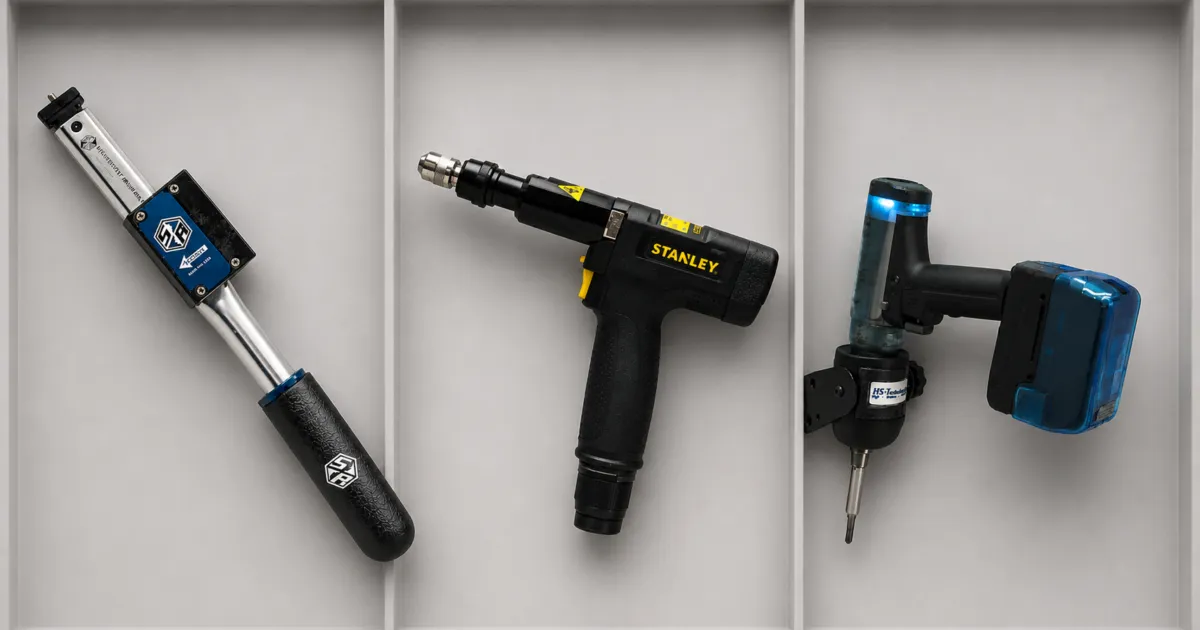
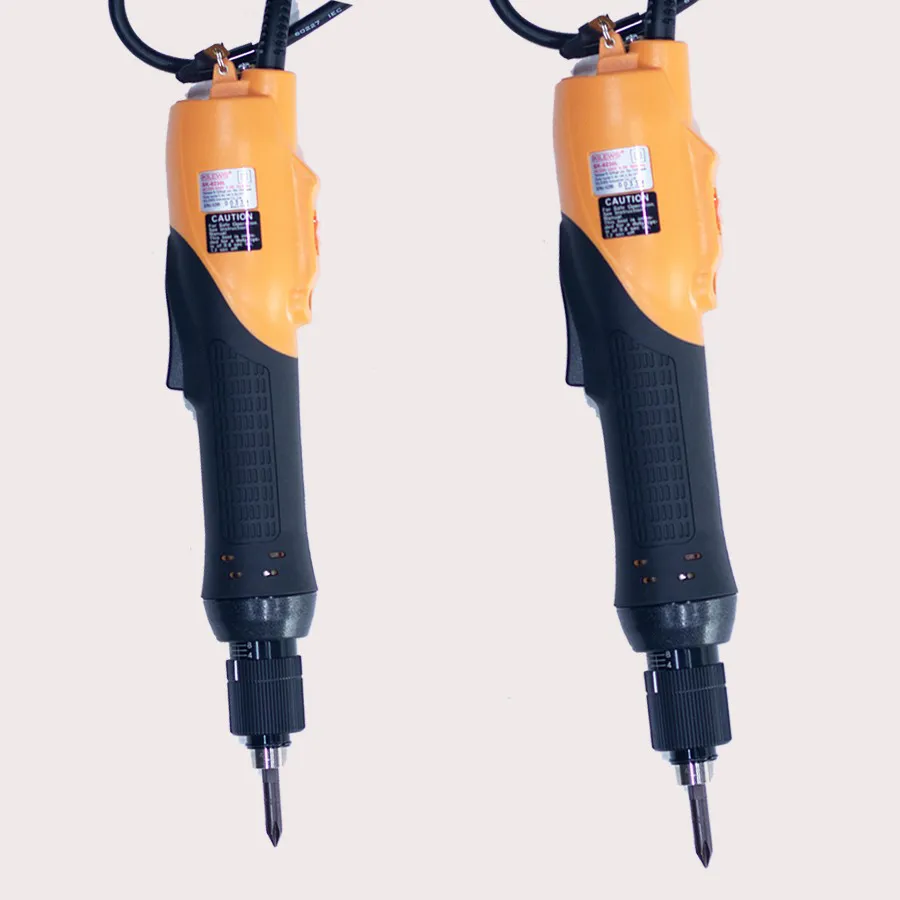
Accuracy and throughput are the primary tradeoffs when selecting between these categories. Manual tools are cost-effective but slow and prone to human error. Pneumatic tools offer speed but lack the sophisticated data capture required for modern quality standards. DC electric tools represent the current industry gold standard by combining high speed with integrated transducers for perfect traceability.
How to Choose an Assembly Tool (Quick How‑To)
Selecting the right tool starts with understanding the specific needs of your joint. You must first determine the target torque and the criticality of the connection. If the joint is safety-critical, such as a wheel nut, you will likely require a transducerized tool with data logging. This ensures every cycle is recorded for future quality audits.
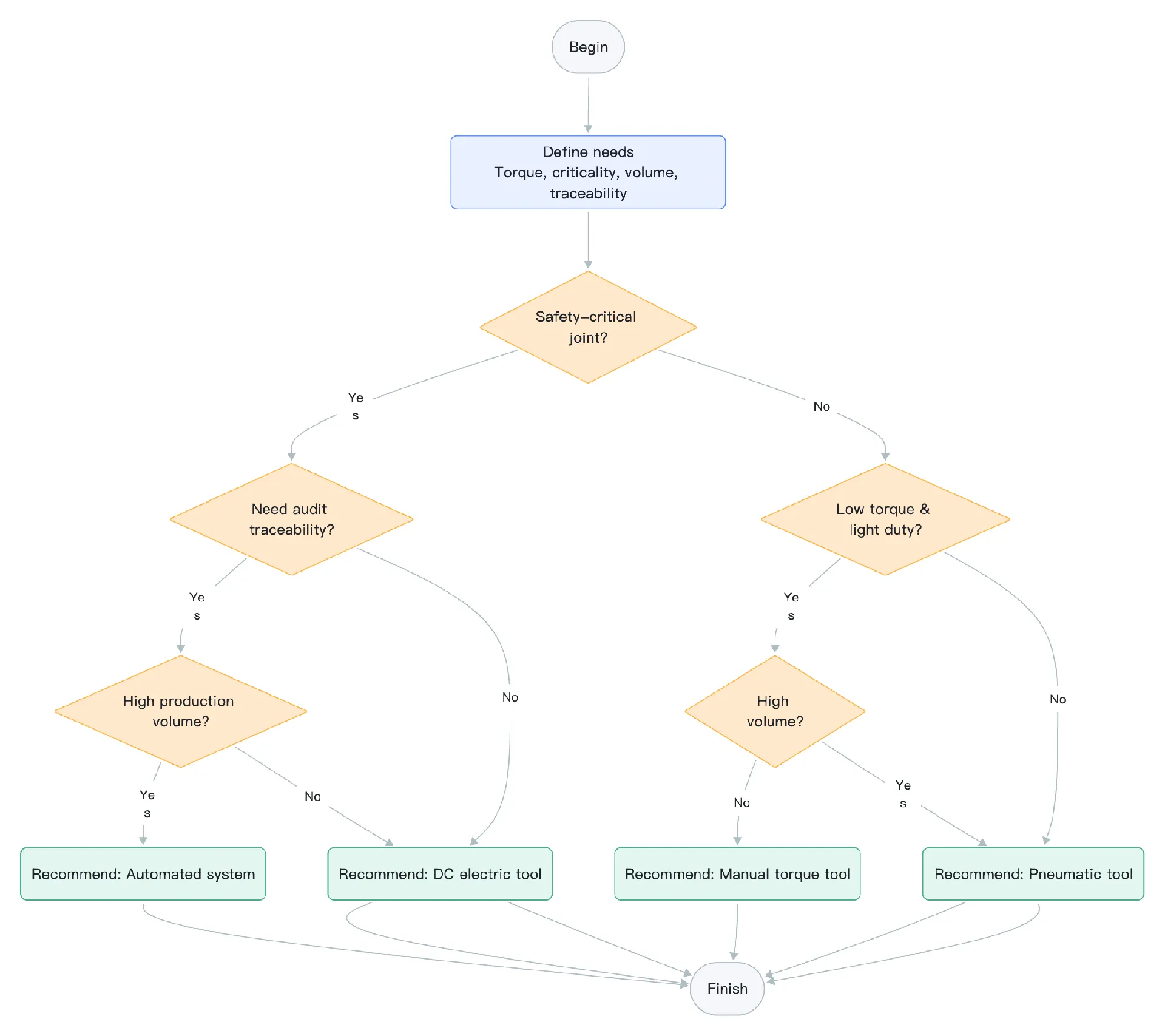
Next, consider the ergonomics and space constraints of the workstation. If the operator needs to move around a large product, a cordless battery tool offers the most freedom. However, for high-torque applications, you might need a reaction arm or a fixtured tool to protect the worker from the repetitive stress of the tool's kickback during the rundown.
Power availability and production volume also dictate the final choice. High-volume lines benefit from automated systems handling multiple fasteners. For specialized applications like electronics, ESD safety is a top priority. Always check specialized requirements, such as those in a ceramic heater band guide, before finalizing your equipment list.
Typical Applications (Where Assembly Tools Are Used)
Assembly tools are ubiquitous across diverse industrial sectors. In automotive manufacturing, they are used for everything from interior trim to heavy-duty powertrain assembly. Electronics manufacturers use tiny, high-precision electric screwdrivers to assemble mobile devices and circuit boards. These applications require a level of precision and speed that manual assembly simply cannot match in a modern factory.
| Industry | Typical Station | Recommended Tool Type |
| Automotive | Engine / Chassis | High-Torque DC Nutrunners |
| Electronics | PCB / Housing | Low-Torque Electric Screwdrivers |
| Appliances | Final Assembly | Cordless / Battery Tools |
| Machinery | Heavy Framing | High-Torque Pneumatic / Hydraulic |
| Plastics / Molding | Auxiliary Assembly | Clutch-style Electric Tools |
In plastics, assembly tools are used with auxiliary equipment like a hot runner temperature controller complete guide. For example, maintaining heating systems might require ceramic band heaters secured with precision. Understanding a hot runner controller troubleshooting guide helps identify when assembly issues affect performance.
For specialized components, you might need coil heater manufacturer products or Hot Runner Cables fastened correctly for connectivity. See our full range of Products for more information. You can Contact Us for heating system integration. Exploring the blogvideo section provides visual examples of these tools.
Market Size (Practical View)
The assembly tools market is a multi-billion-dollar sector that continues to grow alongside global industrialization. Market definitions vary, often overlapping between general power tools and specialized industrial equipment. However, the move toward smart manufacturing is driving significant investment in high-end DC torque tools and connected fastening systems across all major geographic regions.
| Market Segment | 2024 Est. Value | Future Projection | Source |
| DC Torque Tools | $3.63 Billion | $4.36 Billion (2029) | MarketsandMarkets |
| Electric Screwdrivers (Broad) | $5.7 Billion | $9.1 Billion (2030) | Strategic Market Research |
| Electric Screwdrivers (Industrial Focus) | $1.11 Billion | $1.53 Billion (2030) | BusinessWire / R&M |
Market figures vary based on how "electric screwdrivers" are defined. Some reports include consumer-grade DIY tools, explaining valuations up to $9.1 billion. In contrast, industrial-specific reports focus on high-precision corded and cordless tools for manufacturing. DC torque tools represent a distinct segment valuing high accuracy and data traceability in critical assembly lines.
Typical Users and Buying Roles
Buying decisions for assembly tools involve a multi-disciplinary team, each with their own specific priorities. Production operators are the primary users; they care most about tool ergonomics, weight, and the ease of use during an eight-hour shift. If a tool is too heavy or has a harsh reaction, it can lead to long-term health issues and lower morale.
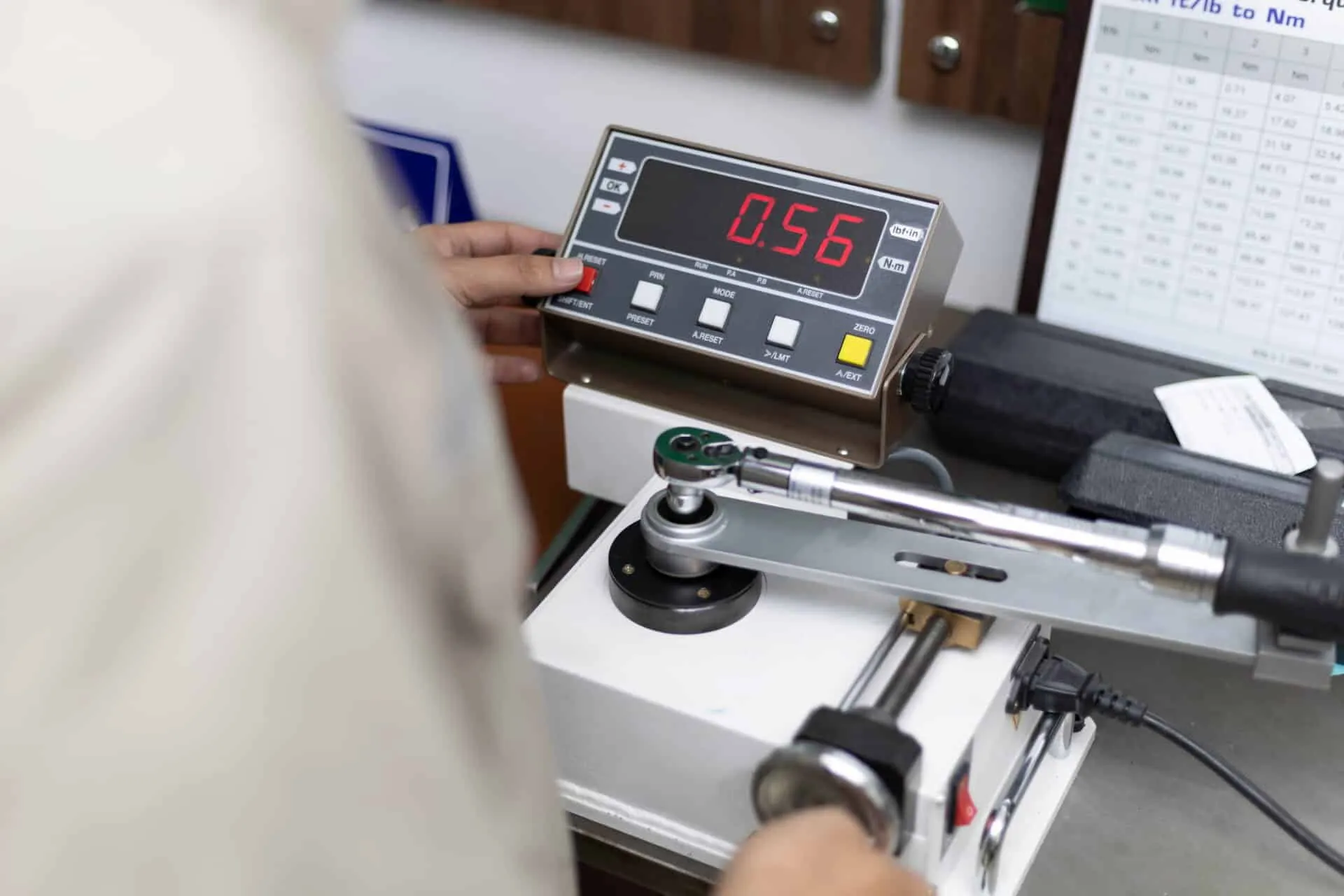
Manufacturing engineers focus on cycle time and process reliability. They select tools that can keep up with the line rate while delivering consistent results. Quality and metrology teams, on the other hand, are concerned with calibration and traceability. They need tools that can document every rundown to prove the product meets all internal and external safety standards.
Finally, procurement and manufacturing IT roles manage the total cost of ownership (TCO) and data integration. IT managers ensure that new smart tools can communicate with the factory's existing Manufacturing Execution System (MES). Procurement specialists look beyond the initial purchase price, considering maintenance costs and the availability of local service networks to minimize future production downtime.
Competitor Landscape (Who Sells What)
The industrial assembly tools market is dominated by a few global giants who offer comprehensive ecosystems of hardware and software. These companies provide everything from the tool itself to the controllers and the data management platforms that link them together. Their strengths often lie in their ability to provide integrated solutions that cover an entire factory's needs.
| Major Brand | Primary Strengths | Notable Portfolio |
| Atlas Copco | Global service, smart software, innovation | Tensor DC tools, SmartLine controllers |
| Stanley / Apex | Broad portfolio, pneumatic legacy, durability | Cleco nutrunners, Stanley SAT systems |
| Ingersoll Rand | Pneumatic expertise, rugged design, reliability | QX Series cordless, pneumatic nutrunners |
| Desoutter | Aerospace focus, electric tool specialization | E-LIT battery tools, ERP platform |
| Mountz / Norbar | Precision torque, calibration, specialist tools | Hand torque, electronic wrenches |
Beyond these major players, regional and OEM suppliers provide specialized or private-label tools for specific niches. While these smaller brands may not offer the same level of global software integration, they often provide excellent value for less critical applications. Choosing between a premium global brand and a specialized niche supplier depends on your specific traceability and service requirements.
Key Trends (2026 and Beyond)
The transition toward Industry 4.0 is the defining trend for the next decade. Manual torque tools are being rapidly replaced by connected fastening systems that capture data for every cycle. This move allows for error-proofing, where the tool will not allow the operator to proceed if the previous joint was not tightened correctly according to the specified torque-plus-angle parameters.
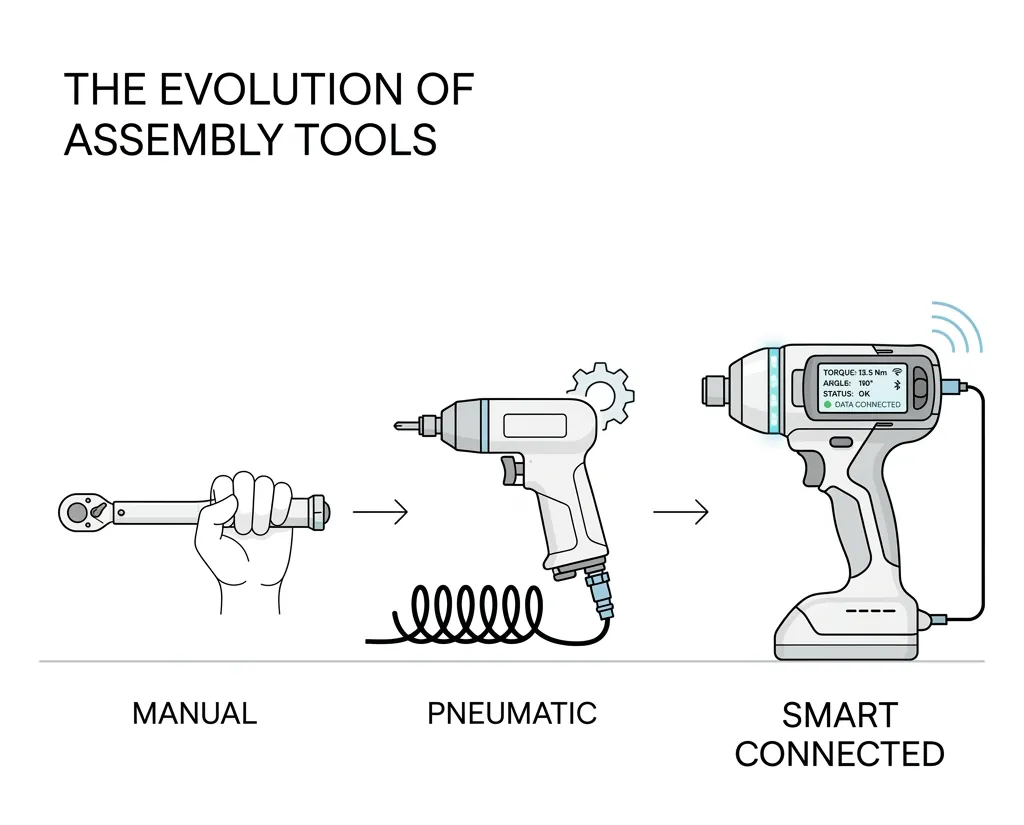
Automation and cobots are also playing a larger role in modern assembly. Collaborative robots can now handle the repetitive task of driving screws while working safely alongside human operators. This reduces worker fatigue and increases throughput. Furthermore, predictive maintenance algorithms now use tool performance data to alert maintenance teams before a tool fails, significantly reducing unplanned downtime.
Sustainability is another emerging priority. Modern electric tools are far more energy-efficient than traditional pneumatic tools, which suffer from significant energy losses in compressed air systems. By switching to DC electric tools, manufacturers can reduce their carbon footprint while simultaneously gaining better control over their processes. These smart tools are no longer just instruments; they are critical data nodes in the factory ecosystem.
Frequently Asked Questions
What is the difference between pneumatic and electric assembly tools?
Pneumatic tools use compressed air and are often cheaper and more rugged. However, they lack the precision and data capture capabilities of electric tools. Electric assembly tools use DC motors and transducers to provide exact torque control and traceability, which is necessary for modern quality standards.
What does ‘transducerized’ mean in assembly tooling?
A transducerized tool has an internal sensor that measures the actual torque and angle during the fastening process. This allows for real-time monitoring and high accuracy. Non-transducerized tools, like clutch-style screwdrivers, stop when a mechanical limit is reached but do not report the actual value achieved.
How often should I calibrate my assembly tools?
Calibration intervals depend on the tool type and the criticality of the application. Most manufacturers recommend calibration every 6 to 12 months, or after a specific number of cycles (e.g., 50,000 or 100,000 rundowns). Critical safety joints may require more frequent verification.
Can I use assembly tools for ESD-sensitive electronics?
Yes, many industrial assembly tools are available in ESD-safe versions. These tools use conductive materials and specialized grounding to prevent the buildup of static electricity, which could otherwise damage sensitive electronic components during the assembly process.
What is torque repeatability versus accuracy?
Accuracy is how close the tool gets to the actual target torque. Repeatability is the tool's ability to hit the same torque value consistently over many cycles. In a high-volume production environment, repeatability is often more important for maintaining process stability across thousands of units.
What are reaction arms and when are they needed?
Reaction arms are mechanical supports that absorb the torque reaction (kickback) from the tool. They are essential for protecting operators in high-torque applications or when performing repetitive tasks, as they prevent the force from being transferred to the worker's wrist and arm.
What is the difference between torque-only and torque-plus-angle control?
Torque control stops the tool when a specific force is reached. Torque-plus-angle control measures both the force and the degree of rotation. This dual-check system is superior for detecting joint defects like cross-threading or stripped fasteners that might otherwise pass a simple torque check.
How does rundown speed affect joint quality?
Fast rundown speeds can increase productivity but may cause torque overshoot due to inertia. Slower speeds at the final stage of the fastening cycle allow the controller to stop more accurately at the target torque. Modern smart tools use multi-stage speeds to balance productivity and precision.
What is traceability in the context of assembly?
Traceability is the ability to track every single fastener back to a specific tool, operator, and timestamp. Transducerized tools record the final torque and angle for every cycle, creating a digital birth certificate for each product that can be audited if a failure occurs in the field.
What causes torque drift in powered tools?
Torque drift can be caused by mechanical wear, temperature changes, or variations in air pressure for pneumatic tools. Regular calibration and the use of stable DC electric motors help minimize drift, ensuring that the tool continues to perform within its specified tolerances over time.