
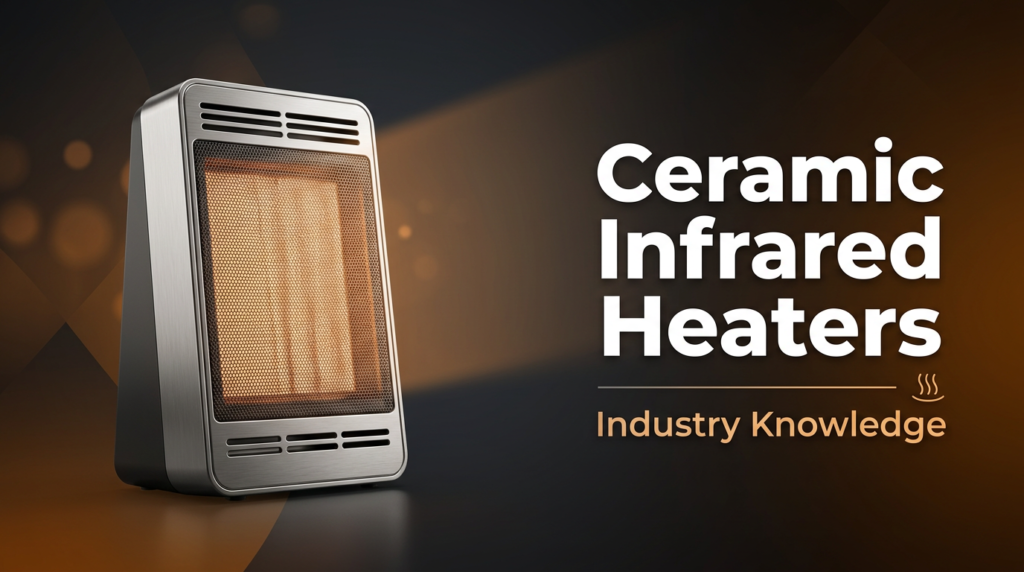
Welcome to our guide on ceramic long-wave infrared heating elements. This manual helps engineers and facility managers optimize process heating. Whether designing thermoforming lines or finding efficient heating technologies, this guide delivers essential component selection knowledge.
We explore principles, applications, and selection strategies. Discover how combining precision radiant heating with intelligent applications and advanced products significantly enhances production throughput and long-term energy efficiency in your manufacturing workflow.
What a Ceramic Infrared Heater Is
Core parts
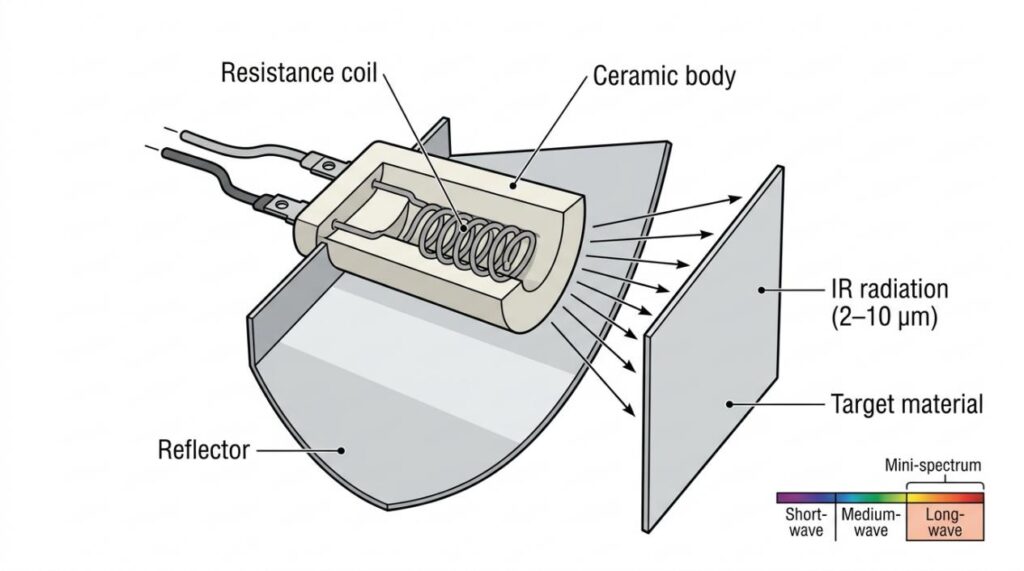
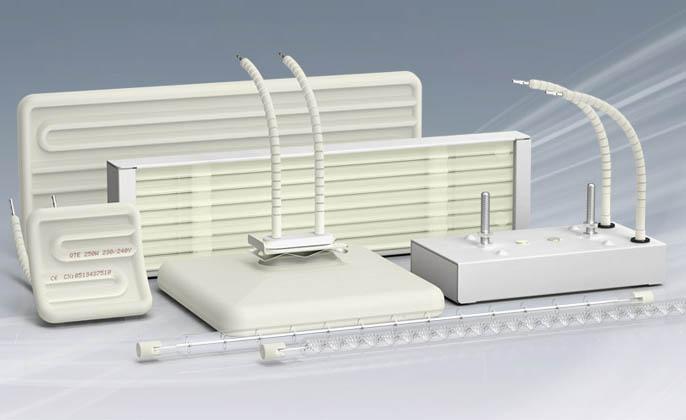
A ceramic heater features resistive heating alloy wire inside a thermally conductive ceramic body. This protects internal parts and acts as an efficient radiant emitter. Polished aluminum-clad steel reflectors are paired with emitters to prevent backward heat loss. Integrating a modular controller ensures precise regulation.
How infrared heating transfers energy
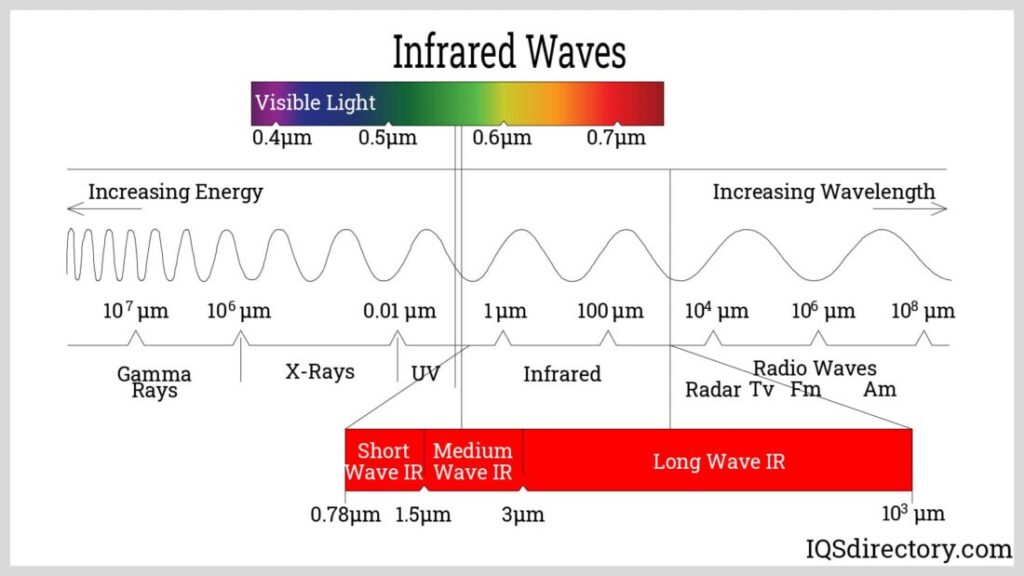
Ceramic radiant heaters transfer energy directly via electromagnetic waves. Objects absorb these waves, converting radiation into kinetic heat internally. These emitters produce 2 to 10 micron wavelength radiation, perfectly matching plastics and organics absorption. They operate from 300°C to 700°C, and occasionally up to 750°C. Proper control systems maintain temperatures safely.
Market Size (Context)
The global infrared heaters market is expanding rapidly due to demand for energy-efficient thermal processes. Industry reports value the 2025 market at US 6.11 Billion,forecastedtoreach us 10.7 Billion by 2034 with a 6.42% CAGR.
The specialized ceramic radiant infrared heaters segment grew to US1,046.9 Million by 2025 and is projected or each us 1,768.07 Million by 2033 (6.77% CAGR).
This table outlines the comparative scale between the general infrared market and the specific ceramic radiant segment.
| Market Category | 2025 Value | Future Forecast | CAGR |
| Global Infrared Heaters (Overall) | US$ 6.11 Billion | US$ 10.7 Billion (2034) | 6.42% |
| Ceramic Radiant Infrared Heaters | US$ 1.04 Billion | US$ 1.76 Billion (2033) | 6.77% |
Typical Applications
Ceramic long-wave emitters provide steady, penetrating heat. Their durability and specific wavelength emission make them vital for manufacturing lines. Our quality capability standards ensure reliable performance in diverse settings.
Thermoforming & Packaging
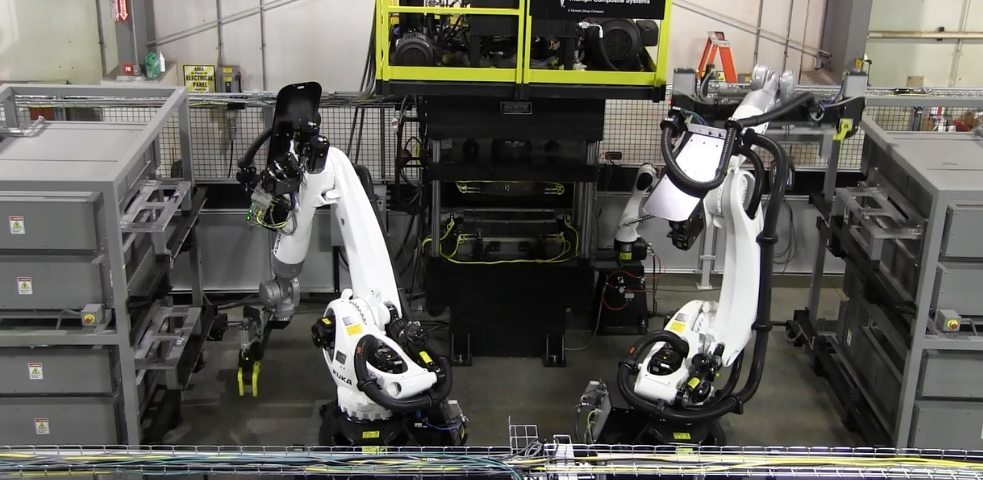
In thermoforming and packaging, plastics must be heated without surface scorching. The 2–10 micron wavelength of ceramic units aligns with plastic absorption peaks, ensuring deep, uniform softening.
Drying & Curing
Paint curing and ink drying need controllable energy to evaporate solvents quickly. Long-wave infrared drives moisture out from within the coating, preventing surface skinning for a durable finish.
Food Processing & Heating
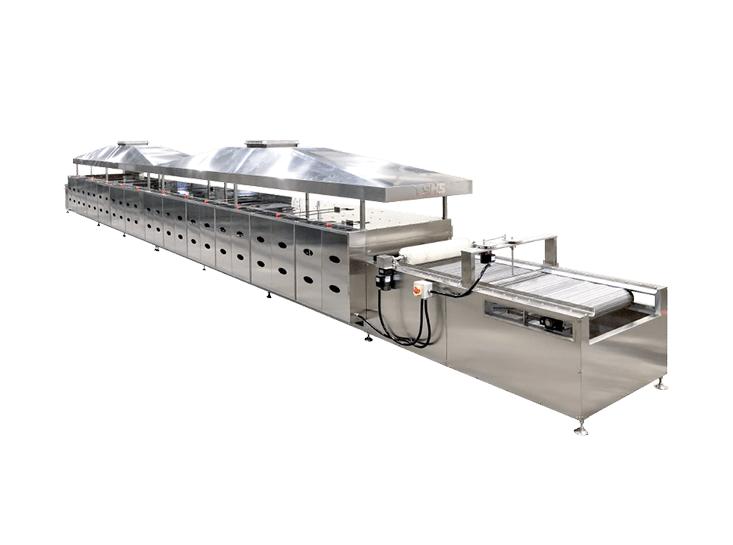
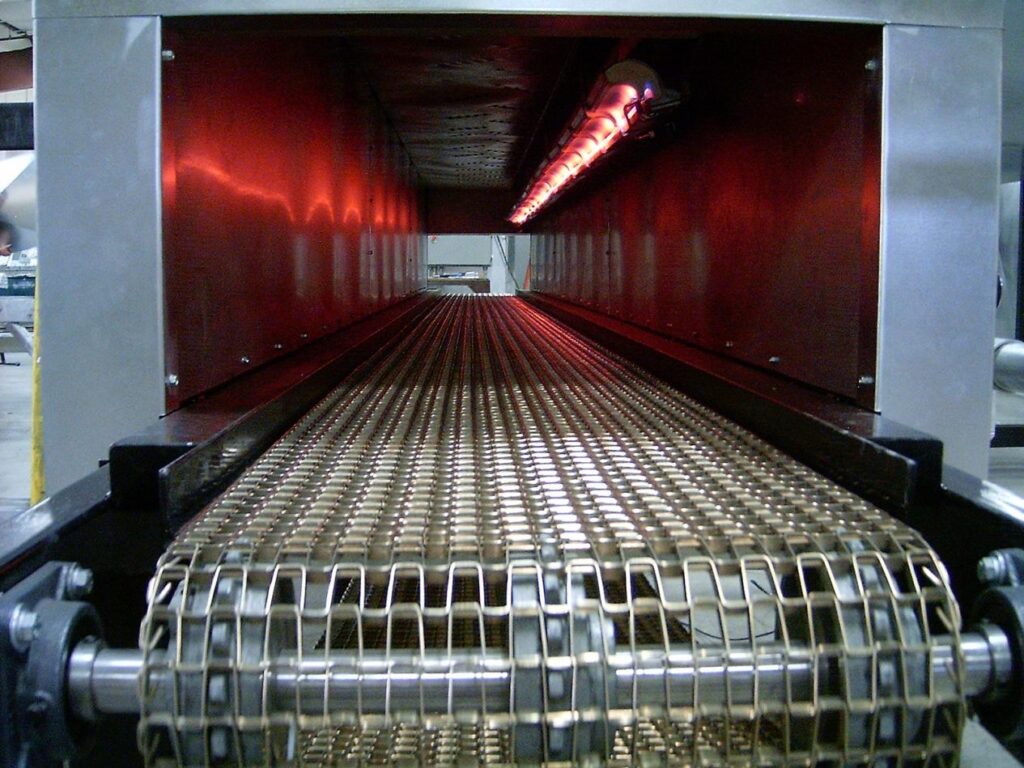
Food manufacturing uses IR for baking and warming. The hygienic solid ceramic bodies provide gentle, penetrating heat, ideal for commercial tunnel ovens and heated holding stations.
Industrial Process Heating
From curing composites to pre-heating automotive components, heavy-duty tasks demand resilient equipment. Learn about optimizing thermal processes by exploring our blog insights on integration.
Comparative Alternatives
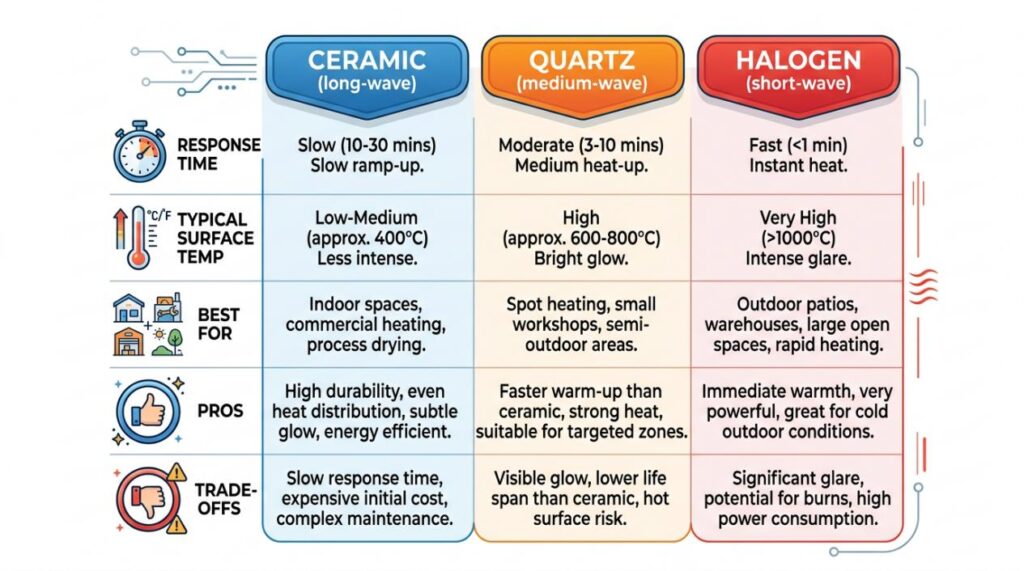
Quartz medium-wave heaters offer faster heat-up times for processes needing rapid thermal cycling. Halogen short-wave emitters deliver instant, high-temperature radiation, penetrating deeply but risking surface burning on sensitive organics. Convection heating relies on less efficient airflow.
Engineers must balance response time against spectral match and durability. Ceramic elements win on durability and plastic compatibility, whereas halogen and quartz offer superior speed and intensity.
| Technology | Response Time | Spectral Match | Durability | Typical Uses |
| Ceramic | Slow | Excellent for plastics | High | Thermoforming |
| Quartz | Medium | Good surface drying | Moderate | Paint drying |
| Halogen | Instant | Metals | Fragile | High-speed printing |
| Convection | Very Slow | N/A (Air) | High | Bulk warming |
How to Specify and Implement a Ceramic IR Heater
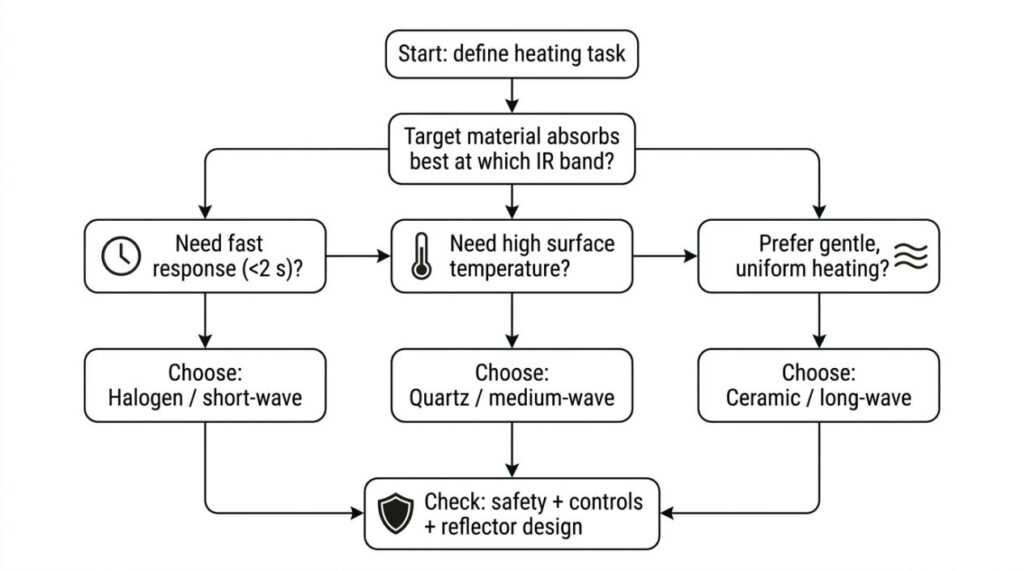
Designing an efficient radiant system requires a methodical approach. Follow these essential steps for optimal performance, longevity, and operator safety.
Step 1. Define target material and wavelength band. The chemical composition dictates absorption needs. Confirm a ceramic emitter's 2–10 micron output aligns with the material's peak absorption curve to maximize energy transfer efficiency.
Step 2. Size power density and heater layout. Calculate the required watt density per square inch. Design the array geometry to guarantee uniform, overlapping heat distribution across the target surface area.
Step 3. Select the proper reflector. Install polished aluminized steel reflectors behind the ceramic elements. This prevents wasted backward radiation, projecting maximum infrared energy forward.
Step 4. Choose controls and safety mechanisms. Integrate SSRs, PID controllers, and thermocouples to prevent overheating. Reliable temperature control is paramount for quality.
Step 5. Execute commissioning and maintenance. Slowly ramp up power during burn-in. Use thermal imaging for calibration. Clean reflectors regularly. For assistance, review our accessories catalog.
Competitor Landscape
The global market features a diverse ecosystem of manufacturers, integrators, and generalist brands. Understanding this competitive landscape helps procurement teams source the exact engineering expertise required.
| Market Segment | Representative Companies | Typical Focus |
| Industrial IR Element Manufacturers | Ceramicx, EUROLINIA, IBT | Core component production |
| System Integrators & Oven Suppliers | CCI Thermal Technologies, ISG | Custom oven design |
| General Infrared Heater Brands | FRICO, Hi-Watt Inc, Jaye | Broad catalog distribution |
Element Manufacturers focus on advanced materials science, offering custom shapes and embedded thermocouple precision. System Integrators provide turnkey engineering services, designing modular heating tunnels for massive production lines.
General Brands offer wide-ranging catalogs spanning multiple thermal technologies. They compete on broad availability and highly competitive pricing, catering to standard applications.
Key Trends
Process-Heat Electrification
Industrial decarbonization is driving the transition from fossil-fuel gas ovens to electrical infrared arrays. Electrifying process heat below 800°C is becoming the most cost-effective solution for modern manufacturing facilities.
Smarter Controls and Sensors
Integration of AI-driven PID control systems is revolutionizing thermal management. Embedded sensors provide real-time feedback, allowing controllers to dynamically adjust power, ensuring precision and reducing waste.
Better Spectral Matching
Engineers are increasingly focusing on spectral matching—aligning the emission wavelength of the ceramic body with the specific absorption signature of the target polymer to reduce thermal bounce-off.
Modular and Zoned Heating
Modern oven designs prioritize modularity with independently controlled heating zones. This allows manufacturers to apply varying heat intensities across different sections of a single complex part.
Frequently Asked Questions
Review common inquiries below or visit our comprehensive FAQ page for more detailed support on advanced thermal systems.
How does a ceramic heater differ from a quartz heater?
Ceramic heaters emit long-wave infrared, featuring slower response times but higher durability. Quartz heaters emit medium-wave infrared, heat rapidly for fast-cycling surface drying tasks, but are more fragile.
What does wavelength mean in infrared heating?
Wavelength determines how energy interacts with materials. Long wavelengths (2–10 microns) perfectly match plastics and water absorption, whereas short wavelengths penetrate deeper into certain dense, reflective materials like heavy metals.
How do I choose the correct watt density?
Calculate the total energy required to raise the product's temperature within your desired timeframe, then distribute that required wattage evenly across your entire heater footprint.
What materials absorb long-wave infrared best?
Organic materials, water-based coatings, and most polymers and plastics are excellent absorbers of long-wave radiation. This makes ceramic units the industry standard for thermoforming and plastic welding applications.
Can ceramic infrared heaters be used to heat metal?
While they can slowly warm metals, long-wave radiation is often highly reflected by shiny metallic surfaces. For efficient metal heating, short-wave halogen emitters or localized inductive heating technologies are better.
Are there safety concerns regarding IR exposure?
Industrial long-wave IR doesn't produce harmful UV or ionizing radiation. However, prolonged direct exposure to high-intensity thermal radiation can cause burns. Proper mechanical shielding, interlocks, and PPE are mandatory.
What is the expected lifetime of a ceramic emitter?
When operated within rated parameters and protected from mechanical impact or corrosive chemicals, high-quality industrial ceramic heating elements can exceed 10,000 continuous operating hours before requiring replacement or maintenance.
How do I troubleshoot uneven heating in my oven?
Uneven heating usually stems from failed elements, degraded reflectors, or improper zoning control. Use a thermal imaging camera to identify cold spots, inspect electrical continuity, and verify PID settings.