

Thermolator (Temperature Control Unit) Industry Guide & How‑To
A thermolator is an industry-standard term for a temperature control unit (TCU). These critical machines are utilized extensively throughout the plastics and injection molding industries to manage precise thermal conditions.
While originally a specific trademarked name, the term has become a widely accepted generic descriptor. This guide covers how these essential temperature regulation systems function, their primary operational mechanisms, and critical considerations for successful deployment in modern manufacturing environments.
Understanding the proper application and maintenance of these robust units ensures better part quality, optimal production cycles, and reduced overall machinery downtime. Readers will gain actionable insights on deploying TCUs effectively.
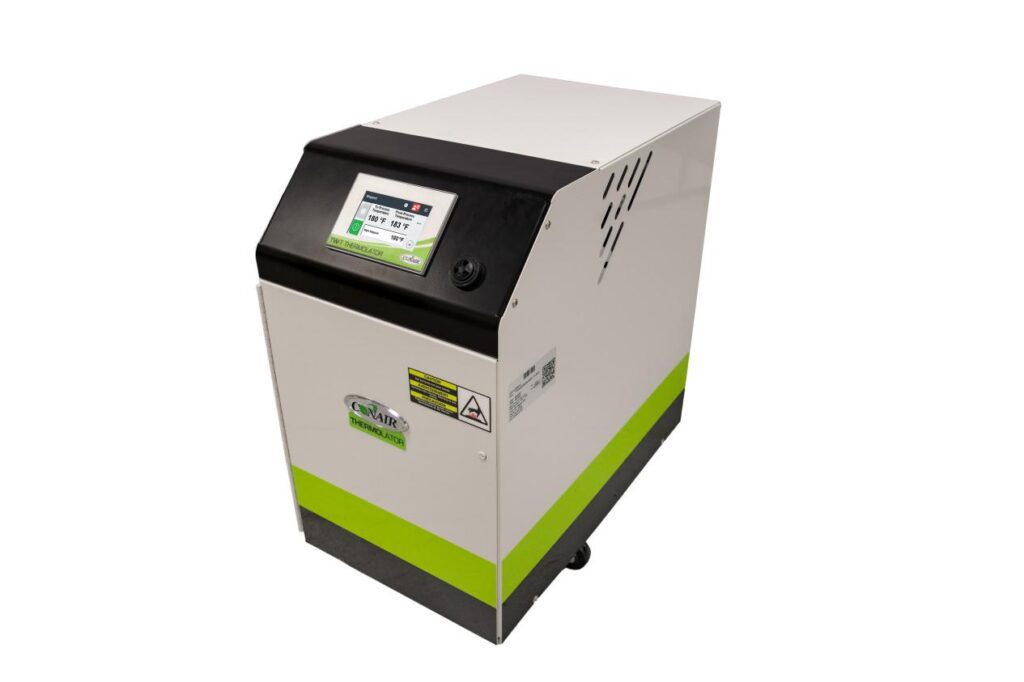
What a thermolator is (and what it is not)
The name Thermolator® is officially a registered trademark of Conair. Over the decades, however, professionals across the plastics sector began using the word generically. Today, it commonly refers to almost any circulating liquid temperature control unit designed for industrial manufacturing.
A thermolator strictly controls the temperature of a circulating fluid to heat or cool a process. It is distinctly different from a standard industrial chiller, which primarily removes heat using a refrigeration circuit to provide chilled water. A thermolator can both heat and cool its circulating medium.
Additionally, it should never be confused with a hot runner temperature controller, which utilizes electrical power to maintain precise temperatures at the nozzle tips. TCUs govern the main mold body cooling channels, complementing various applications without replacing electrical heating controllers.
How a thermolator works
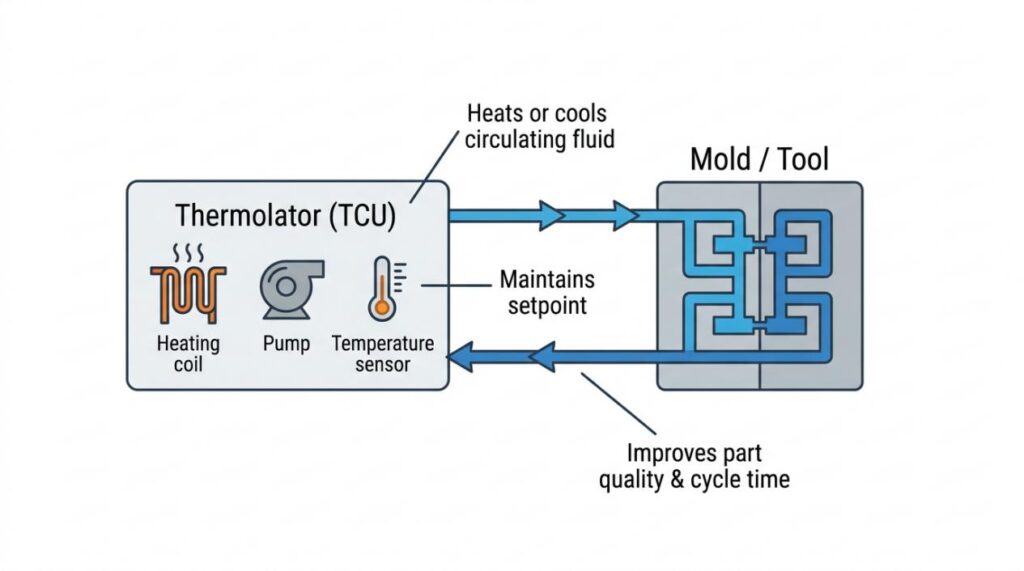
Core components
A thermolator operates via a closed or semi-closed circulating loop. Fluid is driven by an internal pump through a heating element or a cooling valve, then out to the process tool. It subsequently returns to the TCU to be re-measured and adjusted.
| Component | Primary Purpose |
| Centrifugal Pump | Drives the fluid through the mold to maintain necessary turbulent flow. |
| Immersion Heater | Adds thermal energy to the circulating medium to reach desired setpoints quickly. |
| Cooling Valve | Opens to introduce cold supply water or eject heat through a heat exchanger. |
| Microprocessor | Monitors sensor feedback and executes precise heating and cooling commands continuously. |
Heat transfer media
The heat transfer fluid is typically water, pressurized water, or synthetic thermal oil. Water is highly preferred due to its superior specific heat capacity and excellent heat transfer efficiency. It is also inexpensive, clean, and easily sourced in manufacturing plants.
When temperatures exceed the normal boiling point of water, systems rely on pressurized water or high-temperature thermal oils. These specialized media prevent boiling and vapor locks within the lines, ensuring that heat transfer remains stable even at demanding operational setpoints.
Control logic (PID basics)
Modern TCUs leverage Proportional-Integral-Derivative (PID) control logic. The controller constantly calculates the error between the desired setpoint and the actual return temperature. It then modulates the heater and cooling valves to eliminate fluctuations without severe overshooting.
Turbulent flow within the mold channels is an absolute necessity for this control logic to succeed. Laminar flow acts as an insulator, blocking efficient thermal transfer. By maintaining a high Reynolds number, the TCU can rapidly exchange heat with the metal mold.
Market size (and how to interpret it)
Tracking the exact market size for thermolators requires looking at the broader Temperature Control Unit sector. According to Fact.MR data, the global TCU market is steadily expanding, driven by increasing demands in automated plastics processing and advanced industrial manufacturing.
More specifically, the industrial mold temperature controller segment provides a clearer picture for plastics. Forecasts from IntelMarketResearch suggest consistent growth from a 2024 baseline through to 2032. This reflects continuous investment in precision molding technologies and factory automation upgrades globally.
It is vital to recognize that the term encompasses units used in chemical, food, and pharmaceutical industries alongside plastics. Therefore, adjacent market data is used as a reliable proxy. Growth rates highlight the critical nature of thermal stability across various modern industrial sectors.
| Source | Market Segment | Timeframe | Notes |
| Fact.MR | Global TCU Market | Ongoing Forecast | Covers broader industrial applications beyond plastics alone. |
| IntelMarketResearch | Mold Temperature Controllers | 2024 to 2032 | Directly correlates to injection molding equipment investments. |
Typical applications
Injection molding molds/tools
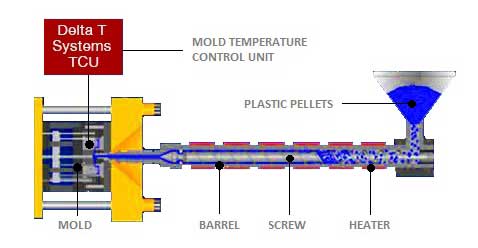
The most prominent application for a TCU is governing the thermal environment of injection molding tools. By circulating fluid through the steel mold halves, the unit ensures uniform cooling of the molten plastic. Consistency here dramatically reduces part warpage and internal stress, two of the most common injection molding defects.
Stable mold temperatures directly affect the final quality capability of the molded product. Furthermore, an optimized setpoint can significantly shorten cycle times, increasing the overall yield of the injection molding machine and boosting factory profitability.
Extrusion & downstream roll temperature control
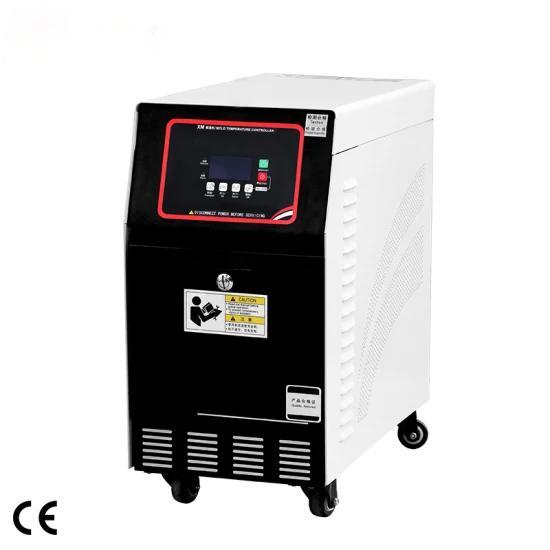
In plastic extrusion processes, maintaining precise temperatures on chill rolls and calendering equipment is critical. TCUs pump conditioned fluid through the internal baffles of these large rollers. This guarantees that extruded films or sheets cool evenly across their entire width.
If the roll temperature drifts, the extruded sheet may suffer from inconsistent thickness or poor optical clarity. A dedicated touch screen hot runner controller handles the melt, while the thermolator expertly manages the cooling rate of the formed product.
Die casting and other process heating/cooling
Beyond standard plastics, high-temperature TCUs are deployed heavily in metal die casting. Die casting tools endure extreme thermal shock, requiring specialized thermal oil TCUs to pre-heat the die steel before the first shot to prevent catastrophic cracking or rapid wear.
Other sectors, including chemical mixing vessels and pharmaceutical jacketing, utilize these fluid temperature controllers. The ability to switch seamlessly between adding heat and stripping heat away makes these units remarkably versatile for diverse industrial applications.
Comparative alternatives
Selecting the correct thermal management equipment requires understanding the distinct capabilities of various machines. Thermolators, process chillers, and basic cooling towers serve fundamentally different roles in a manufacturing plant. Misapplying these systems can lead to inefficient production or damaged tooling.
| System Type | Primary Function | Best Fit Scenario | Limitations |
| Thermolator (TCU) | Heats and cools a local circulating fluid loop. | Precise mold temperature control requiring both heating and cooling. | Cannot generate chilled water natively; requires an external cold water supply. |
| Process Chiller | Removes heat via a mechanical refrigeration circuit. | Applications demanding fluid temperatures strictly below ambient conditions. | Typically offers no heating capability; higher energy consumption. |
| Cooling Tower | Evaporative cooling for large-scale heat rejection. | Providing centralized cooling water to hydraulic systems and TCUs. | Temperatures are limited by ambient wet-bulb weather conditions. |
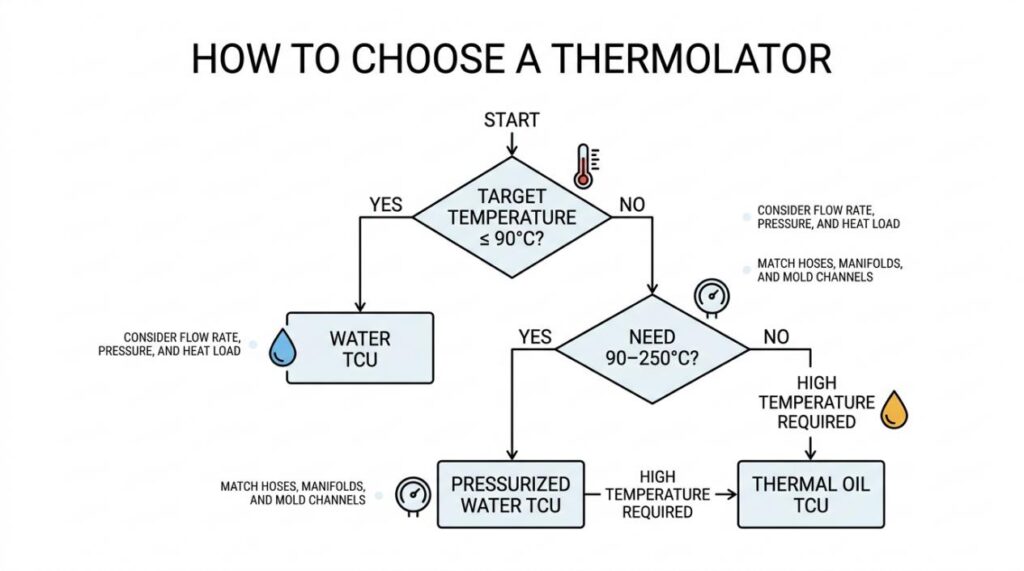
When a TCU is deemed necessary, operators must choose the correct circulating medium based on the required operational temperature. Industry standards dictate specific fluid limits to maintain facility safety and ensure adequate heat transfer efficiency.
| Media Type | Typical Max Temperature | Pros / Cons |
| Standard Water | Up to 90°C (194°F) | Excellent heat transfer and clean. Limited by atmospheric boiling point. |
| Pressurized Water | 90°C to 250°C | High heat transfer at high temps. Requires strict high-pressure safety maintenance. |
| Thermal Oil | Up to 350°C | Operates at low pressure safely. Oil degradation and slower heat transfer occur. |
Typical users and buyers
Process engineers are the primary technical users evaluating thermolator capabilities. They focus intensely on PID control accuracy, flow rate stability, and how rapidly the unit can recover the setpoint after an unexpected disruption. Their main goal is minimizing part rejection rates.
Maintenance personnel prioritize accessibility, simplified plumbing, and robust internal components. They prefer units with non-proprietary pumps, clear diagnostic alarm codes, and easily replaceable contactors. For this group, equipment downtime directly translates to severe operational headaches and extended maintenance shifts.
Procurement teams and factory managers look at the broader financial impact. They evaluate total cost of ownership, energy efficiency, and lead times. When upgrading a production line, buyers might contact suppliers to negotiate bulk pricing on multiple standardized units.
| User Role | Primary Evaluation Criteria |
| Process Engineer | Temperature stability, flow rate, advanced connectivity. |
| Maintenance Tech | Maintenance Tech Serviceability, clear alarm diagnostics, durable pumps. |
| Procurement | Initial cost, energy efficiency, vendor reliability. |
| OEM Integrator | Compact footprint, communication |
| protocol compatibility. |
Competitor landscape
The global market for temperature control units is diverse, featuring established legacy brands and specialized engineering firms. Manufacturers generally fall into three categories: standard branded plastics TCUs, premium high-precision mold temperature controllers, and custom high-temperature industrial systems.
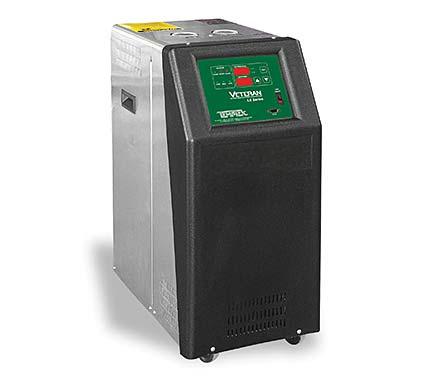
The Thermolator® brand by Conair remains a dominant force in North American plastics, recognized for rugged reliability. European manufacturers like Regloplas and HB-Therm command respect in the high-precision space, offering advanced flow monitoring and pressurized water technologies.
Other notable competitors include Mokon and Advantage Engineering, which provide broad portfolios spanning standard water units to high-temperature thermal oil systems. Competition centers heavily on warranty terms, pump durability, microprocessor interface capabilities, and the integration of Industry 4.0 connectivity.
| Company / Brand | Positioning & Notes | Typical Industries Served |
| Conair (Thermolator®) | Industry standard bearer, highly durable, broad support. | General plastics, injection molding, extrusion. |
| Regloplas | Premium Swiss engineering, advanced flow controls. | High-precision molding, die casting. |
| HB-Therm | High reliability, lifetime heater warranties often cited. | Medical plastics, automotive components. |
| Mokon / Advantage | Versatile lineups including high-temp oil systems. | Chemical, packaging, specialized plastics. |
Key trends
Modern TCUs are increasingly integrated into centralized factory networks. Industry 4.0 connectivity allows molding machines to read temperature and flow data directly from the thermolator via OPC-UA protocols. This digital handshake enables automated setup and precise historical data logging.
Energy efficiency is another major driver in equipment design. Variable frequency drive (VFD) pumps are becoming standard on premium units. Instead of running a pump at full speed constantly, the VFD adjusts motor speed to match exact pressure requirements, saving electricity.
Additionally, the shift towards engineering resins requires higher operational temperatures. Manufacturers are expanding their portfolios of pressurized water units capable of safely reaching 200°C. These systems demand advanced seal designs and automatic pressure relief systems to ensure workplace safety.
| Trend | Why It Matters |
| IoT & Connectivity | Enables remote monitoring, automated recipe loading, and less human error. |
| VFD Pumps | Drastically reduces energy consumption during partial-load cooling cycles. |
| Higher Temps | Allows processing of advanced, high-performance engineering plastics safely. |
How‑to: deploy and run a thermolator (practical checklist)
Sizing basics (flow, pressure, heat load)
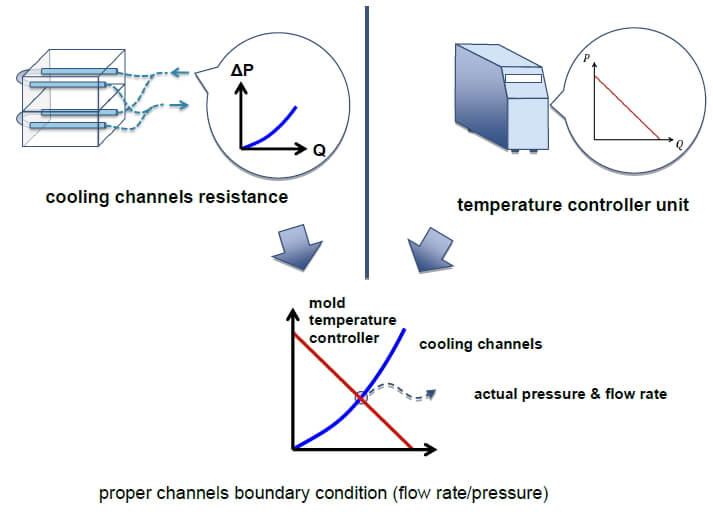
Proper deployment begins with accurate sizing. Calculate the required heat removal capacity by assessing the shot size, material type, and cycle time. The TCU pump must deliver adequate gallons per minute (GPM) to guarantee turbulent flow across all mold channels.
Plumbing & start-up
Connect the supply and return lines using appropriately rated hoses. Ensure the cooling water source is active and properly regulated. Power on the unit and engage the auto-venting sequence to purge trapped air from the internal loop and mold cavities.
Setpoint strategy
Enter the target temperature as specified by the resin manufacturer's data sheet. Allow the thermolator to pre-heat the tool entirely before initiating the first molding cycle. Rushing this step often results in brittle parts, cosmetic defects, or excessive internal stress.
Monitoring & maintenance
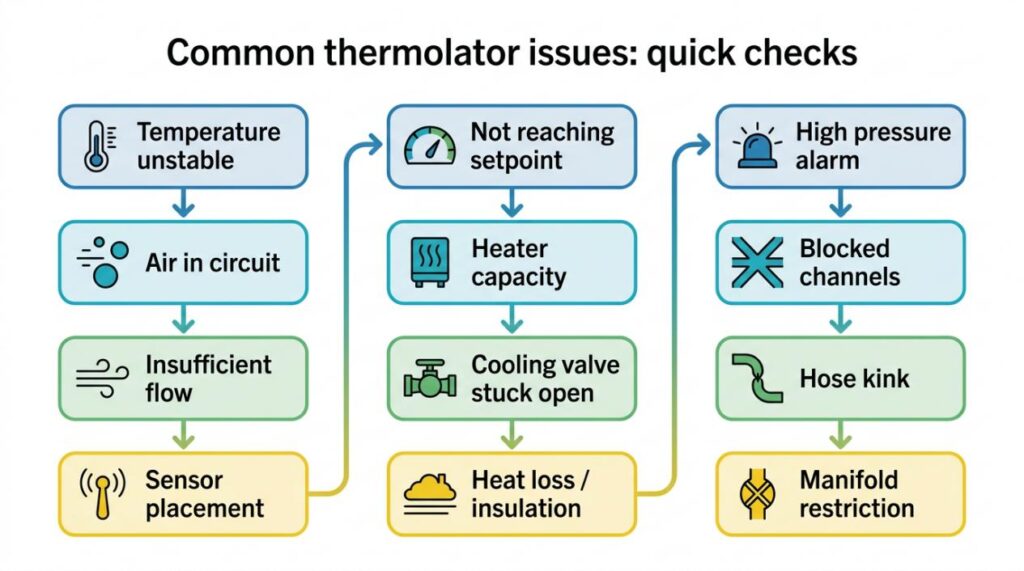
Regularly monitor the pressure gauges and flow meters during operation. A sudden drop in flow indicates a blocked channel or a failing pump seal. Schedule routine preventative maintenance to descale internal heaters and inspect cooling valves for mineral buildup.
Troubleshooting requires a methodical approach. If the unit fails to reach the setpoint, inspect the cooling valve for leaks bypassing water, or verify the heater contactor is pulling correct amperage. Proper maintenance dramatically extends the operational lifespan of the equipment.
Frequently Asked Questions
What is the exact definition of a thermolator?
It is a fluid-circulating temperature control unit designed to precisely heat and cool industrial processes. While Thermolator is a trademarked name, the industry uses the term generically for any unit maintaining stable fluid temperatures in a manufacturing tool.
How do I choose between water and thermal oil?
Water is utilized for applications up to 90°C due to its excellent heat transfer capabilities. Pressurized water can reach 250°C. Thermal oil is required when process temperatures exceed 250°C, as it operates safely without generating dangerous internal system pressures. For a step-by-step selection process, see our guide on how to choose temperature controllers.
Why does turbulent flow matter so much?
Turbulent flow forces fluid molecules to vigorously mix against the mold wall, maximizing heat transfer. If the flow becomes laminar, a stagnant boundary layer forms, acting as thermal insulation and preventing the TCU from effectively cooling or heating the mold.
Why is my mold temperature drifting away from the setpoint?
Temperature drift usually indicates a mechanical failure in the TCU. Common culprits include a stuck cooling valve constantly admitting cold water, a burnt-out heating element, or mineral scale buildup inside the mold channels restricting the necessary fluid circulation rate.
Is a thermolator the same thing as a chiller?
No. A chiller uses a refrigeration compressor to actively cool water below ambient temperatures. A thermolator uses internal heaters to warm fluid and relies on an external water source (often from a cooling tower) to remove excess process heat.
What are the typical operating temperature ranges?
Standard water units operate between 10°C and 90°C. Pressurized water units operate up to 250°C. Thermal oil units can push temperatures up to 350°C. The specific range chosen depends entirely on the plastic resin being processed in the machine.
What do high-pressure alarms typically mean?
A high-pressure alarm indicates a severe restriction in the circulating loop. This is most frequently caused by a closed manual valve, pinched hoses, or completely blocked cooling channels inside the mold tool that prevent fluid from returning to the pump.
How does a TCU affect injection molding cycle times?
By aggressively and uniformly removing heat from the molten plastic, a properly sized TCU allows the plastic part to solidify faster. Faster solidification means the mold can open sooner, directly shrinking the overall cycle time and increasing hourly production rates.
How does this differ from a hot runner controller?
A thermolator circulates liquid to regulate the massive steel mold body. In contrast, a hot runner controller manages electrical heaters built directly into the injection nozzles to keep the plastic molten. Both work together; consult the FAQ for electrical specifics.
What maintenance should be performed weekly?
Weekly maintenance should include checking the system pressure gauges, visually inspecting all hoses for leaks or fraying, and verifying that the internal Y-strainer is free of debris. Ensuring the external cooling water supply is clean prevents premature valve failure.
Explore related TOPOWER pages
To expand your factory's thermal management capabilities, start by exploring the Home page for a broad overview of advanced control solutions. From there, navigate to our Products section to discover precision equipment tailored to demanding manufacturing environments.
For specific nozzle heating needs, review our Modular Hot Runner Temperature Controller and the intuitive Touch Screen models. Operations requiring precise gating should investigate the Time Sequential series, while our Accessories page offers vital spare parts.
To understand our commitment to excellence, read the About section. You can also dive into industry insights on our Blog or reach out directly to our engineering team via the Contact portal to discuss customized system architecture.