

The Injection Molding News Most Shops Read and Nothing Changes
Every mold shop I have visited reads the same industry headlines. Energy prices, resin volatility, reshoring, automation, traceability. Everyone nods at the injection molding news of the week and almost nobody changes a quotation because of it. Six months later the same shop wonders why its margins moved.
The gap between reading injection molding news and acting on it is not laziness. It is that most reporting stops at the trend and never reaches the arithmetic. A headline saying automation is rising tells a toolroom nothing about whether to buy a robot arm or a second grinder.
This piece takes five shifts that keep appearing in injection molding news and translates each one into what it actually changes inside a plant. No forecasts to admire, just decisions and their consequences.
One framing note before the list. Injection molding news reaches a shop through three doors: the sales inbox, the trade press, and the customer's change request. The third door is the only one that already has money attached, and it is usually the last one anyone reads carefully.
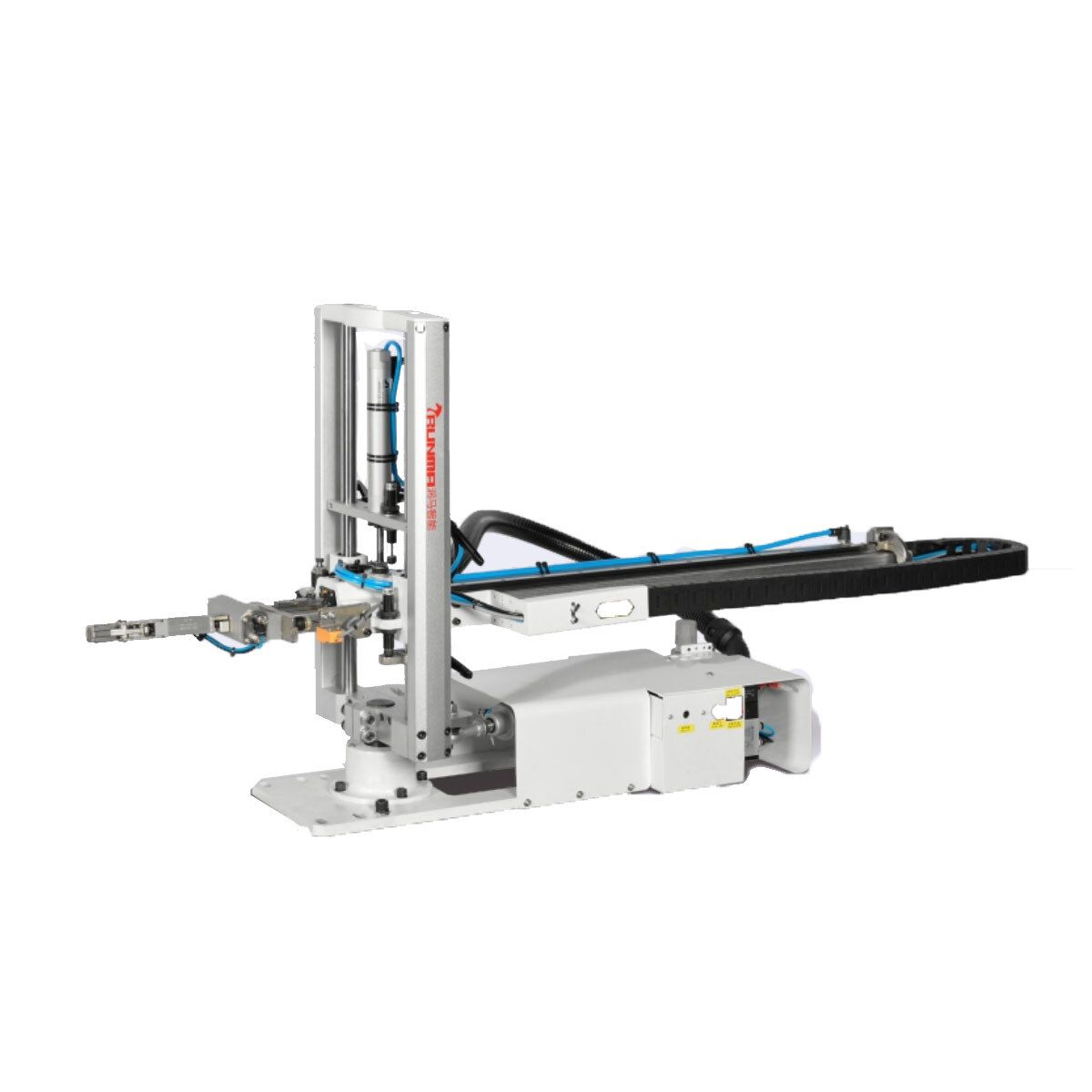
The same triage logic applies to any technical shift, which is why plants that treat industrial applications as a portfolio rather than a list tend to absorb change faster. Each application has one or two cost lines that matter. Injection molding news only bites when it touches those.
What Injection Molding News Actually Signals for a Mold Shop
Industry tracking puts the global injection mold market at roughly $35.7 billion for 2026, with automotive work absorbing about a quarter of all mold usage, according to published mold industry statistics. Those numbers are useful background and useless for a decision on their own.
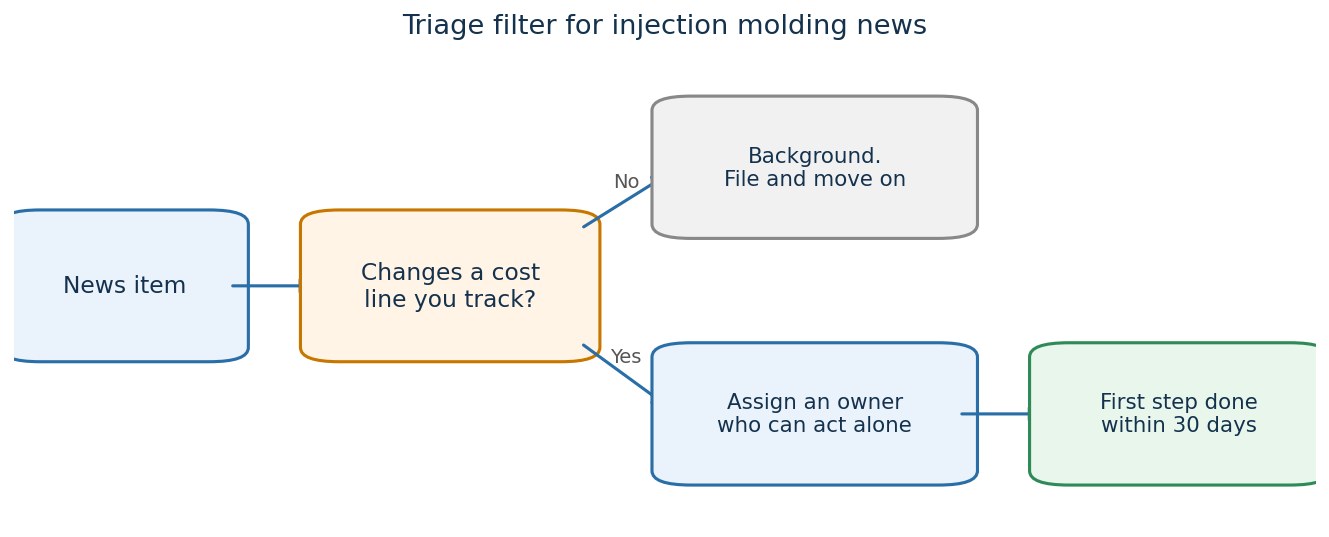
What makes a shift worth acting on is one property: it changes the cost of something you already buy. Energy changes the cost of running a press. Labour changes the cost of the toolroom. Resin changes the cost of a shot. A trend that does not touch a cost line is a conversation, not a signal.
That filter removes most of what passes for injection molding news. The five shifts below all survive it.
Applying the filter takes about a minute per item, and it is worth doing on a schedule rather than on impulse. Read the week's headlines once, mark the items that touch a cost line, and set the rest aside without guilt. A shop that does this for a quarter builds a short list of real signals and stops treating every announcement as an emergency.
The list below is the result of that filter applied over several quarters. Each shift arrives as a sentence in a newsletter and leaves as a specific number someone has to go and measure.
Shift one: energy moves from overhead to quoted line item
For decades electricity sat inside overhead and got absorbed. Buyers now ask for energy per part, and some of them ask for the number in the quotation. That changes two things at once.
A shop that cannot state its energy per part cannot answer the question, and the answer gets assumed on its behalf. Worse, the assumption usually comes from a competitor's figure.
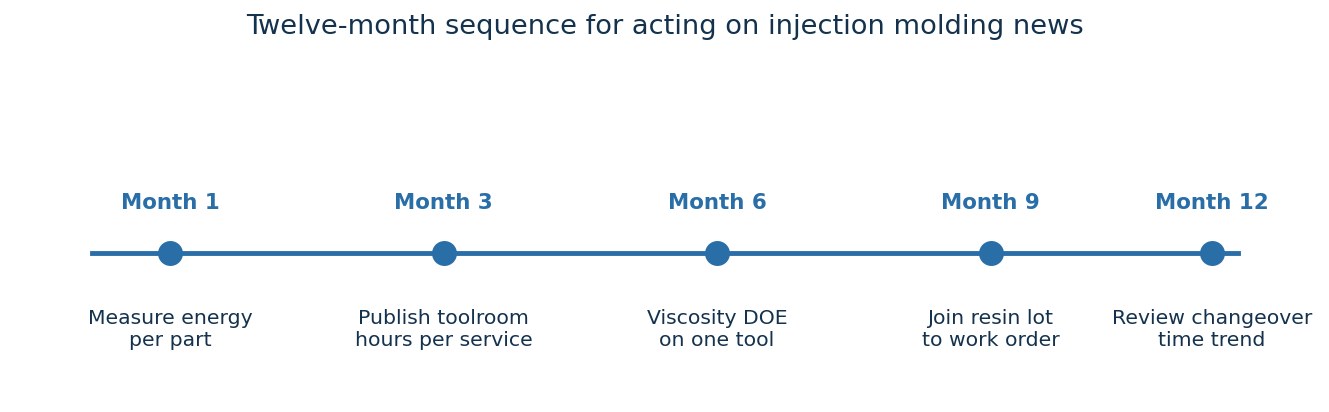
The practical response is unglamorous. Measure the actual draw on a representative tool, keep the number current, and treat all-electric versus hydraulic as a decision per job rather than per shop. Injection molding news rarely spells this out, but the arithmetic does.
Temperature control sits inside the same line. A press holding a tight barrel profile uses less energy per good part than one fighting an unstable process, and the difference shows up in the quotation whether or not anyone measured it. Shops that already run good hot runner temperature control usually discover their energy per part is already competitive once they bother to measure it.
Reading injection molding news about energy costs is easy. Producing a defensible number by Friday is the part that changes a margin.
Shift two: the toolroom, not the press, becomes the constraint
Press capacity has been easy to buy for years. Skilled mold maintenance has not. The shift shows up as a queue, and the queue shows up as lead time.
Shops that staffed the toolroom as a cost centre now find it setting the ceiling on revenue. A press running a marginal tool produces scrap that a healthy tool would not, and the toolroom that could have prevented it is booked out three weeks.
The response is to make toolroom output visible. Track hours per mold service, log what each intervention prevented, and schedule preventive work against press loading rather than against a calendar. Reading injection molding news about skills shortages does nothing; sizing the toolroom against booked press hours does.
Standardising hardware helps more than most managers expect. Common mold bases and inserts reduce the variety of spares a toolroom must stock and cut the time spent hunting for a matching component. Fewer part numbers means faster service, and faster service is the only version of toolroom capacity that shows up in lead time.
Shift three: reshoring moves deadlines, not volumes
Reshoring coverage in injection molding news implies a wave of work returning. The reality inside most plants is narrower. What moves first is not the volume, it is the timeline. Customers bring a tool back for a launch because a launch cannot tolerate a three-week ocean crossing.
That means complexity arrives before quantity. Short-run, high-mix work lands on a shop that is tooled for long runs, and the shop either adapts its changeover practice or loses money on every order.
Adapting means quick-change clamping, standardised mold heights, and toolroom capacity that can turn a repair inside a day. None of it requires new presses. All of it requires deciding that changeover time is a cost worth tracking.
Changeover time is also the cheapest number in the plant to improve, which is why it deserves attention before equipment spend. Time three changeovers with a stopwatch and the losses become obvious: waiting for a crane, hunting for the right clamping hardware, adjusting a mould height that was never standardised. None of those fixes require capital, and all of them shorten the lead time that reshoring customers are actually buying. Read injection molding news about returning work alongside your own changeover data, and the response usually stops looking like an equipment question.
The tooling portfolio should follow the same logic. A shop taking on short-run work benefits from reviewing its mold tooling against the new mix rather than reusing whatever was built for a long-run contract. Reshoring stories in injection molding news describe customer behaviour. The tooling response is a shop's own decision.
Shift four: recycled and bio-based resin enters production tooling
Recycled feedstock has moved from marketing samples to mainstream moulding, and the news angle usually covers supply. The plant-level consequence is different.
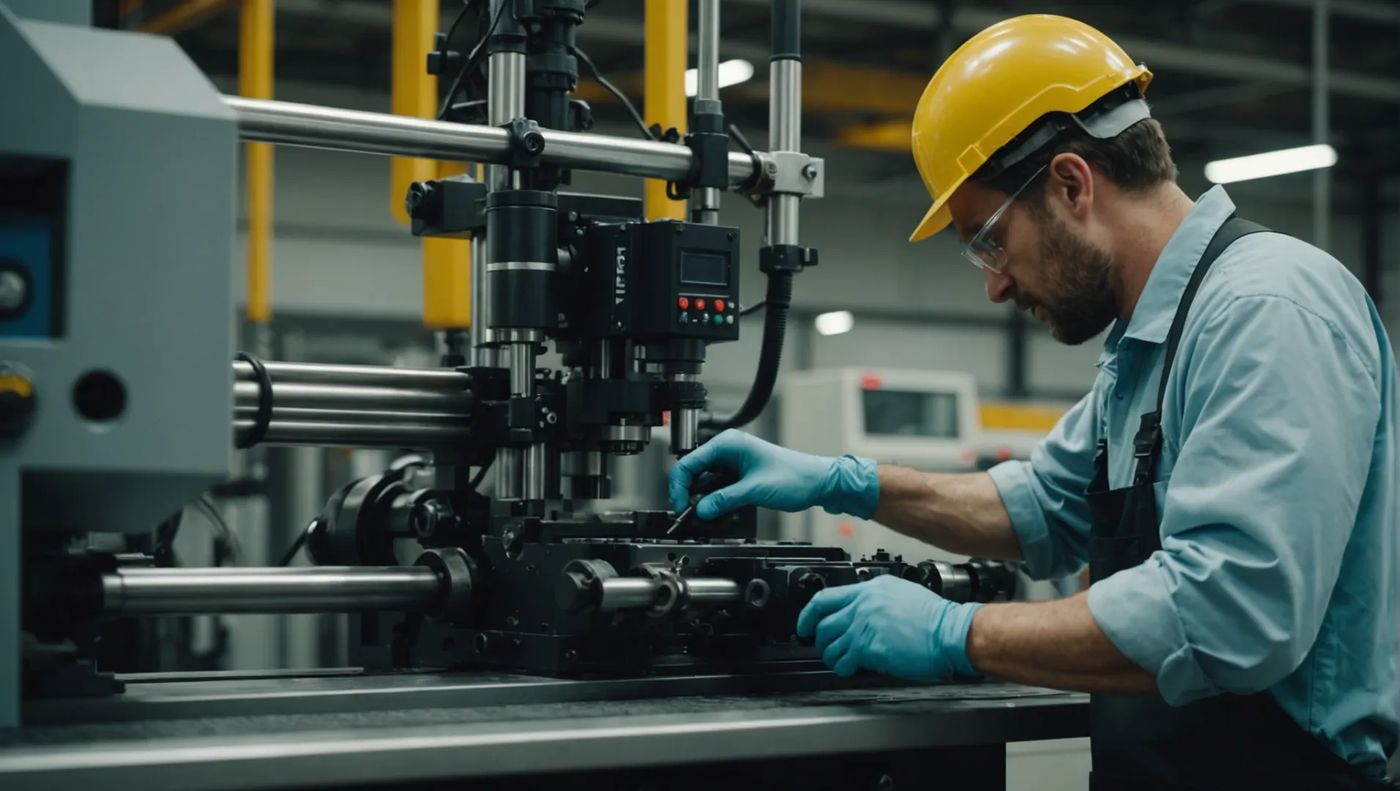
Recycled and bio-based grades vary more between lots than virgin resin. Varying melt viscosity shifts fill pressure, which shifts clamp force, which shifts the tolerance band. A tool qualified on virgin material may sit outside capability on a recycled lot without any change to the mould.
The response is to qualify the tool across the material range rather than at a single point. That means running a design-of-experiments window on viscosity and documenting the process corridor, not the single setting. Injection molding news tends to report the volume of recycled resin used. What a shop needs is the width of the process window that resin allows.
Temperature stability does most of the work here. A mould temperature controller holding the mould face within a degree removes one variable from a situation where viscosity is already moving. That does not make recycled resin easy, but it makes the process window measurable instead of theoretical.
Tooling condition matters just as much. A tool with worn alignment hardware widens the effective process window far beyond anything a material change causes, and the shop then blames the resin for a problem it built itself. The broader principles behind injection moulding practice cover tool condition before material selection for exactly this reason.
Shift five: traceability moves from automotive to everything
Full material traceability used to be an automotive and medical requirement. It now appears in consumer goods, packaging, and industrial components, usually because one customer's downstream obligation cascaded upstream.
For a molder, traceability is a data problem before it is a technology problem. Resin lot, machine, tool, shift, and process parameters need to be joinable for a part made eighteen months ago. Shops that cannot answer the question lose the order to a shop that can, and they usually lose it without knowing why.
The first step costs almost nothing. Attach a resin lot number to the work order and store the process sheet with it. Full digital traceability can follow later, and most of the injection molding news coverage that treats it as a technology purchase misses that sequencing.
The second step is deciding what a traceability question actually requires. Most customers want three facts: which resin lot, which tool, and which process window. Everything beyond that is a system decision, and systems cost money before they answer anything. Answer the three facts manually first and the software requirement becomes obvious.
Trends and What Each One Costs You
Five shifts, one column of consequences. Reading the table as a cost list makes the injection molding news cycle easier to filter.
| Shift | What actually changes | Cost or risk if ignored | First practical step |
|---|---|---|---|
| Energy as a quoted line | Buyers ask for energy per part | Margin assumed away by a competitor's figure | Measure draw on one representative tool |
| Toolroom as constraint | Lead time set by maintenance capacity | Press hours lost to marginal tooling | Track hours per mold service |
| Reshoring pushes deadlines | High-mix work arrives before volume | Long-run practices priced onto short-run orders | Measure and attack changeover time |
| Recycled resin in production | Wider lot-to-lot variation | Tool falls outside capability on a new lot | Qualify a process window, not a setting |
| Traceability broadens | Customer expects lot-level answerability | Orders lost without a stated reason | Attach resin lot to the work order |
Each row has the same shape. A shift appears in injection molding news as an industry movement, and it lands in a plant as a specific number that nobody was tracking.
Which Role Should Act on Which Shift
Shifts stall when everyone assumes someone else owns them, and that assumption is the most common reason a plant reads injection molding news for years without changing anything. The table below assigns each shift to the role that can act without waiting for a committee.
| Role | What they care about | Shift they should own | First move |
|---|---|---|---|
| Estimator | Quoting accuracy and win rate | Energy as a quoted line | Build an energy figure into the standard quote sheet |
| Toolroom lead | Tool availability and repair turnaround | Toolroom as constraint | Publish hours per service so capacity is visible |
| Production manager | OEE and changeover time | Reshoring deadlines | Time three changeovers and set a target |
| Process engineer | Process window and capability | Recycled resin variation | Run a viscosity DOE on the highest-risk tool |
| Quality manager | Complaints and audit readiness | Traceability | Join resin lot to work order this month |
| Owner or plant manager | Capital allocation | All five, in sequence | Pick one row and finish it before starting the next |
The last row matters most. Shops that try to act on all five shifts at once finish none of them, and the following year's injection molding news sounds identical because nothing changed underneath.
Frequently Asked Questions
How much of injection molding news is actually relevant to a small shop?
Roughly a fifth, judged by whether the item changes the cost of something you already buy. Energy, resin, labour and traceability qualify almost every time. Corporate acquisitions and capacity announcements rarely do.
Is automation worth it for a shop running under twenty presses?
Sometimes, and never as a general answer. A sprue picker pays back on cycle time and consistency on high-volume tools. A second grinder pays back on toolroom throughput across every job. Decide per constraint, not per trend.
What does reshoring actually change for a molder?
Deadlines more than volumes, at least in the first wave. Work returns because a launch cannot wait for shipping, which means short and complex runs arriving at shops optimised for long simple ones.
Can recycled resin run on an existing tool?
Usually yes, with a re-qualified process. The risk is not the mould, it is lot-to-lot variation in viscosity. Qualify across the material range and document the corridor rather than one set of settings.
Does every shift in injection molding news deserve a capital request?
No. Three of the five shifts above are addressed with process discipline and a spreadsheet rather than capital. Energy measurement, toolroom hour tracking and resin lot records cost time, not equipment, which is why they make sensible first moves.
What is the cheapest first step on traceability?
Attach the resin lot number to the work order and file the process sheet with it. That single link answers most customer questions and costs a few minutes per order.
How often should a shop revisit the same injection molding news themes?
Once a quarter is enough for themes, because the underlying cost lines move slowly. More frequent review turns into reading without acting, which is the failure mode this article set out to describe.
How should a shop decide which shift to act on first?
Pick the one attached to the largest cost line you can already measure. Energy and toolroom hours usually win because the numbers exist and the action is local.
Reading the News Without Chasing It
Injection molding news is useful in proportion to how specific you make it. A trend becomes actionable when it touches a cost line you track, lands on a role that can act, and has a first step small enough to finish this month.
Everything else is background, and there is a lot of background. The five shifts above have survived several news cycles because they change arithmetic rather than sentiment, and that is the only durability test worth applying to injection molding news.
Acting on them gets easier when the tooling underneath is stable. Tools that hold their process window absorb material variation, and presses that hold their temperature absorb energy questions with real numbers. That is the same discipline behind the hot runner system and mould temperature controller work we do, and the quality and capability documentation that goes with it. If a shift in the news needs a tooling answer, talk to our engineering team rather than waiting for the next cycle to confirm what you already read.
One habit makes the whole exercise sustainable. Keep a single page listing the cost lines you can measure and the owner for each. When a headline arrives, check it against that page. If it does not touch the page, it does not touch the business this month, and the injection molding news cycle can carry on without you.