
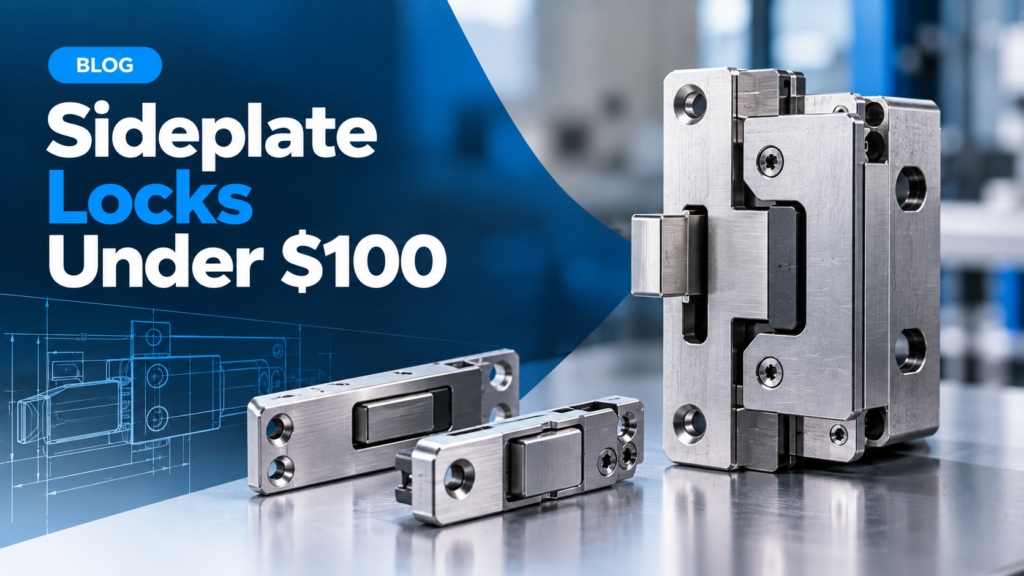
The Price Tag on Sideplate Locks Under $100
The global injection mold market reached $35.7 billion in 2026, and automotive work alone absorbs roughly a quarter of all mold usage. Every one of those tools carries alignment hardware that never appears on a customer drawing. Sideplate locks under $100 are the cheapest link in that chain, and they are the part most likely to decide whether a tool runs for a decade or comes back to the bench twice a year.
Catalogues rarely explain the difference. A budget latch and a tool-grade interlock look almost identical in a product photo. Both are hardened steel blocks with a tapered face. Both slide into a pocket machined into the plate.
Then the tool goes into a press and the difference shows up. Sideplate locks under $100 that were never lapped to a matched pair let the plates shift a few hundredths under clamp force. The shift wears the taper, the wear accelerates, and somewhere around the two million shot mark the alignment drifts far enough to flash the part.
This piece lays the three tiers side by side, works through what actually drives the price, and gives you a way to decide without guessing.
Scale puts the stakes in context. Industry tracking puts the global injection mold market at $35.7 billion for 2026, with mold industry statistics showing automotive accounting for about a quarter of all mold usage. Alignment hardware is a rounding error inside that number, and yet it decides how often each of those tools leaves the press. Sideplate locks under $100 are where that decision gets made.
What a Sideplate Lock Does Inside a Mold
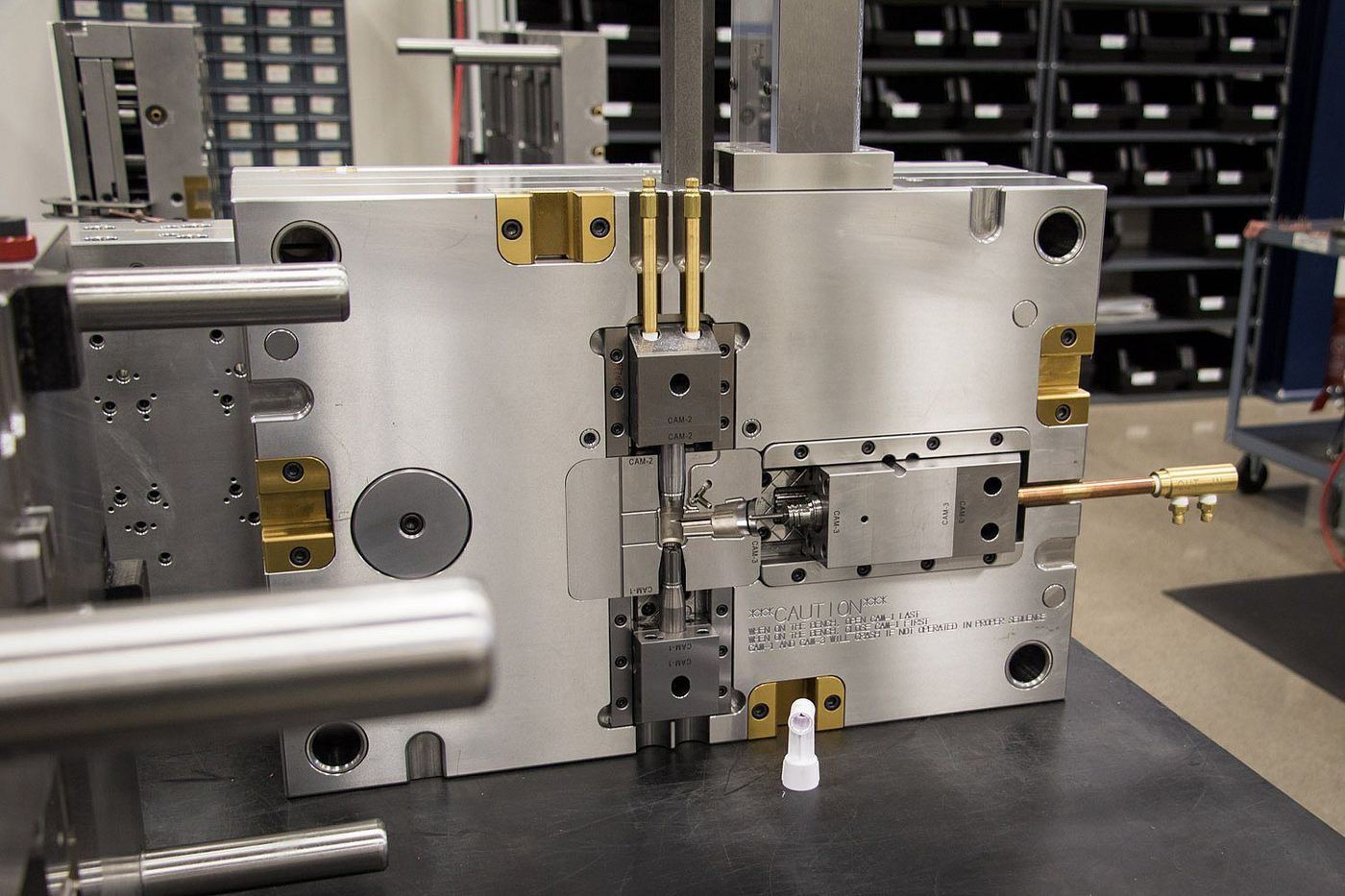
A sideplate lock, also sold as a side lock, interlock, or alignment lock, keeps two mold plates from moving sideways relative to each other. Clamp force presses the plates together. Injection pressure tries to push them apart and sideways. The lock resists that sideways load and pulls the halves back into alignment every cycle.
Its working surface is a matched taper. One half mounts in the cavity plate, the other in the core plate, and the two angled faces slide against each other as the tool closes. The taper converts a vertical closing motion into a horizontal correction.
Three numbers define how well it does that job. Hardness decides how long the taper resists wear. Taper angle decides how much correction force it develops. Fit between the mating pair decides how much slop remains when the tool is closed.
A shallow taper develops less sideways force per millimetre of closure, so the lock corrects alignment gently but needs a longer stroke to seat. A steeper taper corrects harder and wears faster. Most mold tooling ends up somewhere between ten and fifteen degrees, chosen as much by plate thickness as by alignment target. Sideplate locks under $100 rarely publish their angle, which is why so many installations are guesswork.
Get all three right and the lock is invisible. Get any one wrong and the symptom appears somewhere else entirely, usually as uneven flash along one side of the part that a molder blames on clamp tonnage.
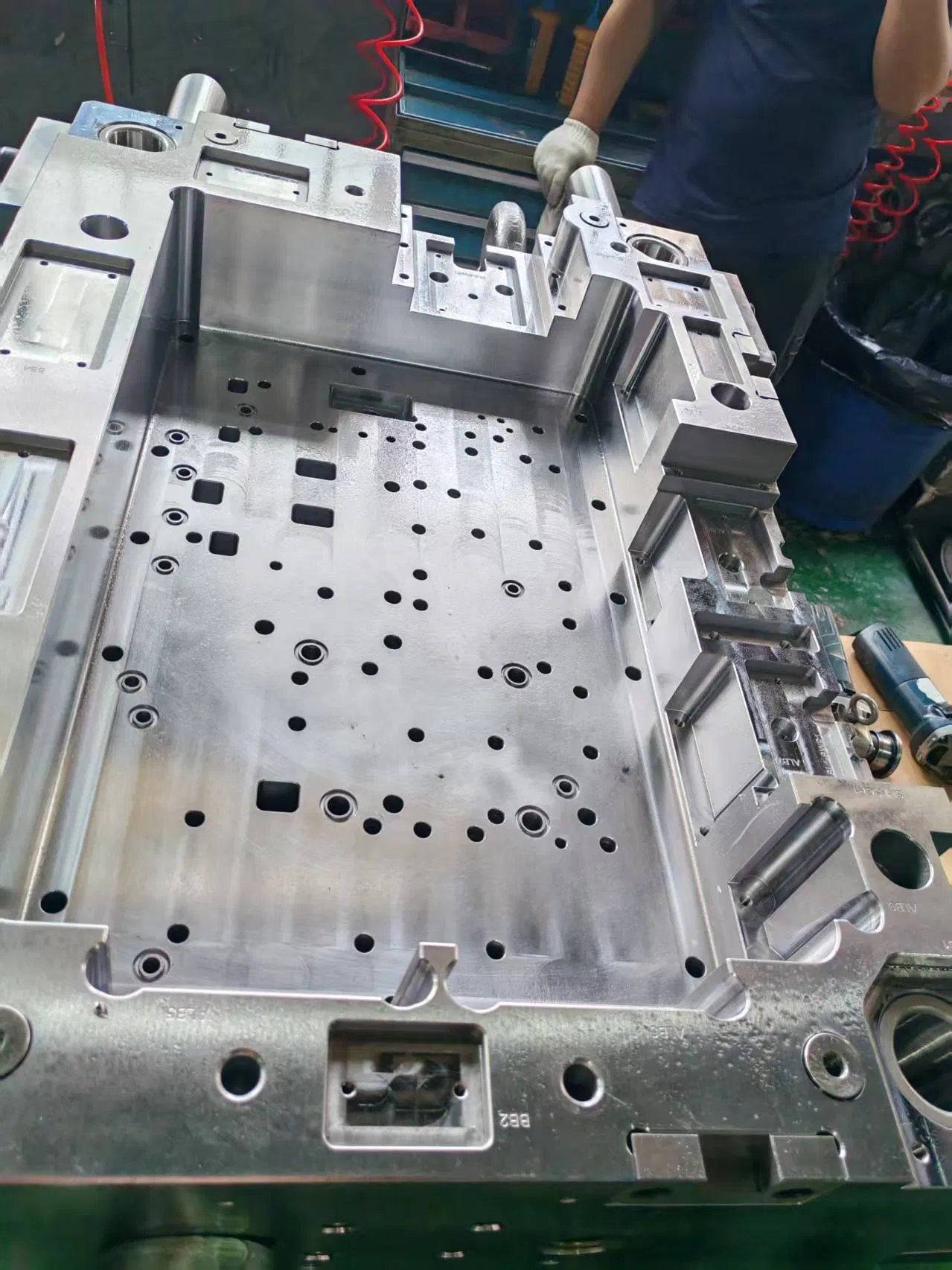
Three Tiers of Sideplate Locks, From Budget to Tool-Grade
The market splits into three bands, and the boundary is not arbitrary. Each band corresponds to a manufacturing route. Sideplate locks under $100 can come from any of the three, so price alone tells you very little about what you are buying.
Tier one: off-the-shelf budget latches
These arrive as a standard block with a ground taper, sold in fixed sizes from a catalogue. Hardness lands around HRC 30 to 45. Buyers get a working lock at a low unit price, often well below the hundred dollar mark once volume discounts apply.
What they do not get is a lapped pair. The block is ground to a nominal taper and paired with whatever comes out of the same batch. Two halves from different batches may not seat across their full face.
For a bridge tool that will be recycled in a year, that shortfall never becomes visible. Sideplate locks under $100 in this band do a job and then the tool is retired.
Tier two: hardened standard interlocks
The middle band uses through-hardened or case-hardened steel at HRC 52 to 60, ground on the taper and often supplied as a matched set. This is the range most production tools should start from. Surface finish on the taper is controlled, and the manufacturer publishes a tolerance band you can check against your pocket machining.
Sideplate locks under $100 land here when a shop buys in reasonable volume. The premium over tier one is small, and the alignment repeatability is a different order of magnitude. For most shops this is the sweet spot, and it pairs naturally with good mold bases and inserts selected to the same tolerance class.
Tier three: custom matched interlocks
The top band is built to the tool. Taper angle follows the plate geometry, the block is machined to fit a specific pocket, and the pair is lapped together and marked so the halves cannot be swapped. Prices climb well past the budget band once you include the matching work.
Most tools do not need this. High-cavity tools, tools with long cores, and tools running glass-filled resin do. Where a tool earns its cost back in a single shift, spending real money on sideplate locks under $100 is not a premium, it is insurance.
Where the Price Difference Comes From
Four cost drivers explain almost the whole spread, and none of them shows up in a product photograph of sideplate locks under $100.
Steel grade and heat treatment come first. A budget latch may use a general-purpose tool steel at moderate hardness. Tool-grade interlocks use steels that hold hardness after repeated impact, and the heat treatment is controlled rather than batch-run.
Grinding time comes second. A taper ground on a surface grinder to a loose tolerance takes minutes. One ground to a controlled angle with a checked surface finish takes considerably longer, and that labor is the single largest line in the cost of a good lock.
Matching comes third. Lapping a pair together, marking the halves, and verifying contact pattern is real work. It is also the step that removes the guesswork from installation.
Documentation comes last, and buyers underestimate it. A supplier who publishes hardness, taper angle tolerance, and recommended preload gives you something to inspect against. A supplier who publishes nothing leaves you to measure it yourself.
Published figures matter because interlock wear interacts with thermal control. Premature lock wear starts as a plate that runs a few degrees hot on one side, and a molder chasing the temperature fault never looks at the alignment hardware. A stable hot runner temperature controller removes one variable, and a documented interlock spec removes another.
Sticker Price vs Cost Per Million Shots
Unit price is the least useful number in this decision. What matters is the cost of the lock plus the cost of everything the lock causes. The table below puts the three tiers on that basis, using sideplate locks under $100 as the entry point for the comparison.
| Cost item | Tier one: budget latch | Tier two: hardened interlock | Tier three: custom matched |
|---|---|---|---|
| Unit price per pair | Low, often under $100 | Modest premium over tier one | Several times tier two |
| Hardness | HRC 30 to 45 | HRC 52 to 60 | HRC 52 to 60, verified per batch |
| Matched pairs | Not guaranteed | Usually matched | Always lapped and marked |
| Expected taper wear | Fast under high clamp force | Slow, predictable | Slowest, with known service interval |
| Replacement interval | Shortest | Multi-year on a normal tool | Longest |
| Downtime per replacement | Tool pulled, plates realigned, first article re-qualified | Same steps, less often | Same steps, least often |
| Scrap risk from drift | Highest, drift is gradual and easy to miss | Low when preload is set correctly | Lowest |
| Best fit | Prototype tools, low-volume work | Most production tools | High-cavity and engineered-resin tools |
Read the table as a risk profile rather than a price list. A budget latch on a prototype tool that will run fifty thousand shots is a sensible purchase. The same latch on a 32-cavity tool running glass-filled nylon is a scheduled failure.
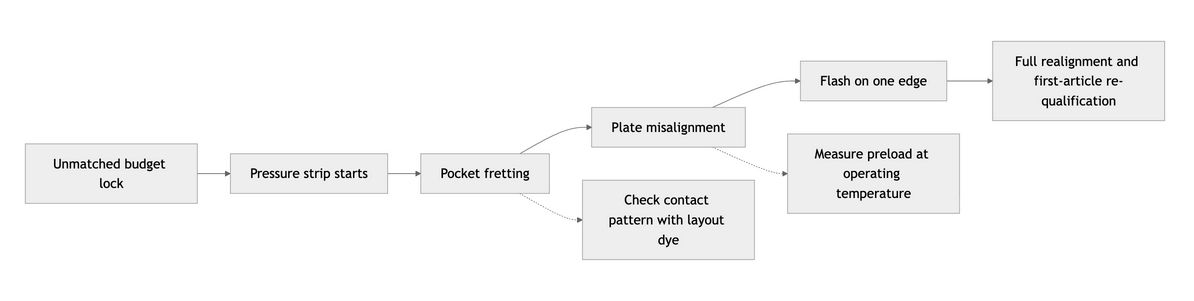
The downtime line deserves emphasis. Replacing a lock is not the expensive part. Realigning plates, re-cutting preload, and re-qualifying first article is, and that work repeats every time the lock wears out. Three replacements on a budget latch will exceed the price difference against a hardened set.
There is a second-order cost that never appears in a maintenance log. Gradual alignment drift produces flash along one edge of the part, and flash gets blamed on clamp tonnage, on gate size, or on the resin. Shops spend days tuning a process around a worn taper face.
Buyers who compare sideplate locks under $100 on unit price alone are comparing the cheapest line in a much longer ledger. The honest comparison is the full replacement cycle: component cost, labour, lost press time, and the scrap produced while the drift went unnoticed.
Interlock Styles Side by Side
Beyond price tiers, the style of interlock changes what the tool can do. Four common arrangements cover most molds, and the cheapest examples of sideplate locks under $100 usually arrive in only one of them.
| Style | Strengths | Limits | Best suited to |
|---|---|---|---|
| Square block interlock | Resists load in two axes, simple pocket, easy to inspect | Needs a deep pocket, adds plate thickness | General production molds |
| Round tapered interlock | Compact footprint, easy to ream the pocket | Correction force lower than a matched square face | Small and medium tools |
| Three-plate interlock | Aligns three plates across two parting lines | Installation tolerance stacks up | Stack molds and three-plate tools |
| Wear plate and guide pin set | Protects the plate surfaces, carries side load cheaply | Alignment accuracy lower than a true interlock | Tools with modest alignment demand |
Pairing matters more than style. A square interlock with a hardened wear plate under it survives far longer than the same interlock bearing directly on a soft plate. Sideplate locks under $100 bought without a wear plate often destroy the pocket they sit in, which turns a cheap component into an expensive repair.
Style choice also interacts with the defects a molder already fights. Misalignment shows up as uneven flow, flash, and dimensional scatter, all of which belong to the same family as common molding defects caused by tool condition. The published guide to mold interlocks is worth reading before you specify a style, because the geometry constrains which corrections are possible.
Choosing a Tier Without Guesswork
Four questions settle the choice for most tools.
Ask what resin the tool will run. Unfilled polypropylene and ABS rarely punish a lock. Glass-filled grades, mineral-filled grades, and anything with abrasive filler wear the taper quickly.
Ask how many cavities. Cavity count multiplies the consequence of drift, because a small shift moves every cavity off-centre at once.
Ask the expected tool life in shots. Prototype and bridge tools justify budget hardware. A tool expected to run millions of shots does not.
Ask who maintains the tool. Shops that pull molds on a schedule get more value from a cheap lock than shops that run to failure, because scheduled replacement removes the downtime penalty.
Answer those four and the tier usually picks itself. The pattern holds across resin types, press sizes, and moulding cultures, which is why experienced toolmakers rarely argue about sideplate locks under $100 in the abstract. They argue about the specific tool.
Scenario Picks by Tool Type
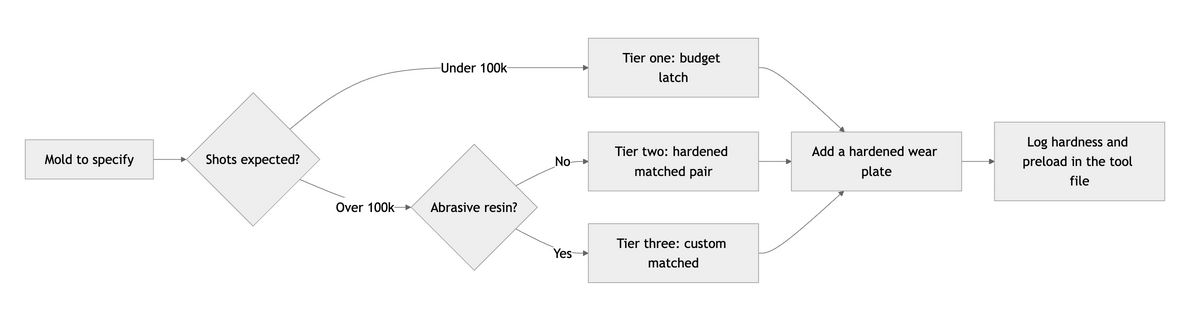
For a prototype or bridge tool running under a hundred thousand shots, buy tier one. Sideplate locks under $100 in this band do the job, and the tool will be retired before taper wear becomes the limiting factor. Spending more here buys nothing you will live long enough to use.
For a standard production tool in the four to sixteen cavity range, buy tier two and buy it matched. Insist on published hardness and a taper tolerance. This is the band where the price difference against tier one disappears inside a single avoided repair. Most buyers settle on sideplate locks under $100 in this range and never revisit the decision.
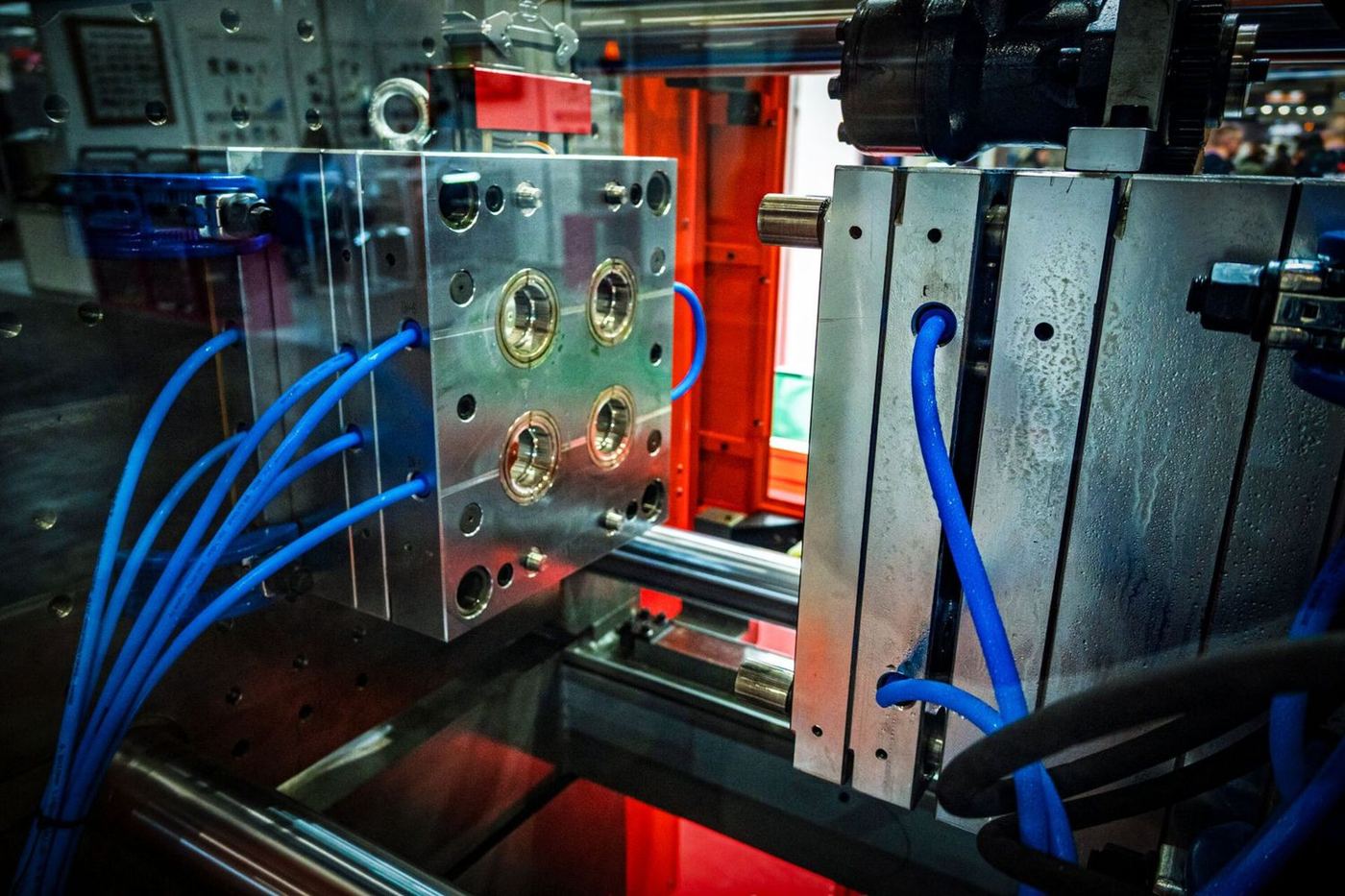
For high-cavity tools, long-core tools, and anything running engineered resin, go tier three. Custom matched interlocks with a documented service interval cost more up front and remove an entire category of unplanned stoppage.
One scenario deserves its own note. Tools running glass-filled resin punish cheap hardware twice, because abrasive filler wears the taper and the wear raises friction at the same time. In that case the mould temperature controller setting matters less than the interlock material, because no temperature correction can fix a plate that has already shifted.
Frequently Asked Questions
Are sideplate locks under $100 good enough for a production mold?
Often yes, provided they sit in the hardened band. Price alone does not identify quality, so the useful test is published hardness and whether the pair is matched. Sideplate locks under $100 that arrive as a matched HRC 54 set outperform a fifty dollar unmatched block every time.
How do I tell a budget latch from a tool-grade interlock?
Measure hardness on the taper face and check the contact pattern with layout dye. A matched pair shows even contact across the full face. An unmatched pair shows contact only at the leading edge, which is where wear starts.
How much preload should an interlock carry?
Enough to seat the taper fully at operating temperature without bottoming the pocket. Follow the supplier figure where one exists, since most vendors of sideplate locks under $100 publish a preload target with the datasheet. Where none exists, verify by closing the tool and checking that the halves contact across the face, then confirm the plates are not being jacked apart.
Can I machine the pocket myself and buy the lock separately?
Yes, and it is common practice. Success depends on matching your pocket tolerance to the published tolerance of the lock. Buying sideplate locks under $100 as a matched pair removes one variable, because the mating geometry is already correct when the blocks arrive.
Should I add wear plates at the same time?
On any tool expected to run high volume, yes. A hardened wear plate spreads side load and protects the plate pocket. Without one, a failed lock takes the pocket with it, and repairing a pocket costs far more than the plate would have.
How often should interlocks be inspected?
Tie inspection to your mold maintenance schedule rather than to a shot count. Measure the taper face for wear, check contact pattern, and look for fretting marks on the pocket. Catching a worn taper early converts a rebuild into a component swap.
Do sideplate locks under $100 work in a hot runner tool?
Yes, with one caveat. A hot runner manifold adds thermal mass near the plates, and uneven plate temperature changes the clearance the interlock sees in service. Specify the lock for the temperature it will actually reach rather than for room temperature, and verify preload once the tool is at operating heat.
What Sideplate Locks Under $100 Really Cost You
Cheap alignment hardware is not a mistake on every tool. It is a mistake when the tool's duty cycle makes wear the limiting factor. Match the tier to the job and the arithmetic works out.
Three practical rules cover most decisions. Insist on a published hardness figure so you can inspect what you bought. Buy matched pairs whenever the tool will see serious volume. Add wear plates so a worn lock never damages the plate. None of these rules asks you to avoid sideplate locks under $100; they ask you to know which ones you are buying.
Do that and sideplate locks under $100 become a controlled consumable rather than a recurring surprise. Skip it and the cheapest component in the tool quietly sets the reliability ceiling for everything around it.
The failure sequence is predictable, and it is worth writing into your maintenance procedure. Pressure strip first, then pocket fretting, then plate misalignment, then part flash, and finally a full realignment that takes the press down for a day.
Building a tool where alignment hardware has to hold for millions of shots? Our engineering team sizes interlocks together with the hot runner system and the plate stack, so the quality and capability of the whole assembly is documented before steel is cut. Talk to us before the design freeze.