
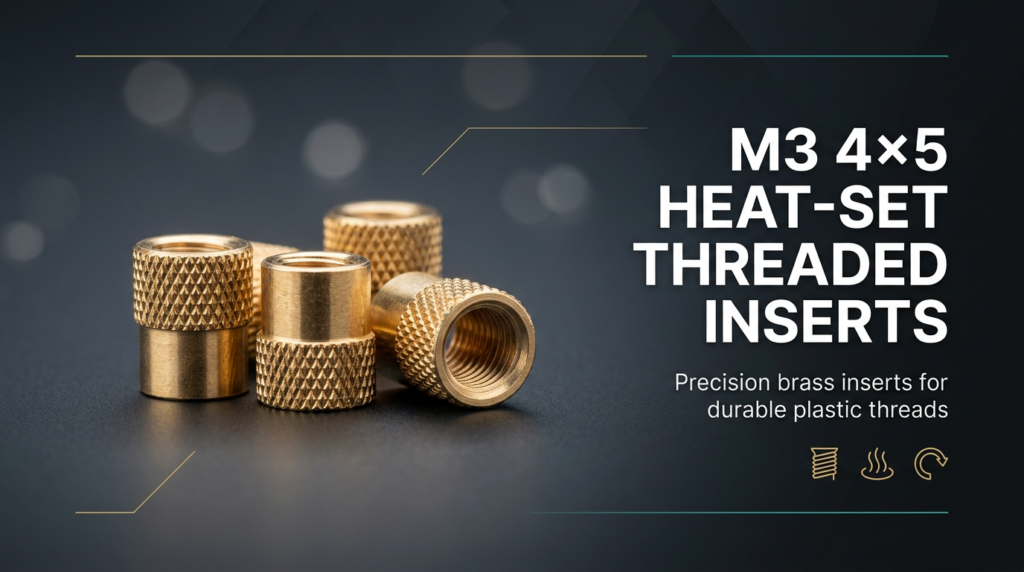
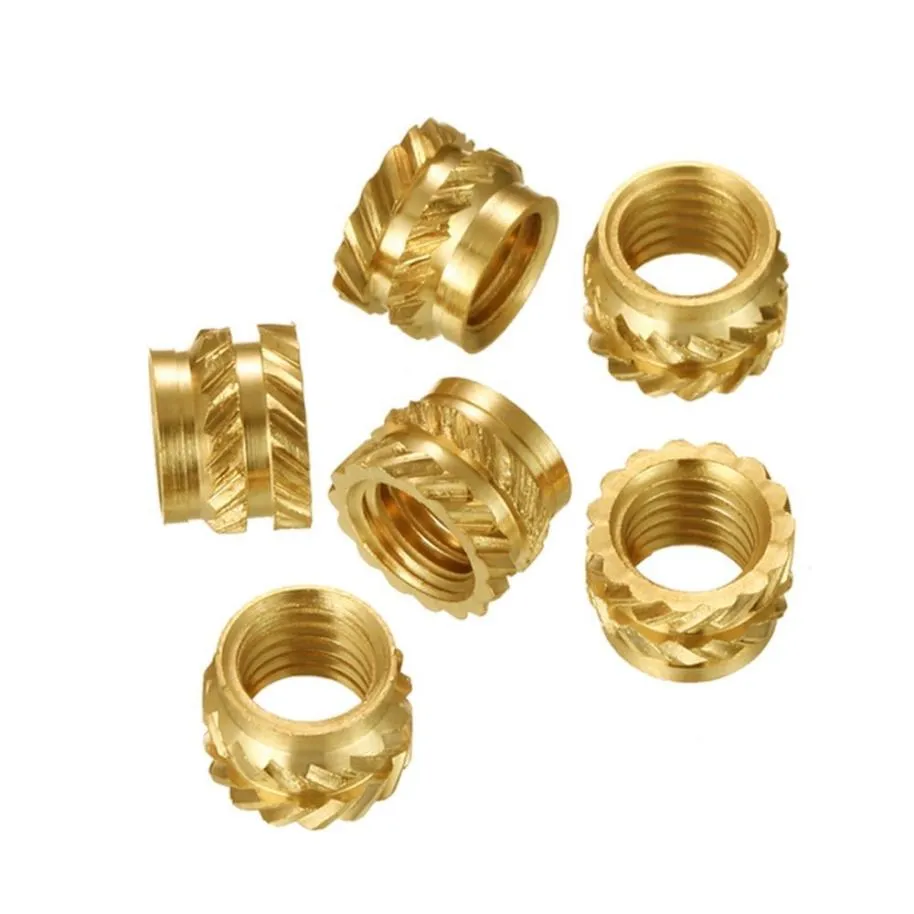
Heat-set threaded inserts are highly specialized metallic fasteners equipped with strategically engineered external knurling patterns. They are meticulously designed for permanent and robust installation into a wide variety of thermoplastic components.
By applying highly controlled thermal energy combined with gentle downward pressure, the surrounding polymer matrix temporarily liquefies. This molten plastic flows seamlessly into the intricate knurled channels, completely encapsulating the insert.
Once the surrounding material cools and solidifies, the resulting threaded connection achieves exceptional pull-out resistance and superior torque retention. This comprehensive engineering guide details the precise installation workflow and exploring vital industry applications.
Furthermore, we provide an extensive comparative analysis of alternative fastening methods and address frequently asked manufacturing questions. The primary objective is to empower design engineers with the essential technical knowledge required to entirely eliminate common assembly failures and significantly elevate overall production yield rates across all modern manufacturing environments.
Quick Overview and Dimensional Specifications
The engineering designation "M3 4×5" precisely indicates an internal metric thread size of M3, combined with a nominal outer diameter of 4 millimeters and a total overall length of 5 millimeters. This standardized dimensional format serves as the fundamental baseline for all mechanical designers creating bespoke injection-molded enclosures or structural 3D-printed plastic components.
However, it is critical to recognize that highly specific structural details, such as the presence of an upper flange geometry or the exact angle of the lower taper, can vary significantly across different commercial fastener suppliers.
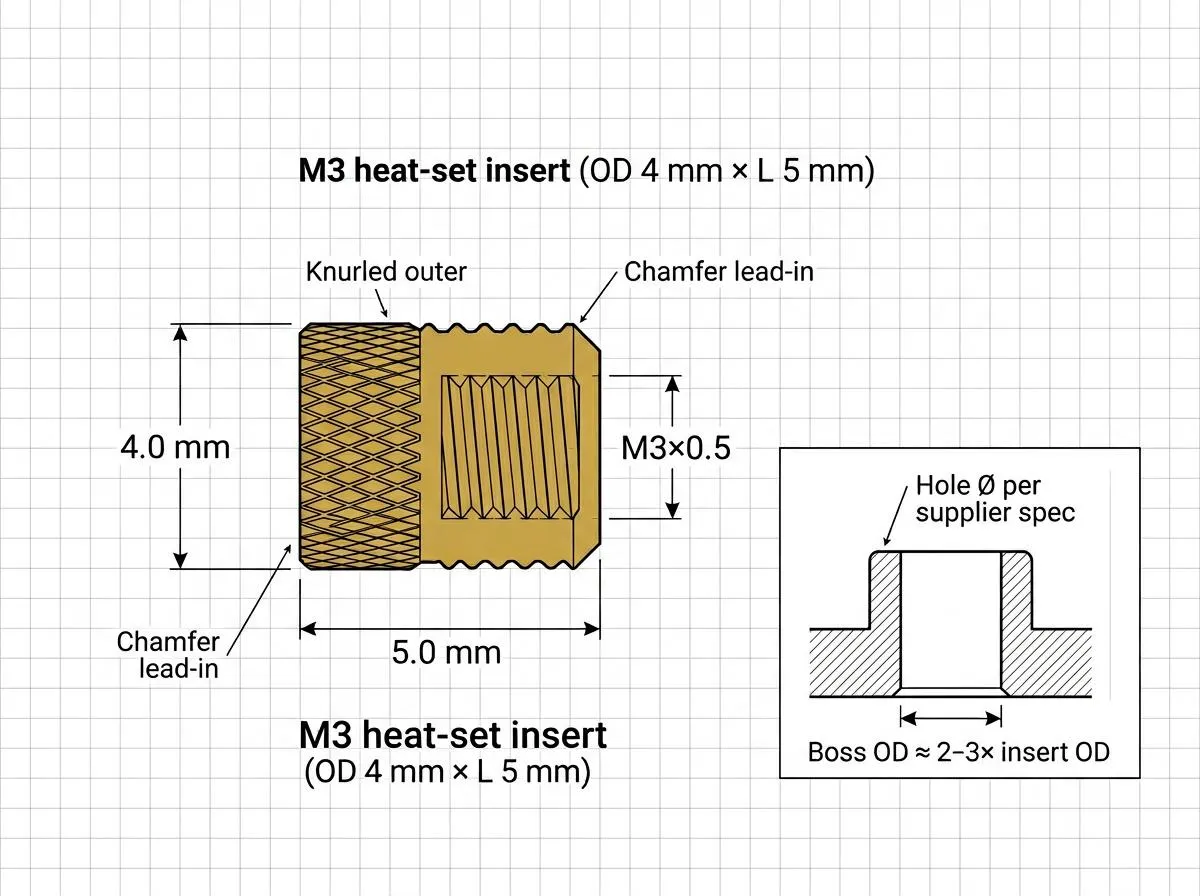
When establishing the final pilot hole dimensions within your CAD software, it is absolutely essential to reference the exact mechanical drawing provided by your explicitly chosen hardware supplier. Relying on generic specifications or rough approximations invariably leads to insufficient plastic displacement or excessive radial stress, which frequently causes catastrophic boss cracking.
The external knurling pattern, which typically features opposed diagonal ridges or highly complex diamond-shaped grids, is meticulously designed to independently maximize mechanical interlocking forces. Once the molten polymer thoroughly penetrates these minute cavities and fully crystallizes, the embedded fastener provides genuinely superior resistance against both extreme axial pull-out forces and intense rotational torque.
Additionally, the slightly tapered, non-threaded lead-in section located at the bottom extremity guarantees precise vertical alignment during the incredibly sensitive initial seating phase. The precision-machined internal M3 threads guarantee smooth, reliable, and consistent engagement for all matching screws and mating mechanical components throughout the product's entire operational lifecycle.
Standard Installation Workflow
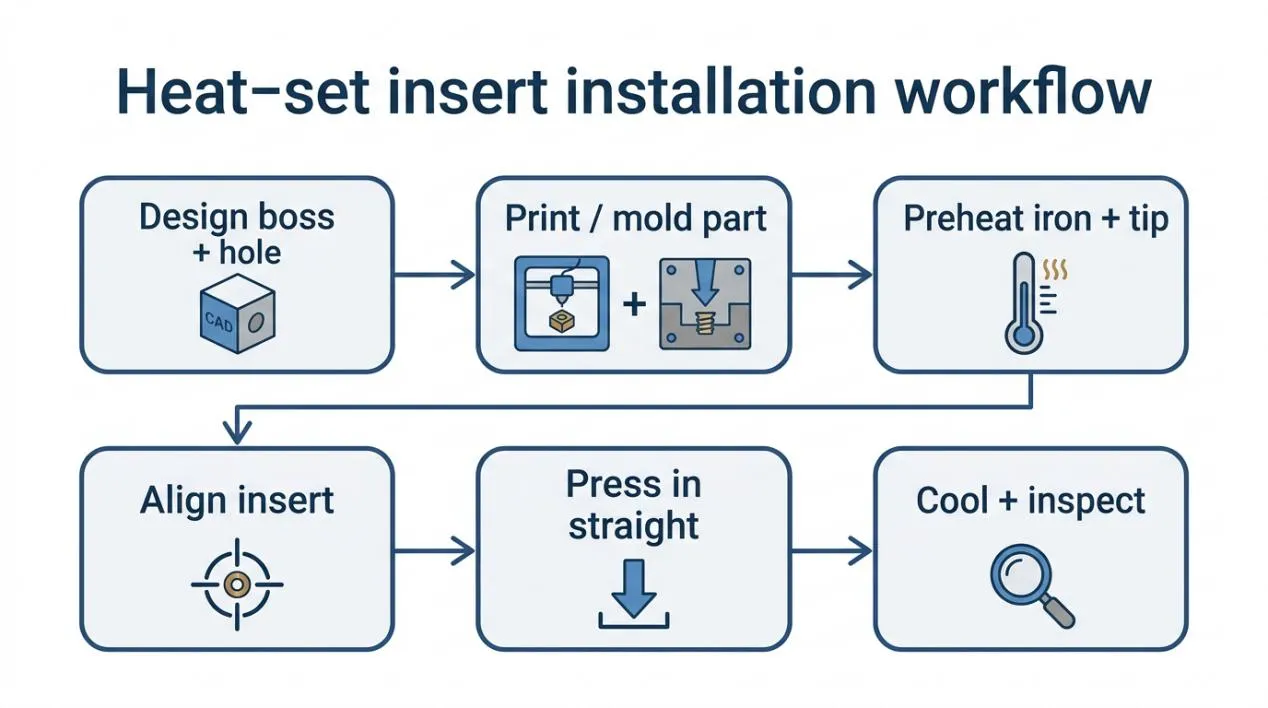
Boss and Pilot Hole Design
A fundamentally robust installation process inherently begins at the foundational CAD design stage by creating a properly dimensioned boss geometry and a precisely angled pre-molded pilot hole. The primary outer diameter of this pre-molded hole must strictly remain slightly smaller than the maximum outer diameter of the chosen metallic threaded insert.
This deliberate and calculated interference fit categorically guarantees that a sufficient volume of thermoplastic material is consistently available to melt and dynamically flow into the deep knurling grooves.
Furthermore, the total vertical depth of the pilot hole must intentionally exceed the insert’s maximum overall length by a clearly defined safety margin.
This highly critical extra clearance space acts as an indispensable internal reservoir, safely accommodating the rapidly displaced molten polymer and actively preventing the pressurized plastic from violently extruding outward or catastrophically contaminating the pristine internal threads.
Tool Preheat and Temperature Setting
Optimal thermal management remains the undisputed cornerstone of a consistently reliable heat-set insertion operation across all manufacturing scales. According to the highly authoritative Markforged engineering guidelines, the primary heating tool should generally be configured within a strictly controlled temperature range of 650–750°F (343–399°C).
In demanding practical manufacturing environments, this theoretical baseline temperature must be carefully and empirically calibrated. Production operators must meticulously account for the specific glass transition temperature of the chosen polymer formulation, the distinct thermal mass of the metallic pressing tip, and the required velocity of the automated production cycle time.
Applying excessively elevated temperatures will aggressively and irreversibly degrade the delicate polymer chains, destroying structural integrity. Conversely, applying completely insufficient thermal energy strictly prevents adequate material flow, severely compromising the final mechanical bond strength.
Vertical Alignment and Pressing
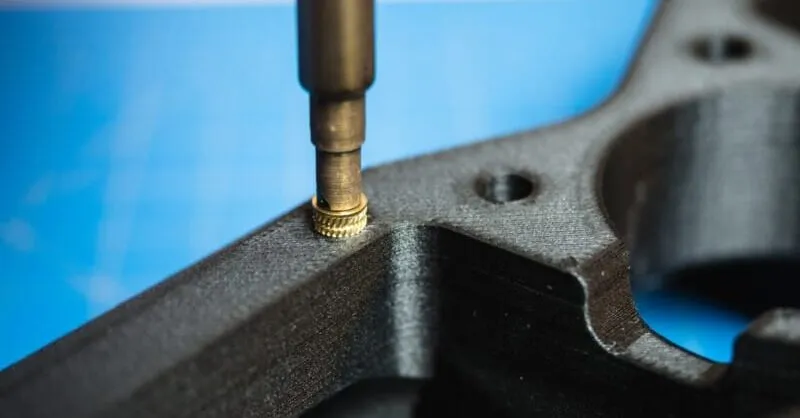
The physical insertion sequence officially commences by carefully placing the specifically tapered lead-in end of the fastener directly into the precisely designated pilot hole aperture. Absolute and unwavering vertical alignment between the central longitudinal axis of the pressing tool, the metallic insert, and the plastic boss is absolutely critical for success.
Any minor angular deviation introduced at this exact stage will inevitably result in a severely tilted fastener, entirely compromising the final assembly tolerances and operational sealing capabilities. The assigned operator, or automated robotic arm, should apply only exceptionally gentle downward pressure with the heated tip.
The fundamental physical principle driving this process is to allow localized thermal conduction to seamlessly and progressively soften the immediate interface plastic, thereby enabling the metallic insert to sink incredibly smoothly under its own distinct weight rather than forcing it destructively through sheer mechanical brute force.
Cooling and Cross-Section Inspection
The precise moment the topmost surface of the metallic fastener sits perfectly flush and strictly parallel with the surrounding plastic rim, the active heating tool must be immediately and vertically withdrawn to halt further thermal transfer. The completed sub-assembly must then be permitted to cool entirely naturally at standard ambient room temperature.
Implementing artificial rapid cooling techniques, such as directly applying cold water droplets or directing high-velocity compressed air jets, introduces extraordinarily severe internal residual stresses and must be strictly and unequivocally avoided under all circumstances. During all initial process validation protocols, quality assurance engineers are strongly advised to physically slice representative test specimens and perform meticulous microscopic cross-section inspections.
This rigorous destructive testing methodology unequivocally verifies that the complex external knurling is completely and uniformly encapsulated by the re-solidified polymer without generating any detrimental internal voids or hidden micro-fractures.
Typical Industry Applications
| Application Area | Typical Parts | Why Heat-Set Inserts |
| 3D Printing & Low Volume | Electronic enclosures and custom structural fixtures | Effectively remelts highly rough FDM wall layers to provide an exceptionally reliable metallic thread structure. |
| Consumer Electronics | High-end laptop bases and ergonomic controller shells | Fully supports high-frequency disassembly cycles for routine maintenance while entirely eliminating the widespread issue of stripped plastic threads. |
| Medical & Lab Equipment | Precision instrument panels and diagnostic probe housings | Consistently delivers truly exceptional positional assembly accuracy and supreme mechanical connection reliability for absolutely critical healthcare diagnostics. |
| Automotive Interior | Complex dashboard brackets and structural trim fasteners | Provides the immense baseline pull-out resistance absolutely necessary to withstand constant, high-frequency kinetic road vibrations over decades of use. |
| Industrial Controls | Heavy-duty control cabinet panels and rugged sensor enclosures | Highly capable of enduring significantly higher locking torque forces without disastrously fracturing or splintering the surrounding rigid polymer matrix. |
| Injection Molded Parts | PVC injection molding electrical junction boxes | Skillfully circumvents the strict necessity for exceedingly complex mold bases and inserts designs while simultaneously accelerating the overall continuous molding cycle time. |
In highly optimized contemporary high-volume production facilities, the pervasive and strategic integration of advanced hot runner systems plays an incredibly pivotal role in guaranteeing impeccable structural integrity. High-quality precision molded components exhibit vastly superior dimensional stability, exceptional surface finish, and highly uniform internal material density.
Consequently, these perfectly optimized plastic substrates are significantly more receptive to fully automated thermal insertion processes, naturally leading to remarkably higher manufacturing yields, lowered operational overhead, and substantially fewer rejected sub-assemblies on the demanding final production line.
Alternatives at a Glance
| Connection Method | Suitable Materials | Strength Characteristics | Cost Evaluation | Typical Failure Mode |
| Heat-Set Insert | Thermoplastics | Extremely high strength, permits infinite disassembly cycles | Moderate implementation cost, highly compatible with automation | Tilted installation alignment, internal plastic overflow |
| Cold Press-In Insert | Thermosets, incredibly hard plastics | Moderate overall strength, permanently retains high internal stress | Extremely simple equipment, exceptionally rapid manual installation | Catastrophic boss wall cracking from severe radial material displacement |
| Molded-In Insert | High-load injection molded components | Absolute maximum theoretical strength, perfectly seamless fusion | Prohibitively expensive mold tooling, considerably prolonged injection cycles | Insert physically shifting inside the high-pressure mold cavity, prominent |
| surface sink marks | ||||
| Self-Tapping Screw | Extremely soft and highly ductile plastics | Very low baseline strength, highly susceptible to immediate stripping | Absolute lowest initial component acquisition cost | Operator over-tightening leading to rapid and catastrophic boss splitting |
| Direct Tapping | Rigid engineering-grade plastics | Highly fragile internal threads, totally unsuitable for regular maintenance | Significantly adds secondary machining operations, severely reduces efficiency | Extremely rapid thread pitch wear and eventual total structural collapse |
| Helical Coil Insert | High-hardness, aggressively glass-filled plastics | Superb dynamic wear resistance, exceptional for critical thread repair | Exceedingly tedious, highly manual, and extremely time-consuming installation process | Inaccurate or slightly skewed pre-tapping entirely prevents proper coil insertion |
When specifically tasked with meticulously selecting the absolute optimal fastening strategy for various thermoplastic substrates that require frequent and routine disassembly, professional structural engineers universally recognize precision heat-set threaded inserts as the undisputed preeminent choice.
They consistently deliver an entirely unparalleled equilibrium between robust mechanical load strength, long-term reliability, and highly reasonable implementation costs. Conversely, when specifically designing for exceedingly rigid thermosetting polymers, the foundational selection logic completely and unavoidably changes.
Thermoset materials undergo an irreversible and permanent chemical cross-linking process during molding and simply will never remelt upon any subsequent heat application. Therefore, engineers must intelligently pivot toward alternative robust solutions, strictly relying on either specialized cold press-in inserts or integrating the heavy-duty metal fasteners directly during the initial high-pressure molding process.
Typical Users and Key Operational Concerns
| User Type | Primary Operational Focus |
| Maker & 3D Printing Users | General component procurement convenience, single-unit peak pull-out strength, and manual soldering iron insertion success rates. |
| Product & Structural Engineers | Empirical pull-out and torsional test data, highly rigorous pilot hole dimension guidelines, and overall functional assembly lifecycle longevity. |
| Injection Molders & Processors | Direct quantifiable impact on standard injection cycle times, precisely required draft angles, and successful mitigation of external surface sink marks. |
| OEM Factory Assembly Lines | Broad automated equipment compatibility, extremely high-speed production takt times, rigorous statistical yield rates, and perfect component traceability. |
Within the enthusiastic amateur 3D printing community, individuals frequently and erroneously attempt highly sensitive installations using standard, completely unmodified conical soldering iron tips. This profoundly improper tooling choice inevitably scratches and permanently damages the incredibly delicate internal metric threads.
It is absolutely mandatory and non-negotiable to exclusively utilize highly specialized heating tips equipped with a precise cylindrical guiding step to comprehensively protect thread structural integrity. Similarly, professional mechanical engineers occasionally overlook the fundamental necessity of incorporating adequate exhaust clearance at the exact bottom of blind pilot holes.
This critical geometric oversight violently forces molten plastic to surge upwards and form highly problematic surface nodules that disrupt mating surfaces. Furthermore, operators situated on extraordinarily high-speed OEM assembly lines often succumb to the dangerous temptation of drastically elevating the tool temperature to artificially accelerate processing times.
This highly aggressive and ill-advised heating strategy inevitably causes rapid and catastrophic polymer carbonization, directly leading to immediate structural degradation and completely catastrophic insert pull-out failures during final product testing.
Market Size and Competitor Landscape
Market Projections and Economic Data
According to comprehensive, meticulously verified industry analysis compiled directly by Growth Market Reports, the global threaded inserts market achieved an incredibly impressive valuation of approximately 1.36 billion USD during the tightly monitored 2024 fiscal year.
Extrapolating current, highly aggressive industrial adoption trends, seasoned financial forecasters confidently and unanimously project that this expansive global market will rapidly escalate to a truly remarkable 2.36 billion USD by the definitive conclusion of 2033.
Throughout this entire extended and dynamic forecast period, the manufacturing industry is broadly expected to sustain a highly consistent and robust Compound Annual Growth Rate (CAGR) measuring approximately 6.3 percent, driven primarily by extensive automation upgrades.
| Brand Representative | Core Positioning and Advantages |
| SPIROL | Delivers highly specialized, world-class engineering application support seamlessly combined with advanced integrated automated insertion machinery. |
| PennEngineering (PEM) | Consistently excels in producing sophisticated miniature components and boldly pioneering lead-free environmentally friendly materials for highly demanding applications. |
| Bossard | A massive global fastener distribution conglomerate strategically focusing on holistic engineering solutions and highly optimized, precisely timed supply chain management. |
| Mold-Masters | Globally renowned for flawlessly executing high-precision thermal control technology, synergistically advancing the absolute quality standards of precision injection molding. |
| Yardley Inserts | Boasts exceptionally robust custom manufacturing capabilities, primarily focusing heavily on imperial sizes and highly specialized, low-volume production runs. |
| MW Components | Offers a remarkably diverse, multi-disciplinary portfolio of complex metalworking capabilities, providing highly customizable fastener configurations for uniquely niche markets. |
| RS PRO | A truly formidable proprietary distribution brand absolutely dominating the sector with highly cost-effective solutions and incredibly rapid-response off-the-shelf component distribution. |
| Generic E-Commerce Kits | Specifically targets extreme low-cost requirements, adequately satisfying the most fundamental assembly needs of individual makers, students, and hobbyist electronics projects. |
Process Stability and Thermal Control
The fundamental and underlying molding quality of all precision injection-molded components unequivocally dictates the ultimate success rate and mechanical reliability of the subsequent threaded insert installation process.
This incredibly intricate relationship is extraordinarily reliant on flawless upstream thermal precision. Implementing a high-fidelity, highly responsive hot runner temperature controller is an absolute prerequisite for ensuring absolute melt uniformity across the entire plastic matrix.
Whenever any minor manufacturing defects or surface inconsistencies visibly manifest during the critical molding phase, production engineers must immediately consult a comprehensive troubleshooting guide to rapidly identify and flawlessly rectify the underlying thermodynamic variables.
It is fundamentally imperative to meticulously and routinely inspect the exact operational status of all highly critical hot-end thermal components. Regularly evaluating the precise performance characteristics of every dedicated coil heater and rigorously testing each localized ceramic band heaters strongly ensures sustained thermal equilibrium and drastically reduces disastrous assembly failure rates across the entire facility.
Key Industry Trends
3D Printing Expansion and Lead-Free Material Adoption
The truly exponential proliferation of both desktop enthusiast and heavy-industrial 3D printing technologies has directly and undeniably catalyzed an explosive, completely unprecedented global demand for highly reliable heat-set threaded inserts.
These extraordinarily specialized fasteners effectively and immediately compensate for the inherently weak, highly porous structural layers commonly found in standard fused deposition modeling prints. Furthermore, in strict, rapid response to increasingly stringent global environmental regulations and ongoing, highly aggressive aerospace lightweighting initiatives, the manufacturing sector is witnessing a massive, totally irreversible material paradigm shift.
Highly innovative lead-free metal alloys, exceptionally lightweight aerospace-grade aluminum, and incredibly corrosion-resistant stainless steel material variants are rapidly, permanently displacing traditional, heavier brass components across virtually all high-end engineering sectors.
Insertion Automation and Miniaturization Directives
Within all modern, highly optimized OEM assembly environments, the distinctly archaic reliance on slow, highly variable manual, hand-held soldering iron operations is swiftly and permanently becoming totally obsolete. Cutting-edge, lightning-fast multi-axis automated thermal press machines now entirely dominate the modern production floor.
These machines flawlessly and continuously execute simultaneous, perfectly synchronized multi-point insertions with truly extraordinary dimensional consistency and near-zero failure rates. These incredibly sophisticated manufacturing systems comprehensively integrate highly advanced, instantly responsive closed-loop temperature control algorithms to proactively prevent any localized thermal degradation.
Simultaneously, powerfully propelled by the relentless and ongoing miniaturization of advanced medical electronics, brilliant structural engineers are successfully deploying microscopic, hyper-precision inserts well below the incredibly challenging M1 dimensional threshold, continuously and relentlessly pushing the absolute physical boundaries of modern precision machining and automated thermal installation technology.
Frequently Asked Questions
How should I accurately determine the pilot hole dimensions?
The preliminary and critically important pilot hole diameter must always be intentionally designed marginally smaller than the specific metallic insert's true maximum outer diameter. For extracting exact, highly reliable numerical tolerances, you absolutely must consult the official dimensional specification sheets provided directly by your definitively selected hardware manufacturer. Furthermore, the overall physical hole depth must physically extend an additional 0.5 to 1.0 millimeters completely beyond the fastener's maximum length to safely and securely accommodate the inevitable, rapidly expanding volume of forcefully displaced molten polymer.
What is the optimal temperature setting for the heating tool?
Experienced professional engineers generally and strictly adhere to the widely recognized Markforged baseline engineering recommendation, which explicitly suggests a highly stable thermal operating window tightly constrained between 650–750°F (343–399°C). However, this crucial theoretical baseline must be meticulously and rigorously fine-tuned on the actual production floor. The precise, final thermal calibration strictly depends on the exact, specific melting characteristics of the distinctly chosen plastic material, the exact thermal mass of the designated pressing apparatus, and the specifically desired speed of the continuous automated production cycle.
How do PLA, PETG, and ABS plastics differ during installation?
Standard, highly ubiquitous PLA plastic exhibits a remarkably low thermal glass transition temperature, making it highly susceptible to incredibly rapid softening and disastrously excessive material overflow if not constantly and carefully monitored by the operator. In direct, stark contrast, PETG material provides truly superior inherent physical toughness, generously offering a considerably more forgiving and robust operational thermal window. High-performance ABS polymer, explicitly characterized by a significantly higher, highly demanding melting point and an incredibly rigid internal structural matrix, absolutely and unequivocally mandates a proportionally higher initial tool temperature and a deliberately, intentionally prolonged thermal pressing duration to ensure perfect bonding.
Are heat-set threaded inserts compatible with thermosetting plastics?
No, they are fundamentally, entirely, and completely incompatible. Highly rigid thermosetting polymers uniquely undergo an irreversible, deeply complex chemical cross-linking physical process exactly during their initial high-pressure molding cycle. Consequently, they will exclusively, violently carbonize, permanently blacken, and actively burn rather than smoothly or predictably remelting when directly exposed to any subsequent, intense thermal energy. For securely fastening these incredibly rigid, highly unyielding materials, precision engineers must strictly and uniformly specify specialized cold press-in mechanical inserts or perfectly integrate the threaded fasteners directly into the massive steel mold cavity entirely prior to the critical chemical curing phase.
What causes tilted insertions or protruding fasteners, and how can they be prevented?
Disastrous angular deviation almost entirely and exclusively occurs when the human operator or robotic arm completely fails to rigorously maintain incredibly strict, perfectly perpendicular geometrical alignment precisely during the highly sensitive initial seating phase. Conversely, a metallic insert that actively sits visibly proud entirely above the designated plastic surface typically, strongly indicates an overly shallow, poorly designed pilot hole, where rapidly trapped polymer forcefully and unstoppably pushes the rigid fastener continuously upward. To completely and permanently eliminate these critical, highly expensive assembly defects, modern production facilities must immediately deploy incredibly precision thermal presses heavily equipped with extraordinarily robust vertical linear guide rails and strictly enforce totally accurate blind hole depths throughout the entire facility.