Brass pipe nipplesIntroductionBrass pipe nipples are short sections of brass tubing with male t...
Hot Runner Temperature Controller: The Complete Guide to Precision, Stability, and Cost Efficiency in Injection Molding
2026-02-28
Contents
1. What Is a Hot Runner Temperature Controller?
2. How a Hot Runner Temperature Controller Works
3. Key Features of a Modern Hot Runner Temperature Controller
4. Why Temperature Control Is Critical in Industrial Manufacturing
5. How a Hot Runner Temperature Controller Reduces Costs
6. Open-Loop vs Closed-Loop Control
7. How Many Zones Do You Need?
8. Integration with Smart Manufacturing
9. Selection Criteria for Buyers
10. Frequently Asked Questions
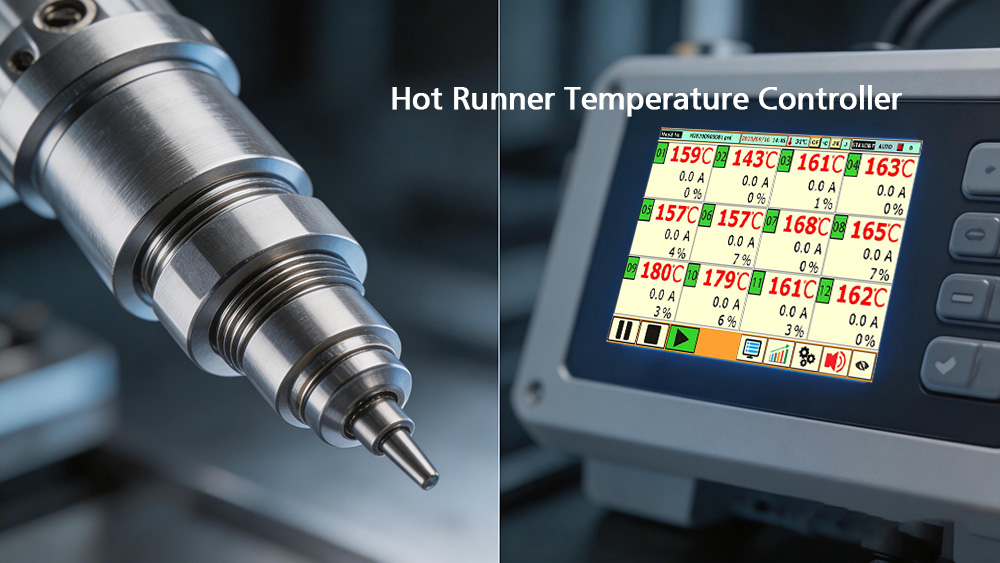
In modern injection molding, precision is not optional—it is fundamental. At the center of that precision lies the hot runner temperature controller, a critical system responsible for maintaining stable melt temperatures, ensuring consistent product quality, and minimizing production waste.
Whether you are a mold designer, production engineer, or factory decision-maker, understanding how temperature control works—and how it directly affects cost, efficiency, and product performance—is essential. This guide provides a structured, technical yet accessible explanation of hot runner temperature control systems and their industrial value.
What Is a Hot Runner Temperature Controller?
A hot runner temperature controller is an industrial control unit designed to regulate and stabilize the temperature of heating elements within a hot runner system in injection molding machines.
A hot runner system keeps molten plastic at controlled temperatures inside a manifold and nozzle network, eliminating the need for cold runners and reducing material waste. The temperature controller ensures that each heating zone maintains the precise temperature required for optimal polymer flow.
Core Purpose
Maintain consistent melt temperature
Prevent overheating or underheating
Ensure uniform cavity filling
Protect heaters and manifolds from thermal damage
Without precise control, fluctuations in temperature can cause defects such as short shots, flashing, sink marks, stringing, or material degradation.
How a Hot Runner Temperature Controller Works
The Closed-Loop Control Principle
Modern systems operate using closed-loop control. Each heating zone includes:
A heater (cartridge or coil heater)
A temperature sensor (usually thermocouple or RTD)
A control module using PID algorithms
The sensor continuously measures actual temperature and sends feedback to the controller. The controller compares this with the setpoint and adjusts power output in real time.
PID Control Explained Simply
Most high-performance controllers use PID (Proportional–Integral–Derivative) control:
Proportional: Reacts to current temperature error
Integral: Corrects accumulated past errors
Derivative: Predicts future trends to prevent overshoot
This combination allows for fast response, minimal overshoot, and stable long-term temperature maintenance.
Key Features of a Modern Hot Runner Temperature Controller
Leading industrial solutions—such as those offered by HIT Controls, Hasteco, PCS Company, and Tinko Instrument—typically include the following capabilities:
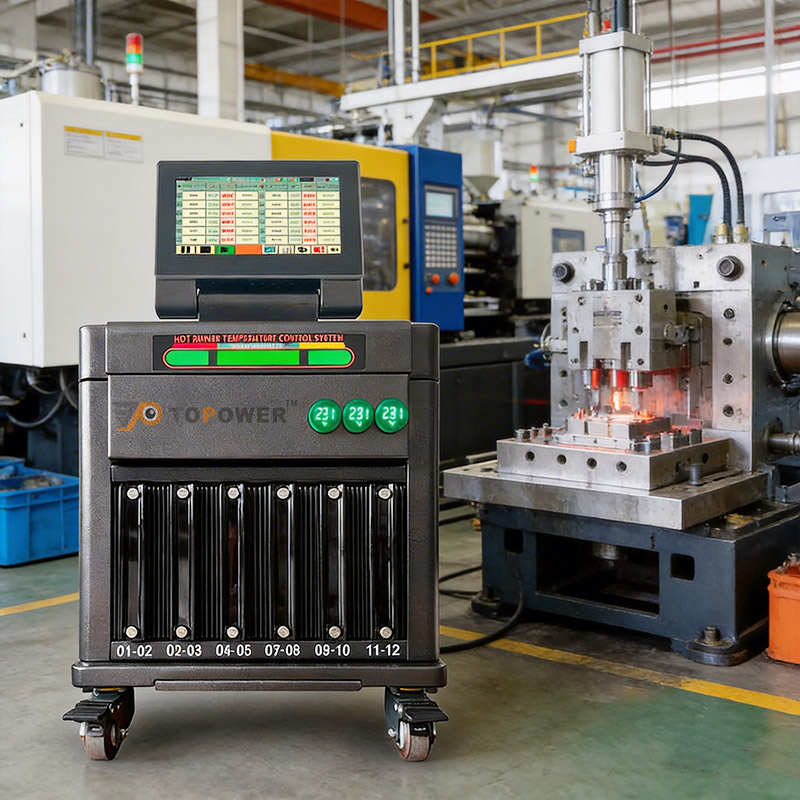
Multi-Zone Independent Control
2 to 128+ zones available
Each zone individually tuned
Ideal for complex multi-cavity molds
High Accuracy Regulation
±0.1°C to ±1°C stability (depending on configuration)
Fast heat-up and minimal overshoot
Alarm & Protection Systems
Over-temperature protection
Heater break detection
Thermocouple fault detection
Fuse and load monitoring
User Interface & Connectivity
Touchscreen HMI panels
Modular rack-mounted mainframes
PLC integration via Modbus or Ethernet/IP
Data logging for process validation
Why Temperature Control Is Critical in Industrial Manufacturing
Temperature is one of the most sensitive variables in polymer processing. Even minor deviations can alter viscosity, flow characteristics, and crystallization behavior.
Direct Impact on Product Quality
Accurate temperature control ensures:
Uniform melt flow across cavities
Reduced internal stress
Dimensional stability
Surface finish consistency
Industries that demand tight tolerances—automotive, medical devices, and consumer electronics—depend on stable temperature control to meet regulatory and performance standards.
Process Repeatability
In high-volume manufacturing, consistency across thousands or millions of cycles is essential. A stable hot runner temperature controller guarantees repeatable shot-to-shot performance.
How a Hot Runner Temperature Controller Reduces Costs
Temperature control is not merely a technical necessity—it is a financial strategy.
Reduced Material Waste
Improper temperature causes:
Short shots
Burn marks
Stringing
Degraded resin
By maintaining stable melt conditions, scrap rates decrease significantly, directly lowering material costs.
Energy Efficiency
Advanced controllers:
Avoid excessive heating
Reduce overshoot cycles
Apply intelligent power modulation
This reduces unnecessary energy consumption while maintaining performance.
Longer Equipment Lifespan
Thermal cycling stress damages:
Heaters
Manifolds
Electrical components
Stable temperature management extends component life and reduces maintenance frequency.
Increased Throughput
Consistent temperature:
Shortens cycle times
Reduces startup stabilization time
Minimizes production interruptions
Higher uptime directly translates into improved ROI.
Open-Loop vs Closed-Loop Control
Understanding this distinction is important when selecting a controller.
Open-Loop
No real-time temperature feedback
Power output fixed or manually adjusted
Lower cost but less precise
Closed-Loop (Industry Standard)
Continuous feedback from sensors
Automatic correction
Essential for high-precision injection molding
For industrial hot runner systems, closed-loop control is the standard due to its reliability and accuracy.
How Many Zones Do You Need?
Zone count depends on:
Number of nozzles
Manifold complexity
Valve gate presence
Mold cavity configuration
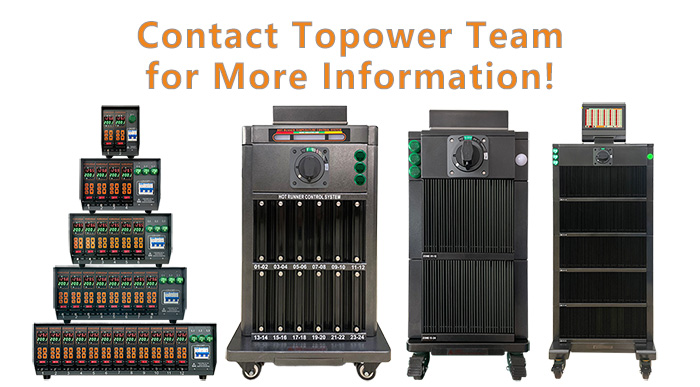
A simple mold may require 4 to 8 zones.
Large multi-cavity or valve-gated molds may require 24–96+ zones.
Scalable, modular mainframe systems enable expansion as production demands increase.
Integration with Smart Manufacturing
Modern controllers increasingly support Industry 4.0 initiatives:
Real-time data export
Cloud monitoring
Predictive maintenance alerts
Remote diagnostics
By integrating temperature data into MES or ERP systems, manufacturers gain deeper insight into process stability and cost optimization.
Selection Criteria for Buyers
When evaluating a hot runner temperature controller, consider:
Technical Factors
Zone capacity
Control accuracy
Heating load per zone
Response time
Operational Factors
Ease of maintenance
Modular expansion capability
Interface usability
Financial Considerations
Initial investment vs lifecycle cost
Energy savings potential
Downtime reduction
A slightly higher upfront investment often results in substantial long-term savings.
Frequently Asked Questions
What temperature tolerance is acceptable?
Most industrial applications require stability within ±1°C. Medical or precision components may demand tighter tolerances.
Can controllers integrate with PLC systems?
Yes. Many systems support industrial communication protocols for seamless factory automation.
What happens if a thermocouple fails?
Advanced controllers detect sensor faults immediately and trigger alarms or shut down the affected zone to prevent damage.
Conclusion
A hot runner temperature controller is not merely an accessory—it is a core infrastructure component of modern injection molding systems. It ensures precision, stabilizes production, minimizes waste, and protects equipment investment.
By implementing accurate, multi-zone closed-loop temperature control, manufacturers achieve:
Higher product quality
Lower scrap rates
Improved energy efficiency
Reduced maintenance costs
Greater production reliability
In competitive manufacturing environments, temperature control is not simply about heat—it is about operational excellence and sustainable profitability.